20 Revelations From Facebook CEO Mark Zuckerberg’s Apology Tour
Zuckerberg finally spoke on Wednesday, via Facebook and in interviews with four major outlets, about the Cambridge Analytica data breach.
Opinions expressed by Entrepreneur contributors are their own.
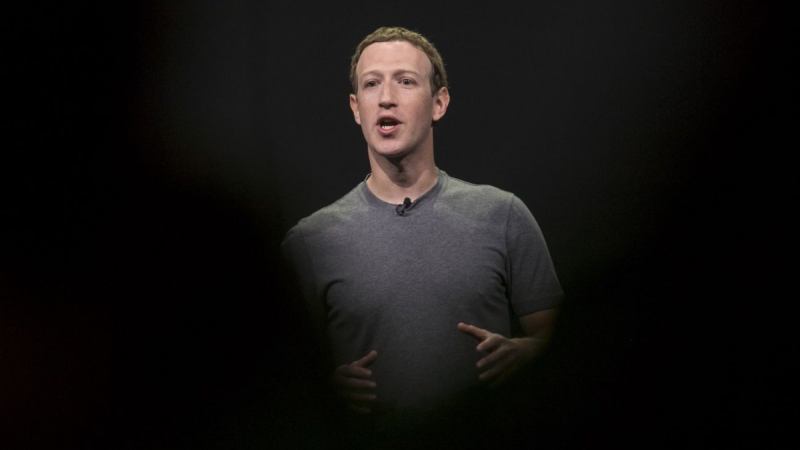
Mark Zuckerberg emerged from the shadows on Wednesday afternoon after four days of silence.
Facebook apparently had been crafting its response to the news that a voter-profiling data consultancy called Cambridge Analytica had obtained private data of more than 50 million Facebook users back in 2014. On Wednesday afternoon, Zuckerberg published a Facebook post acknowledging the situation and appeared in interviews with a handful of news outlets — amid suggestions that he might be wise to resign.
Over the weekend, The New York Times and The Observer broke the news of the data breach and published interviews with former Cambridge Analytica employee Chris Wylie to explain what had occured. Wylie explained that in 2013, a Cambridge University researcher named Aleksandr Kogan, who had received permission to gather Facebook data for academic purposes, created a quiz app called “thisismydigitallife,” and 270,000-plus Facebook users who used the app consented to giving the app access to their own Facebook profiles, as well as their friends’.
Cambridge Analytica formed and reportedly paid $7 million for Kogan’s data, even though Kogan had an agreement with Facebook not to share the data for commercial purposes. Although Facebook didn’t publicly announce its discovery at the time, The Guardian reported on the breach in 2015, which prompted Facebook to demand that Kogan and Cambridge delete the data. Sources have claimed that Cambridge Analytica did not follow through with this request.
Related: Why These People and Brands Are Fed Up With Facebook
These revelations are especially controversial, given that Cambridge Analytica assisted Donald Trump’s 2016 presidential campaign, and former Trump White House Chief Strategist Steve Bannon and GOP donor Robert Mercer were part owners of the company. It’s still not clear to what extent the Trump campaign utilized stolen Facebook data to construct messaging or target voters, but the fact that Facebook did not protect its users from a data breach of this magnitude, let alone that this data may have been used for political manipulation, has caused a major uproar.
That’s putting it lightly. Facebook was already under extreme scrutiny before this story surfaced, due to the spread of fake news on the platform and Russian interference via the social network in the 2016 U.S. general election. By early Monday morning, Facebook’s market capitalization began to tank. The company’s valuation declined by a whopping $50 billion in a matter of two days.
Zuckerberg’s four-day silence was conspicuous, but yesterday afternoon, he posted a 936-word statement to his Facebook page, then announced he would appear on CNN for an interview shortly. Interviews with Wired, The New York Times and Recode also published late yesterday.
Click through the slides to see what Entrepreneur learned from Zuckerberg’s statements to those four outlets, as well as his initial Facebook post.
Related video: More Trouble for Facebook! 3 Things You Should Know Today.
Zuckerberg explained that Facebook took precautions to prevent similar data breaches years ago.
In his Facebook post, Zuckerberg provided a timeline of events. In 2013, Kogan received access to Facebook data, and in 2014 (before Kogan’s misuse of the data surfaced), Facebook limited third-party apps’ data access — for instance, preventing apps from collecting data on users’ friends without those friends’ authorization.
This 2014 change was too late to prevent Kogan from sharing Facebook user data with Cambridge Analytica, which Zuckerberg confirmed the company became aware of in 2015, when it asked Cambridge and Kogan to delete the data.
“This was a breach of trust between Kogan, Cambridge Analytica and Facebook,” Zuckerberg stated in the post. “But it was also a breach of trust between Facebook and the people who share their data with us and expect us to protect it. We need to fix that.”
Zuckerberg explained changes Facebook will make to protect users’ data.
He laid out three steps that Facebook will take going forward, from investigating thousands of apps that had access to large amounts of user data before the 2014 change, auditing suspicious ones and banning developers that don’t comply with an audit or that it finds “misused personally identifiable information.” No longer will Facebook merely trust developers to handle data properly, like it did with Kogan.
Facebook will also revoke app developers’ access to user data if a user hasn’t used the app in three months. It will limit the data third-party apps can gather about users, and it will require any developers who collect user data to sign a contract with Facebook.
Finally, Zuckerberg explained, Facebook will work to make it clearer to users when they’ve allowed an app to access their data — by putting this information at the top of users’ news feeds.
Zuckerberg took personal responsibility for the Cambridge Analytica breach.
“I started Facebook,” Zuckerberg stated in his Facebook post, “and at the end of the day I’m responsible for what happens on our platform.”
However, he then concluded on an optimistic note, as he often does:
“I know it takes longer to fix all these issues than we’d like, but I promise you we’ll work through this and build a better service over the long term.”
Zuckerberg apologized on CNN.
Although Zuckerberg’s Facebook post didn’t contain an explicit apology, in his CNN interview shortly after the post published, Zuckerberg said, “So, this was a major breach of trust and I’m really sorry that this happened.”
As he’d written in the Facebook post, Zuckerberg told CNN‘s Laurie Segall, “You know we have a basic responsibility to protect people’s data, and if we can’t do that then we don’t deserve to have the opportunity to serve people.”
Zuckerberg then summarized the measures Facebook will take in the wake of the Cambridge Analytica revelations, as described in his Facebook post.
Related: Mark Zuckerberg Doesn’t Seem Very Sorry or Very Forgiven
Zuckerberg didn’t explicitly say he’d sue Cambridge Analytica.
“Well, the first thing that we need to do is actually understand what happened,” Zuckerberg told CNN‘s Segall.
However, once an audit of Cambridge Analytica is complete, Zuckerberg explained, if Facebook finds Cambridge Analytica still has access to the data, the company will “take all legal steps that we can to make that the data of people in our community is protected.”
Zuckerberg admitted to being ‘naive’ about data sharing in the past.
“You know, I think we’ve started off a little bit on the idealistic, and maybe naive side, right, of thinking that that vision around data portability and enabling social apps was gonna be what our community preferred,” Zuckerberg told CNN. “I think what we’ve learned over time very clearly is that the most important thing always is making sure that people’s data is locked down.”
Zuckerberg explained that user reactions have informed this mindset shift.
“I think the feedback that we’ve gotten from people — not only in this episode but for years — is that people value having less access to their data above having the ability to more easily bring social experiences with their friends’ data to other places,” Zuckerberg told Wired Editor-in-Chief Nicholas Thompson on March 21.
Zuckerberg explained that his company doesn’t sell data, for ethical and business reasons.
He explained that it’s a misconception that Facebook sells user data it collects. Rather, he said, it helps its advertisers show ads to certain demographics, but it does not share user data with those advertisers. Plus, Facebook wouldn’t want that data to get shared further, or it’d ruin the social platform’s competitive data.
“We don’t want data to be able to get out,” Zuckerberg told CNN. “When that happens, that’s not good for people in our community, that’s not good for our business.”
Zuckerberg explained that fighting election meddling ‘isn’t rocket science.’
Facebook was one of the leading platforms for Russian trolls and bots in the 2016 president election, but Zuckerberg said Facebook has made strides combating interference with the elections that followed. He provided examples of the French election and Alabama special senate election in 2017, explaining that Facebook weeded out Russian interference on the platform for both.
“We deployed some new AI tools that we built to detect fake accounts that were trying to spread false news,” Zuckerberg told CNN of these two elections. “I think the reality here is that this isn’t rocket science.”
He added that Facebook will continue its work to combat fake news, trolls and bots leading up to the 2018 U.S. midterm elections, as well as other upcoming major elections globally. In fact, he admitted that bad actors are likely working to manipulate those elections now.
“I’m sure someone’s trying,” he said, then added that he’s aware of what some new tactics are, without providing specifics, other than “trying to sew division.”
Zuckerberg said he’d testify before Congress, but provided a caveat.
“So, the short answer is I’m happy to, if it’s the right thing to do,” Zuckerberg told CNN. But he added that he personally might not be the most appropriate person to testify on behalf of the company.
“What we try to do is send the person at Facebook who will have the most knowledge about what Congress is trying to learn,” Zuckerberg told CNN. “So if that’s me, then I am happy to go.” He provided similar statements to other outlets he interviewed with on March 21.
Zuckerberg didn’t deny that the government should regulate Facebook.
When CNN‘s Segall asked Zuckerberg whether he thinks the platform should face government regulation, Zuckerberg didn’t object to the idea.
“I actually am not sure we shouldn’t be regulated,” he said. “I actually think the question is more, “what is the right regulation?'”
He followed up that “ads transparency” is an area where increased regulation is needed.
“People should know who is buying the ads that they see on Facebook,” Zuckerberg said, “and you should be able to go on any page and see all the ads that people are running to different audiences.”
Zuckerberg alluded that there are more changes yet to be announced.
In his March 21 Facebook post, Zuckerberg stated, “we’ll have more changes to share in the next few days.”
In his interview with Wired, he explained, “there are probably 15 changes that we’re making to the platform to further restrict data, and I didn’t list them all, because a lot of them are kind of nuanced and hard to explain.”
Zuckerberg said he doesn’t know whether Cambridge Analytica shared Facebook user data with Russian operatives.
“I can’t really say that,” he told Wired‘s Thompson. “I hope that we will know that more certainly after we do an audit.”
He also said that this audit is on hold while the U.K.’s Information Commissioner’s Office conducts its own investigation of Cambridge Analytica.
Zuckerberg explained that advances in AI make Facebook more accountable.
When Facebook started out of Zuckerberg’s Harvard dorm room in 2004, he told Wired‘s Thompson, no one expected the platform to be able to moderate all of the content its users shared. But now that the company has grown and artificial intelligence has gotten sophisticated at identifying things such as nudity and terrorist content, questions around Facebook’s ethical and legal responsibility to regulate certain types of content loom.
“AI is not solved, but it is improving to the point where we can proactively identify a lot of content,” Zuckerberg told
Wired.“Not all of it, you know; some really nuanced hate speech and bullying, it’s still going to be years before we can get at.”
Zuckerberg said Facebook will notify users whose data Cambridge Analytica obtained.
“We’re going to tell anyone whose data may have been shared,” Zuckerberg told The New York Times‘s Kevin Roose and Sheera Frenkel. “We’re going to be conservative … and try to tell anyone whose data may have been affected, even if we don’t know for certain that they were.”
Related: Here’s What You Can Expect If You Want to Get Hired at Facebook
Zuckerberg responded to the #DeleteFacebook campaign that has formed in the past week.
“I don’t think we’ve seen a meaningful number of people act on that, but, you know, it’s not good,” Zuckerberg told The New York Times. “I think it’s a clear signal that this is a major trust issue for people, and I understand that. And whether people delete their app over it or just don’t feel good about using Facebook, that’s a big issue that I think we have a responsibility to rectify.”
Zuckerberg said Facebook’s business model is crucial to maintain a multi-billion user base.
The platform’s current data and advertising driven business model allows it to be free to users. In fact, Facebook’s home page tells users, upon signing up, “It’s free and always will be.”
Zuckerberg told The New York Times on March 21: “Now, over time, might there be ways for people who can afford it to pay a different way? That’s certainly something we’ve thought about over time. But I don’t think the ad model is going to go away, because I think fundamentally, it’s important to have a service like this that everyone in the world can use, and the only way to do that is to have it be very cheap or free.”
Zuckerberg said he’d rather not be the one to make calls on things like hate speech.
In an interview with Recode‘s Kara Swisher and Kurt Wagner, Zuckerberg admitted, “I feel fundamentally uncomfortable sitting here in California at an office, making content policy decisions for people around the world.”
Instead, he said he’d rather Facebook get to a point where its values reflect the values of its community. However, until he figures out how to achieve this, he noted that he’s assumed responsibility for these sorts of decisions, such as where to draw the line on hate speech, given that he leads the company.
Zuckerberg said that the audits Facebook will need to facilitate will cost the company ‘millions.’
He also expressed worry that the sheer number of qualified auditors in the world might be too low to handle the volume of required audits expeditiously.
“You know, the conversations we have been having internally on this is, “Are there enough people who are trained auditors in the world to do the number of audits that we’re going to need quickly?'” Zuckerberg told Recode. “But I think this is going to cost many millions of dollars and take a number of months and hopefully not longer than that in order to get this fully complete.”
Zuckerberg framed his mistakes as learning opportunities.
Given that Facebook has created something “unprecedented” in building a global online community, the challenges it faces are also unprecedented, Zuckerberg told The New York Times.
He definitely didn’t foresee foreign governments’ election meddling being an issue while at Harvard in 2004. Because he didn’t know better, he said it’s difficult for him to pinpoint regrets that he would avoid if given the chance to go back and act differently.
While he can’t foresee every issue, he said, he takes responsibility for addressing issues when they arise.
“It’s an inherently iterative process, so I don’t tend to look at these things as: Oh, I wish we had not made that mistake,” Zuckerberg told Wired. “I mean, of course I wish we didn’t make the mistakes, but it wouldn’t be possible to avoid the mistakes. It’s just about, how do you learn from that and improve things and try to serve the community going forward?”
Zuckerberg explained that Facebook took precautions to prevent similar data breaches years ago.
Mark Zuckerberg emerged from the shadows on Wednesday afternoon after four days of silence.
Facebook apparently had been crafting its response to the news that a voter-profiling data consultancy called Cambridge Analytica had obtained private data of more than 50 million Facebook users back in 2014. On Wednesday afternoon, Zuckerberg published a Facebook post acknowledging the situation and appeared in interviews with a handful of news outlets — amid suggestions that he might be wise to resign.
Over the weekend, The New York Times and The Observer broke the news of the data breach and published interviews with former Cambridge Analytica employee Chris Wylie to explain what had occured. Wylie explained that in 2013, a Cambridge University researcher named Aleksandr Kogan, who had received permission to gather Facebook data for academic purposes, created a quiz app called “thisismydigitallife,” and 270,000-plus Facebook users who used the app consented to giving the app access to their own Facebook profiles, as well as their friends’.
Cambridge Analytica formed and reportedly paid $7 million for Kogan’s data, even though Kogan had an agreement with Facebook not to share the data for commercial purposes. Although Facebook didn’t publicly announce its discovery at the time, The Guardian reported on the breach in 2015, which prompted Facebook to demand that Kogan and Cambridge delete the data. Sources have claimed that Cambridge Analytica did not follow through with this request.
Related: Why These People and Brands Are Fed Up With Facebook
These revelations are especially controversial, given that Cambridge Analytica assisted Donald Trump’s 2016 presidential campaign, and former Trump White House Chief Strategist Steve Bannon and GOP donor Robert Mercer were part owners of the company. It’s still not clear to what extent the Trump campaign utilized stolen Facebook data to construct messaging or target voters, but the fact that Facebook did not protect its users from a data breach of this magnitude, let alone that this data may have been used for political manipulation, has caused a major uproar.
That’s putting it lightly. Facebook was already under extreme scrutiny before this story surfaced, due to the spread of fake news on the platform and Russian interference via the social network in the 2016 U.S. general election. By early Monday morning, Facebook’s market capitalization began to tank. The company’s valuation declined by a whopping $50 billion in a matter of two days.
Zuckerberg’s four-day silence was conspicuous, but yesterday afternoon, he posted a 936-word statement to his Facebook page, then announced he would appear on CNN for an interview shortly. Interviews with Wired, The New York Times and Recode also published late yesterday.
Click through the slides to see what Entrepreneur learned from Zuckerberg’s statements to those four outlets, as well as his initial Facebook post.
Related video: More Trouble for Facebook! 3 Things You Should Know Today.
Zuckerberg explained that Facebook took precautions to prevent similar data breaches years ago.
In his Facebook post, Zuckerberg provided a timeline of events. In 2013, Kogan received access to Facebook data, and in 2014 (before Kogan’s misuse of the data surfaced), Facebook limited third-party apps’ data access — for instance, preventing apps from collecting data on users’ friends without those friends’ authorization.
This 2014 change was too late to prevent Kogan from sharing Facebook user data with Cambridge Analytica, which Zuckerberg confirmed the company became aware of in 2015, when it asked Cambridge and Kogan to delete the data.
“This was a breach of trust between Kogan, Cambridge Analytica and Facebook,” Zuckerberg stated in the post. “But it was also a breach of trust between Facebook and the people who share their data with us and expect us to protect it. We need to fix that.”
Zuckerberg explained changes Facebook will make to protect users’ data.
He laid out three steps that Facebook will take going forward, from investigating thousands of apps that had access to large amounts of user data before the 2014 change, auditing suspicious ones and banning developers that don’t comply with an audit or that it finds “misused personally identifiable information.” No longer will Facebook merely trust developers to handle data properly, like it did with Kogan.
Facebook will also revoke app developers’ access to user data if a user hasn’t used the app in three months. It will limit the data third-party apps can gather about users, and it will require any developers who collect user data to sign a contract with Facebook.
Finally, Zuckerberg explained, Facebook will work to make it clearer to users when they’ve allowed an app to access their data — by putting this information at the top of users’ news feeds.
Zuckerberg took personal responsibility for the Cambridge Analytica breach.
“I started Facebook,” Zuckerberg stated in his Facebook post, “and at the end of the day I’m responsible for what happens on our platform.”
However, he then concluded on an optimistic note, as he often does:
“I know it takes longer to fix all these issues than we’d like, but I promise you we’ll work through this and build a better service over the long term.”
Zuckerberg apologized on CNN.
Although Zuckerberg’s Facebook post didn’t contain an explicit apology, in his CNN interview shortly after the post published, Zuckerberg said, “So, this was a major breach of trust and I’m really sorry that this happened.”
As he’d written in the Facebook post, Zuckerberg told CNN‘s Laurie Segall, “You know we have a basic responsibility to protect people’s data, and if we can’t do that then we don’t deserve to have the opportunity to serve people.”
Zuckerberg then summarized the measures Facebook will take in the wake of the Cambridge Analytica revelations, as described in his Facebook post.
Related: Mark Zuckerberg Doesn’t Seem Very Sorry or Very Forgiven
Zuckerberg didn’t explicitly say he’d sue Cambridge Analytica.
“Well, the first thing that we need to do is actually understand what happened,” Zuckerberg told CNN‘s Segall.
However, once an audit of Cambridge Analytica is complete, Zuckerberg explained, if Facebook finds Cambridge Analytica still has access to the data, the company will “take all legal steps that we can to make that the data of people in our community is protected.”
Zuckerberg admitted to being ‘naive’ about data sharing in the past.
“You know, I think we’ve started off a little bit on the idealistic, and maybe naive side, right, of thinking that that vision around data portability and enabling social apps was gonna be what our community preferred,” Zuckerberg told CNN. “I think what we’ve learned over time very clearly is that the most important thing always is making sure that people’s data is locked down.”
Zuckerberg explained that user reactions have informed this mindset shift.
“I think the feedback that we’ve gotten from people — not only in this episode but for years — is that people value having less access to their data above having the ability to more easily bring social experiences with their friends’ data to other places,” Zuckerberg told Wired Editor-in-Chief Nicholas Thompson on March 21.
Zuckerberg explained that his company doesn’t sell data, for ethical and business reasons.
He explained that it’s a misconception that Facebook sells user data it collects. Rather, he said, it helps its advertisers show ads to certain demographics, but it does not share user data with those advertisers. Plus, Facebook wouldn’t want that data to get shared further, or it’d ruin the social platform’s competitive data.
“We don’t want data to be able to get out,” Zuckerberg told CNN. “When that happens, that’s not good for people in our community, that’s not good for our business.”
Zuckerberg explained that fighting election meddling ‘isn’t rocket science.’
Facebook was one of the leading platforms for Russian trolls and bots in the 2016 president election, but Zuckerberg said Facebook has made strides combating interference with the elections that followed. He provided examples of the French election and Alabama special senate election in 2017, explaining that Facebook weeded out Russian interference on the platform for both.
“We deployed some new AI tools that we built to detect fake accounts that were trying to spread false news,” Zuckerberg told CNN of these two elections. “I think the reality here is that this isn’t rocket science.”
He added that Facebook will continue its work to combat fake news, trolls and bots leading up to the 2018 U.S. midterm elections, as well as other upcoming major elections globally. In fact, he admitted that bad actors are likely working to manipulate those elections now.
“I’m sure someone’s trying,” he said, then added that he’s aware of what some new tactics are, without providing specifics, other than “trying to sew division.”
Zuckerberg said he’d testify before Congress, but provided a caveat.
“So, the short answer is I’m happy to, if it’s the right thing to do,” Zuckerberg told CNN. But he added that he personally might not be the most appropriate person to testify on behalf of the company.
“What we try to do is send the person at Facebook who will have the most knowledge about what Congress is trying to learn,” Zuckerberg told CNN. “So if that’s me, then I am happy to go.” He provided similar statements to other outlets he interviewed with on March 21.
Zuckerberg didn’t deny that the government should regulate Facebook.
When CNN‘s Segall asked Zuckerberg whether he thinks the platform should face government regulation, Zuckerberg didn’t object to the idea.
“I actually am not sure we shouldn’t be regulated,” he said. “I actually think the question is more, “what is the right regulation?'”
He followed up that “ads transparency” is an area where increased regulation is needed.
“People should know who is buying the ads that they see on Facebook,” Zuckerberg said, “and you should be able to go on any page and see all the ads that people are running to different audiences.”
Zuckerberg alluded that there are more changes yet to be announced.
In his March 21 Facebook post, Zuckerberg stated, “we’ll have more changes to share in the next few days.”
In his interview with Wired, he explained, “there are probably 15 changes that we’re making to the platform to further restrict data, and I didn’t list them all, because a lot of them are kind of nuanced and hard to explain.”
Zuckerberg said he doesn’t know whether Cambridge Analytica shared Facebook user data with Russian operatives.
“I can’t really say that,” he told Wired‘s Thompson. “I hope that we will know that more certainly after we do an audit.”
He also said that this audit is on hold while the U.K.’s Information Commissioner’s Office conducts its own investigation of Cambridge Analytica.
Zuckerberg explained that advances in AI make Facebook more accountable.
When Facebook started out of Zuckerberg’s Harvard dorm room in 2004, he told Wired‘s Thompson, no one expected the platform to be able to moderate all of the content its users shared. But now that the company has grown and artificial intelligence has gotten sophisticated at identifying things such as nudity and terrorist content, questions around Facebook’s ethical and legal responsibility to regulate certain types of content loom.
“AI is not solved, but it is improving to the point where we can proactively identify a lot of content,” Zuckerberg told
Wired.“Not all of it, you know; some really nuanced hate speech and bullying, it’s still going to be years before we can get at.”
Zuckerberg said Facebook will notify users whose data Cambridge Analytica obtained.
“We’re going to tell anyone whose data may have been shared,” Zuckerberg told The New York Times‘s Kevin Roose and Sheera Frenkel. “We’re going to be conservative … and try to tell anyone whose data may have been affected, even if we don’t know for certain that they were.”
Related: Here’s What You Can Expect If You Want to Get Hired at Facebook
Zuckerberg responded to the #DeleteFacebook campaign that has formed in the past week.
“I don’t think we’ve seen a meaningful number of people act on that, but, you know, it’s not good,” Zuckerberg told The New York Times. “I think it’s a clear signal that this is a major trust issue for people, and I understand that. And whether people delete their app over it or just don’t feel good about using Facebook, that’s a big issue that I think we have a responsibility to rectify.”
Zuckerberg said Facebook’s business model is crucial to maintain a multi-billion user base.
The platform’s current data and advertising driven business model allows it to be free to users. In fact, Facebook’s home page tells users, upon signing up, “It’s free and always will be.”
Zuckerberg told The New York Times on March 21: “Now, over time, might there be ways for people who can afford it to pay a different way? That’s certainly something we’ve thought about over time. But I don’t think the ad model is going to go away, because I think fundamentally, it’s important to have a service like this that everyone in the world can use, and the only way to do that is to have it be very cheap or free.”
Zuckerberg said he’d rather not be the one to make calls on things like hate speech.
In an interview with Recode‘s Kara Swisher and Kurt Wagner, Zuckerberg admitted, “I feel fundamentally uncomfortable sitting here in California at an office, making content policy decisions for people around the world.”
Instead, he said he’d rather Facebook get to a point where its values reflect the values of its community. However, until he figures out how to achieve this, he noted that he’s assumed responsibility for these sorts of decisions, such as where to draw the line on hate speech, given that he leads the company.
Zuckerberg said that the audits Facebook will need to facilitate will cost the company ‘millions.’
He also expressed worry that the sheer number of qualified auditors in the world might be too low to handle the volume of required audits expeditiously.
“You know, the conversations we have been having internally on this is, “Are there enough people who are trained auditors in the world to do the number of audits that we’re going to need quickly?'” Zuckerberg told Recode. “But I think this is going to cost many millions of dollars and take a number of months and hopefully not longer than that in order to get this fully complete.”
Zuckerberg framed his mistakes as learning opportunities.
Given that Facebook has created something “unprecedented” in building a global online community, the challenges it faces are also unprecedented, Zuckerberg told The New York Times.
He definitely didn’t foresee foreign governments’ election meddling being an issue while at Harvard in 2004. Because he didn’t know better, he said it’s difficult for him to pinpoint regrets that he would avoid if given the chance to go back and act differently.
While he can’t foresee every issue, he said, he takes responsibility for addressing issues when they arise.
“It’s an inherently iterative process, so I don’t tend to look at these things as: Oh, I wish we had not made that mistake,” Zuckerberg told Wired. “I mean, of course I wish we didn’t make the mistakes, but it wouldn’t be possible to avoid the mistakes. It’s just about, how do you learn from that and improve things and try to serve the community going forward?”
Zuckerberg explained changes Facebook will make to protect users’ data.
Mark Zuckerberg emerged from the shadows on Wednesday afternoon after four days of silence.
Facebook apparently had been crafting its response to the news that a voter-profiling data consultancy called Cambridge Analytica had obtained private data of more than 50 million Facebook users back in 2014. On Wednesday afternoon, Zuckerberg published a Facebook post acknowledging the situation and appeared in interviews with a handful of news outlets — amid suggestions that he might be wise to resign.
Over the weekend, The New York Times and The Observer broke the news of the data breach and published interviews with former Cambridge Analytica employee Chris Wylie to explain what had occured. Wylie explained that in 2013, a Cambridge University researcher named Aleksandr Kogan, who had received permission to gather Facebook data for academic purposes, created a quiz app called “thisismydigitallife,” and 270,000-plus Facebook users who used the app consented to giving the app access to their own Facebook profiles, as well as their friends’.
Cambridge Analytica formed and reportedly paid $7 million for Kogan’s data, even though Kogan had an agreement with Facebook not to share the data for commercial purposes. Although Facebook didn’t publicly announce its discovery at the time, The Guardian reported on the breach in 2015, which prompted Facebook to demand that Kogan and Cambridge delete the data. Sources have claimed that Cambridge Analytica did not follow through with this request.
Related: Why These People and Brands Are Fed Up With Facebook
These revelations are especially controversial, given that Cambridge Analytica assisted Donald Trump’s 2016 presidential campaign, and former Trump White House Chief Strategist Steve Bannon and GOP donor Robert Mercer were part owners of the company. It’s still not clear to what extent the Trump campaign utilized stolen Facebook data to construct messaging or target voters, but the fact that Facebook did not protect its users from a data breach of this magnitude, let alone that this data may have been used for political manipulation, has caused a major uproar.
That’s putting it lightly. Facebook was already under extreme scrutiny before this story surfaced, due to the spread of fake news on the platform and Russian interference via the social network in the 2016 U.S. general election. By early Monday morning, Facebook’s market capitalization began to tank. The company’s valuation declined by a whopping $50 billion in a matter of two days.
Zuckerberg’s four-day silence was conspicuous, but yesterday afternoon, he posted a 936-word statement to his Facebook page, then announced he would appear on CNN for an interview shortly. Interviews with Wired, The New York Times and Recode also published late yesterday.
Click through the slides to see what Entrepreneur learned from Zuckerberg’s statements to those four outlets, as well as his initial Facebook post.
Related video: More Trouble for Facebook! 3 Things You Should Know Today.
Zuckerberg explained that Facebook took precautions to prevent similar data breaches years ago.
In his Facebook post, Zuckerberg provided a timeline of events. In 2013, Kogan received access to Facebook data, and in 2014 (before Kogan’s misuse of the data surfaced), Facebook limited third-party apps’ data access — for instance, preventing apps from collecting data on users’ friends without those friends’ authorization.
This 2014 change was too late to prevent Kogan from sharing Facebook user data with Cambridge Analytica, which Zuckerberg confirmed the company became aware of in 2015, when it asked Cambridge and Kogan to delete the data.
“This was a breach of trust between Kogan, Cambridge Analytica and Facebook,” Zuckerberg stated in the post. “But it was also a breach of trust between Facebook and the people who share their data with us and expect us to protect it. We need to fix that.”
Zuckerberg explained changes Facebook will make to protect users’ data.
He laid out three steps that Facebook will take going forward, from investigating thousands of apps that had access to large amounts of user data before the 2014 change, auditing suspicious ones and banning developers that don’t comply with an audit or that it finds “misused personally identifiable information.” No longer will Facebook merely trust developers to handle data properly, like it did with Kogan.
Facebook will also revoke app developers’ access to user data if a user hasn’t used the app in three months. It will limit the data third-party apps can gather about users, and it will require any developers who collect user data to sign a contract with Facebook.
Finally, Zuckerberg explained, Facebook will work to make it clearer to users when they’ve allowed an app to access their data — by putting this information at the top of users’ news feeds.
Zuckerberg took personal responsibility for the Cambridge Analytica breach.
“I started Facebook,” Zuckerberg stated in his Facebook post, “and at the end of the day I’m responsible for what happens on our platform.”
However, he then concluded on an optimistic note, as he often does:
“I know it takes longer to fix all these issues than we’d like, but I promise you we’ll work through this and build a better service over the long term.”
Zuckerberg apologized on CNN.
Although Zuckerberg’s Facebook post didn’t contain an explicit apology, in his CNN interview shortly after the post published, Zuckerberg said, “So, this was a major breach of trust and I’m really sorry that this happened.”
As he’d written in the Facebook post, Zuckerberg told CNN‘s Laurie Segall, “You know we have a basic responsibility to protect people’s data, and if we can’t do that then we don’t deserve to have the opportunity to serve people.”
Zuckerberg then summarized the measures Facebook will take in the wake of the Cambridge Analytica revelations, as described in his Facebook post.
Related: Mark Zuckerberg Doesn’t Seem Very Sorry or Very Forgiven
Zuckerberg didn’t explicitly say he’d sue Cambridge Analytica.
“Well, the first thing that we need to do is actually understand what happened,” Zuckerberg told CNN‘s Segall.
However, once an audit of Cambridge Analytica is complete, Zuckerberg explained, if Facebook finds Cambridge Analytica still has access to the data, the company will “take all legal steps that we can to make that the data of people in our community is protected.”
Zuckerberg admitted to being ‘naive’ about data sharing in the past.
“You know, I think we’ve started off a little bit on the idealistic, and maybe naive side, right, of thinking that that vision around data portability and enabling social apps was gonna be what our community preferred,” Zuckerberg told CNN. “I think what we’ve learned over time very clearly is that the most important thing always is making sure that people’s data is locked down.”
Zuckerberg explained that user reactions have informed this mindset shift.
“I think the feedback that we’ve gotten from people — not only in this episode but for years — is that people value having less access to their data above having the ability to more easily bring social experiences with their friends’ data to other places,” Zuckerberg told Wired Editor-in-Chief Nicholas Thompson on March 21.
Zuckerberg explained that his company doesn’t sell data, for ethical and business reasons.
He explained that it’s a misconception that Facebook sells user data it collects. Rather, he said, it helps its advertisers show ads to certain demographics, but it does not share user data with those advertisers. Plus, Facebook wouldn’t want that data to get shared further, or it’d ruin the social platform’s competitive data.
“We don’t want data to be able to get out,” Zuckerberg told CNN. “When that happens, that’s not good for people in our community, that’s not good for our business.”
Zuckerberg explained that fighting election meddling ‘isn’t rocket science.’
Facebook was one of the leading platforms for Russian trolls and bots in the 2016 president election, but Zuckerberg said Facebook has made strides combating interference with the elections that followed. He provided examples of the French election and Alabama special senate election in 2017, explaining that Facebook weeded out Russian interference on the platform for both.
“We deployed some new AI tools that we built to detect fake accounts that were trying to spread false news,” Zuckerberg told CNN of these two elections. “I think the reality here is that this isn’t rocket science.”
He added that Facebook will continue its work to combat fake news, trolls and bots leading up to the 2018 U.S. midterm elections, as well as other upcoming major elections globally. In fact, he admitted that bad actors are likely working to manipulate those elections now.
“I’m sure someone’s trying,” he said, then added that he’s aware of what some new tactics are, without providing specifics, other than “trying to sew division.”
Zuckerberg said he’d testify before Congress, but provided a caveat.
“So, the short answer is I’m happy to, if it’s the right thing to do,” Zuckerberg told CNN. But he added that he personally might not be the most appropriate person to testify on behalf of the company.
“What we try to do is send the person at Facebook who will have the most knowledge about what Congress is trying to learn,” Zuckerberg told CNN. “So if that’s me, then I am happy to go.” He provided similar statements to other outlets he interviewed with on March 21.
Zuckerberg didn’t deny that the government should regulate Facebook.
When CNN‘s Segall asked Zuckerberg whether he thinks the platform should face government regulation, Zuckerberg didn’t object to the idea.
“I actually am not sure we shouldn’t be regulated,” he said. “I actually think the question is more, “what is the right regulation?'”
He followed up that “ads transparency” is an area where increased regulation is needed.
“People should know who is buying the ads that they see on Facebook,” Zuckerberg said, “and you should be able to go on any page and see all the ads that people are running to different audiences.”
Zuckerberg alluded that there are more changes yet to be announced.
In his March 21 Facebook post, Zuckerberg stated, “we’ll have more changes to share in the next few days.”
In his interview with Wired, he explained, “there are probably 15 changes that we’re making to the platform to further restrict data, and I didn’t list them all, because a lot of them are kind of nuanced and hard to explain.”
Zuckerberg said he doesn’t know whether Cambridge Analytica shared Facebook user data with Russian operatives.
“I can’t really say that,” he told Wired‘s Thompson. “I hope that we will know that more certainly after we do an audit.”
He also said that this audit is on hold while the U.K.’s Information Commissioner’s Office conducts its own investigation of Cambridge Analytica.
Zuckerberg explained that advances in AI make Facebook more accountable.
When Facebook started out of Zuckerberg’s Harvard dorm room in 2004, he told Wired‘s Thompson, no one expected the platform to be able to moderate all of the content its users shared. But now that the company has grown and artificial intelligence has gotten sophisticated at identifying things such as nudity and terrorist content, questions around Facebook’s ethical and legal responsibility to regulate certain types of content loom.
“AI is not solved, but it is improving to the point where we can proactively identify a lot of content,” Zuckerberg told
Wired.“Not all of it, you know; some really nuanced hate speech and bullying, it’s still going to be years before we can get at.”
Zuckerberg said Facebook will notify users whose data Cambridge Analytica obtained.
“We’re going to tell anyone whose data may have been shared,” Zuckerberg told The New York Times‘s Kevin Roose and Sheera Frenkel. “We’re going to be conservative … and try to tell anyone whose data may have been affected, even if we don’t know for certain that they were.”
Related: Here’s What You Can Expect If You Want to Get Hired at Facebook
Zuckerberg responded to the #DeleteFacebook campaign that has formed in the past week.
“I don’t think we’ve seen a meaningful number of people act on that, but, you know, it’s not good,” Zuckerberg told The New York Times. “I think it’s a clear signal that this is a major trust issue for people, and I understand that. And whether people delete their app over it or just don’t feel good about using Facebook, that’s a big issue that I think we have a responsibility to rectify.”
Zuckerberg said Facebook’s business model is crucial to maintain a multi-billion user base.
The platform’s current data and advertising driven business model allows it to be free to users. In fact, Facebook’s home page tells users, upon signing up, “It’s free and always will be.”
Zuckerberg told The New York Times on March 21: “Now, over time, might there be ways for people who can afford it to pay a different way? That’s certainly something we’ve thought about over time. But I don’t think the ad model is going to go away, because I think fundamentally, it’s important to have a service like this that everyone in the world can use, and the only way to do that is to have it be very cheap or free.”
Zuckerberg said he’d rather not be the one to make calls on things like hate speech.
In an interview with Recode‘s Kara Swisher and Kurt Wagner, Zuckerberg admitted, “I feel fundamentally uncomfortable sitting here in California at an office, making content policy decisions for people around the world.”
Instead, he said he’d rather Facebook get to a point where its values reflect the values of its community. However, until he figures out how to achieve this, he noted that he’s assumed responsibility for these sorts of decisions, such as where to draw the line on hate speech, given that he leads the company.
Zuckerberg said that the audits Facebook will need to facilitate will cost the company ‘millions.’
He also expressed worry that the sheer number of qualified auditors in the world might be too low to handle the volume of required audits expeditiously.
“You know, the conversations we have been having internally on this is, “Are there enough people who are trained auditors in the world to do the number of audits that we’re going to need quickly?'” Zuckerberg told Recode. “But I think this is going to cost many millions of dollars and take a number of months and hopefully not longer than that in order to get this fully complete.”
Zuckerberg framed his mistakes as learning opportunities.
Given that Facebook has created something “unprecedented” in building a global online community, the challenges it faces are also unprecedented, Zuckerberg told The New York Times.
He definitely didn’t foresee foreign governments’ election meddling being an issue while at Harvard in 2004. Because he didn’t know better, he said it’s difficult for him to pinpoint regrets that he would avoid if given the chance to go back and act differently.
While he can’t foresee every issue, he said, he takes responsibility for addressing issues when they arise.
“It’s an inherently iterative process, so I don’t tend to look at these things as: Oh, I wish we had not made that mistake,” Zuckerberg told Wired. “I mean, of course I wish we didn’t make the mistakes, but it wouldn’t be possible to avoid the mistakes. It’s just about, how do you learn from that and improve things and try to serve the community going forward?”
Zuckerberg took personal responsibility for the Cambridge Analytica breach.
Mark Zuckerberg emerged from the shadows on Wednesday afternoon after four days of silence.
Facebook apparently had been crafting its response to the news that a voter-profiling data consultancy called Cambridge Analytica had obtained private data of more than 50 million Facebook users back in 2014. On Wednesday afternoon, Zuckerberg published a Facebook post acknowledging the situation and appeared in interviews with a handful of news outlets — amid suggestions that he might be wise to resign.
Over the weekend, The New York Times and The Observer broke the news of the data breach and published interviews with former Cambridge Analytica employee Chris Wylie to explain what had occured. Wylie explained that in 2013, a Cambridge University researcher named Aleksandr Kogan, who had received permission to gather Facebook data for academic purposes, created a quiz app called “thisismydigitallife,” and 270,000-plus Facebook users who used the app consented to giving the app access to their own Facebook profiles, as well as their friends’.
Cambridge Analytica formed and reportedly paid $7 million for Kogan’s data, even though Kogan had an agreement with Facebook not to share the data for commercial purposes. Although Facebook didn’t publicly announce its discovery at the time, The Guardian reported on the breach in 2015, which prompted Facebook to demand that Kogan and Cambridge delete the data. Sources have claimed that Cambridge Analytica did not follow through with this request.
Related: Why These People and Brands Are Fed Up With Facebook
These revelations are especially controversial, given that Cambridge Analytica assisted Donald Trump’s 2016 presidential campaign, and former Trump White House Chief Strategist Steve Bannon and GOP donor Robert Mercer were part owners of the company. It’s still not clear to what extent the Trump campaign utilized stolen Facebook data to construct messaging or target voters, but the fact that Facebook did not protect its users from a data breach of this magnitude, let alone that this data may have been used for political manipulation, has caused a major uproar.
That’s putting it lightly. Facebook was already under extreme scrutiny before this story surfaced, due to the spread of fake news on the platform and Russian interference via the social network in the 2016 U.S. general election. By early Monday morning, Facebook’s market capitalization began to tank. The company’s valuation declined by a whopping $50 billion in a matter of two days.
Zuckerberg’s four-day silence was conspicuous, but yesterday afternoon, he posted a 936-word statement to his Facebook page, then announced he would appear on CNN for an interview shortly. Interviews with Wired, The New York Times and Recode also published late yesterday.
Click through the slides to see what Entrepreneur learned from Zuckerberg’s statements to those four outlets, as well as his initial Facebook post.
Related video: More Trouble for Facebook! 3 Things You Should Know Today.
Zuckerberg explained that Facebook took precautions to prevent similar data breaches years ago.
In his Facebook post, Zuckerberg provided a timeline of events. In 2013, Kogan received access to Facebook data, and in 2014 (before Kogan’s misuse of the data surfaced), Facebook limited third-party apps’ data access — for instance, preventing apps from collecting data on users’ friends without those friends’ authorization.
This 2014 change was too late to prevent Kogan from sharing Facebook user data with Cambridge Analytica, which Zuckerberg confirmed the company became aware of in 2015, when it asked Cambridge and Kogan to delete the data.
“This was a breach of trust between Kogan, Cambridge Analytica and Facebook,” Zuckerberg stated in the post. “But it was also a breach of trust between Facebook and the people who share their data with us and expect us to protect it. We need to fix that.”
Zuckerberg explained changes Facebook will make to protect users’ data.
He laid out three steps that Facebook will take going forward, from investigating thousands of apps that had access to large amounts of user data before the 2014 change, auditing suspicious ones and banning developers that don’t comply with an audit or that it finds “misused personally identifiable information.” No longer will Facebook merely trust developers to handle data properly, like it did with Kogan.
Facebook will also revoke app developers’ access to user data if a user hasn’t used the app in three months. It will limit the data third-party apps can gather about users, and it will require any developers who collect user data to sign a contract with Facebook.
Finally, Zuckerberg explained, Facebook will work to make it clearer to users when they’ve allowed an app to access their data — by putting this information at the top of users’ news feeds.
Zuckerberg took personal responsibility for the Cambridge Analytica breach.
“I started Facebook,” Zuckerberg stated in his Facebook post, “and at the end of the day I’m responsible for what happens on our platform.”
However, he then concluded on an optimistic note, as he often does:
“I know it takes longer to fix all these issues than we’d like, but I promise you we’ll work through this and build a better service over the long term.”
Zuckerberg apologized on CNN.
Although Zuckerberg’s Facebook post didn’t contain an explicit apology, in his CNN interview shortly after the post published, Zuckerberg said, “So, this was a major breach of trust and I’m really sorry that this happened.”
As he’d written in the Facebook post, Zuckerberg told CNN‘s Laurie Segall, “You know we have a basic responsibility to protect people’s data, and if we can’t do that then we don’t deserve to have the opportunity to serve people.”
Zuckerberg then summarized the measures Facebook will take in the wake of the Cambridge Analytica revelations, as described in his Facebook post.
Related: Mark Zuckerberg Doesn’t Seem Very Sorry or Very Forgiven
Zuckerberg didn’t explicitly say he’d sue Cambridge Analytica.
“Well, the first thing that we need to do is actually understand what happened,” Zuckerberg told CNN‘s Segall.
However, once an audit of Cambridge Analytica is complete, Zuckerberg explained, if Facebook finds Cambridge Analytica still has access to the data, the company will “take all legal steps that we can to make that the data of people in our community is protected.”
Zuckerberg admitted to being ‘naive’ about data sharing in the past.
“You know, I think we’ve started off a little bit on the idealistic, and maybe naive side, right, of thinking that that vision around data portability and enabling social apps was gonna be what our community preferred,” Zuckerberg told CNN. “I think what we’ve learned over time very clearly is that the most important thing always is making sure that people’s data is locked down.”
Zuckerberg explained that user reactions have informed this mindset shift.
“I think the feedback that we’ve gotten from people — not only in this episode but for years — is that people value having less access to their data above having the ability to more easily bring social experiences with their friends’ data to other places,” Zuckerberg told Wired Editor-in-Chief Nicholas Thompson on March 21.
Zuckerberg explained that his company doesn’t sell data, for ethical and business reasons.
He explained that it’s a misconception that Facebook sells user data it collects. Rather, he said, it helps its advertisers show ads to certain demographics, but it does not share user data with those advertisers. Plus, Facebook wouldn’t want that data to get shared further, or it’d ruin the social platform’s competitive data.
“We don’t want data to be able to get out,” Zuckerberg told CNN. “When that happens, that’s not good for people in our community, that’s not good for our business.”
Zuckerberg explained that fighting election meddling ‘isn’t rocket science.’
Facebook was one of the leading platforms for Russian trolls and bots in the 2016 president election, but Zuckerberg said Facebook has made strides combating interference with the elections that followed. He provided examples of the French election and Alabama special senate election in 2017, explaining that Facebook weeded out Russian interference on the platform for both.
“We deployed some new AI tools that we built to detect fake accounts that were trying to spread false news,” Zuckerberg told CNN of these two elections. “I think the reality here is that this isn’t rocket science.”
He added that Facebook will continue its work to combat fake news, trolls and bots leading up to the 2018 U.S. midterm elections, as well as other upcoming major elections globally. In fact, he admitted that bad actors are likely working to manipulate those elections now.
“I’m sure someone’s trying,” he said, then added that he’s aware of what some new tactics are, without providing specifics, other than “trying to sew division.”
Zuckerberg said he’d testify before Congress, but provided a caveat.
“So, the short answer is I’m happy to, if it’s the right thing to do,” Zuckerberg told CNN. But he added that he personally might not be the most appropriate person to testify on behalf of the company.
“What we try to do is send the person at Facebook who will have the most knowledge about what Congress is trying to learn,” Zuckerberg told CNN. “So if that’s me, then I am happy to go.” He provided similar statements to other outlets he interviewed with on March 21.
Zuckerberg didn’t deny that the government should regulate Facebook.
When CNN‘s Segall asked Zuckerberg whether he thinks the platform should face government regulation, Zuckerberg didn’t object to the idea.
“I actually am not sure we shouldn’t be regulated,” he said. “I actually think the question is more, “what is the right regulation?'”
He followed up that “ads transparency” is an area where increased regulation is needed.
“People should know who is buying the ads that they see on Facebook,” Zuckerberg said, “and you should be able to go on any page and see all the ads that people are running to different audiences.”
Zuckerberg alluded that there are more changes yet to be announced.
In his March 21 Facebook post, Zuckerberg stated, “we’ll have more changes to share in the next few days.”
In his interview with Wired, he explained, “there are probably 15 changes that we’re making to the platform to further restrict data, and I didn’t list them all, because a lot of them are kind of nuanced and hard to explain.”
Zuckerberg said he doesn’t know whether Cambridge Analytica shared Facebook user data with Russian operatives.
“I can’t really say that,” he told Wired‘s Thompson. “I hope that we will know that more certainly after we do an audit.”
He also said that this audit is on hold while the U.K.’s Information Commissioner’s Office conducts its own investigation of Cambridge Analytica.
Zuckerberg explained that advances in AI make Facebook more accountable.
When Facebook started out of Zuckerberg’s Harvard dorm room in 2004, he told Wired‘s Thompson, no one expected the platform to be able to moderate all of the content its users shared. But now that the company has grown and artificial intelligence has gotten sophisticated at identifying things such as nudity and terrorist content, questions around Facebook’s ethical and legal responsibility to regulate certain types of content loom.
“AI is not solved, but it is improving to the point where we can proactively identify a lot of content,” Zuckerberg told
Wired.“Not all of it, you know; some really nuanced hate speech and bullying, it’s still going to be years before we can get at.”
Zuckerberg said Facebook will notify users whose data Cambridge Analytica obtained.
“We’re going to tell anyone whose data may have been shared,” Zuckerberg told The New York Times‘s Kevin Roose and Sheera Frenkel. “We’re going to be conservative … and try to tell anyone whose data may have been affected, even if we don’t know for certain that they were.”
Related: Here’s What You Can Expect If You Want to Get Hired at Facebook
Zuckerberg responded to the #DeleteFacebook campaign that has formed in the past week.
“I don’t think we’ve seen a meaningful number of people act on that, but, you know, it’s not good,” Zuckerberg told The New York Times. “I think it’s a clear signal that this is a major trust issue for people, and I understand that. And whether people delete their app over it or just don’t feel good about using Facebook, that’s a big issue that I think we have a responsibility to rectify.”
Zuckerberg said Facebook’s business model is crucial to maintain a multi-billion user base.
The platform’s current data and advertising driven business model allows it to be free to users. In fact, Facebook’s home page tells users, upon signing up, “It’s free and always will be.”
Zuckerberg told The New York Times on March 21: “Now, over time, might there be ways for people who can afford it to pay a different way? That’s certainly something we’ve thought about over time. But I don’t think the ad model is going to go away, because I think fundamentally, it’s important to have a service like this that everyone in the world can use, and the only way to do that is to have it be very cheap or free.”
Zuckerberg said he’d rather not be the one to make calls on things like hate speech.
In an interview with Recode‘s Kara Swisher and Kurt Wagner, Zuckerberg admitted, “I feel fundamentally uncomfortable sitting here in California at an office, making content policy decisions for people around the world.”
Instead, he said he’d rather Facebook get to a point where its values reflect the values of its community. However, until he figures out how to achieve this, he noted that he’s assumed responsibility for these sorts of decisions, such as where to draw the line on hate speech, given that he leads the company.
Zuckerberg said that the audits Facebook will need to facilitate will cost the company ‘millions.’
He also expressed worry that the sheer number of qualified auditors in the world might be too low to handle the volume of required audits expeditiously.
“You know, the conversations we have been having internally on this is, “Are there enough people who are trained auditors in the world to do the number of audits that we’re going to need quickly?'” Zuckerberg told Recode. “But I think this is going to cost many millions of dollars and take a number of months and hopefully not longer than that in order to get this fully complete.”
Zuckerberg framed his mistakes as learning opportunities.
Given that Facebook has created something “unprecedented” in building a global online community, the challenges it faces are also unprecedented, Zuckerberg told The New York Times.
He definitely didn’t foresee foreign governments’ election meddling being an issue while at Harvard in 2004. Because he didn’t know better, he said it’s difficult for him to pinpoint regrets that he would avoid if given the chance to go back and act differently.
While he can’t foresee every issue, he said, he takes responsibility for addressing issues when they arise.
“It’s an inherently iterative process, so I don’t tend to look at these things as: Oh, I wish we had not made that mistake,” Zuckerberg told Wired. “I mean, of course I wish we didn’t make the mistakes, but it wouldn’t be possible to avoid the mistakes. It’s just about, how do you learn from that and improve things and try to serve the community going forward?”
Zuckerberg apologized on CNN.
Mark Zuckerberg emerged from the shadows on Wednesday afternoon after four days of silence.
Facebook apparently had been crafting its response to the news that a voter-profiling data consultancy called Cambridge Analytica had obtained private data of more than 50 million Facebook users back in 2014. On Wednesday afternoon, Zuckerberg published a Facebook post acknowledging the situation and appeared in interviews with a handful of news outlets — amid suggestions that he might be wise to resign.
Over the weekend, The New York Times and The Observer broke the news of the data breach and published interviews with former Cambridge Analytica employee Chris Wylie to explain what had occured. Wylie explained that in 2013, a Cambridge University researcher named Aleksandr Kogan, who had received permission to gather Facebook data for academic purposes, created a quiz app called “thisismydigitallife,” and 270,000-plus Facebook users who used the app consented to giving the app access to their own Facebook profiles, as well as their friends’.
Cambridge Analytica formed and reportedly paid $7 million for Kogan’s data, even though Kogan had an agreement with Facebook not to share the data for commercial purposes. Although Facebook didn’t publicly announce its discovery at the time, The Guardian reported on the breach in 2015, which prompted Facebook to demand that Kogan and Cambridge delete the data. Sources have claimed that Cambridge Analytica did not follow through with this request.
Related: Why These People and Brands Are Fed Up With Facebook
These revelations are especially controversial, given that Cambridge Analytica assisted Donald Trump’s 2016 presidential campaign, and former Trump White House Chief Strategist Steve Bannon and GOP donor Robert Mercer were part owners of the company. It’s still not clear to what extent the Trump campaign utilized stolen Facebook data to construct messaging or target voters, but the fact that Facebook did not protect its users from a data breach of this magnitude, let alone that this data may have been used for political manipulation, has caused a major uproar.
That’s putting it lightly. Facebook was already under extreme scrutiny before this story surfaced, due to the spread of fake news on the platform and Russian interference via the social network in the 2016 U.S. general election. By early Monday morning, Facebook’s market capitalization began to tank. The company’s valuation declined by a whopping $50 billion in a matter of two days.
Zuckerberg’s four-day silence was conspicuous, but yesterday afternoon, he posted a 936-word statement to his Facebook page, then announced he would appear on CNN for an interview shortly. Interviews with Wired, The New York Times and Recode also published late yesterday.
Click through the slides to see what Entrepreneur learned from Zuckerberg’s statements to those four outlets, as well as his initial Facebook post.
Related video: More Trouble for Facebook! 3 Things You Should Know Today.
Zuckerberg explained that Facebook took precautions to prevent similar data breaches years ago.
In his Facebook post, Zuckerberg provided a timeline of events. In 2013, Kogan received access to Facebook data, and in 2014 (before Kogan’s misuse of the data surfaced), Facebook limited third-party apps’ data access — for instance, preventing apps from collecting data on users’ friends without those friends’ authorization.
This 2014 change was too late to prevent Kogan from sharing Facebook user data with Cambridge Analytica, which Zuckerberg confirmed the company became aware of in 2015, when it asked Cambridge and Kogan to delete the data.
“This was a breach of trust between Kogan, Cambridge Analytica and Facebook,” Zuckerberg stated in the post. “But it was also a breach of trust between Facebook and the people who share their data with us and expect us to protect it. We need to fix that.”
Zuckerberg explained changes Facebook will make to protect users’ data.
He laid out three steps that Facebook will take going forward, from investigating thousands of apps that had access to large amounts of user data before the 2014 change, auditing suspicious ones and banning developers that don’t comply with an audit or that it finds “misused personally identifiable information.” No longer will Facebook merely trust developers to handle data properly, like it did with Kogan.
Facebook will also revoke app developers’ access to user data if a user hasn’t used the app in three months. It will limit the data third-party apps can gather about users, and it will require any developers who collect user data to sign a contract with Facebook.
Finally, Zuckerberg explained, Facebook will work to make it clearer to users when they’ve allowed an app to access their data — by putting this information at the top of users’ news feeds.
Zuckerberg took personal responsibility for the Cambridge Analytica breach.
“I started Facebook,” Zuckerberg stated in his Facebook post, “and at the end of the day I’m responsible for what happens on our platform.”
However, he then concluded on an optimistic note, as he often does:
“I know it takes longer to fix all these issues than we’d like, but I promise you we’ll work through this and build a better service over the long term.”
Zuckerberg apologized on CNN.
Although Zuckerberg’s Facebook post didn’t contain an explicit apology, in his CNN interview shortly after the post published, Zuckerberg said, “So, this was a major breach of trust and I’m really sorry that this happened.”
As he’d written in the Facebook post, Zuckerberg told CNN‘s Laurie Segall, “You know we have a basic responsibility to protect people’s data, and if we can’t do that then we don’t deserve to have the opportunity to serve people.”
Zuckerberg then summarized the measures Facebook will take in the wake of the Cambridge Analytica revelations, as described in his Facebook post.
Related: Mark Zuckerberg Doesn’t Seem Very Sorry or Very Forgiven
Zuckerberg didn’t explicitly say he’d sue Cambridge Analytica.
“Well, the first thing that we need to do is actually understand what happened,” Zuckerberg told CNN‘s Segall.
However, once an audit of Cambridge Analytica is complete, Zuckerberg explained, if Facebook finds Cambridge Analytica still has access to the data, the company will “take all legal steps that we can to make that the data of people in our community is protected.”
Zuckerberg admitted to being ‘naive’ about data sharing in the past.
“You know, I think we’ve started off a little bit on the idealistic, and maybe naive side, right, of thinking that that vision around data portability and enabling social apps was gonna be what our community preferred,” Zuckerberg told CNN. “I think what we’ve learned over time very clearly is that the most important thing always is making sure that people’s data is locked down.”
Zuckerberg explained that user reactions have informed this mindset shift.
“I think the feedback that we’ve gotten from people — not only in this episode but for years — is that people value having less access to their data above having the ability to more easily bring social experiences with their friends’ data to other places,” Zuckerberg told Wired Editor-in-Chief Nicholas Thompson on March 21.
Zuckerberg explained that his company doesn’t sell data, for ethical and business reasons.
He explained that it’s a misconception that Facebook sells user data it collects. Rather, he said, it helps its advertisers show ads to certain demographics, but it does not share user data with those advertisers. Plus, Facebook wouldn’t want that data to get shared further, or it’d ruin the social platform’s competitive data.
“We don’t want data to be able to get out,” Zuckerberg told CNN. “When that happens, that’s not good for people in our community, that’s not good for our business.”
Zuckerberg explained that fighting election meddling ‘isn’t rocket science.’
Facebook was one of the leading platforms for Russian trolls and bots in the 2016 president election, but Zuckerberg said Facebook has made strides combating interference with the elections that followed. He provided examples of the French election and Alabama special senate election in 2017, explaining that Facebook weeded out Russian interference on the platform for both.
“We deployed some new AI tools that we built to detect fake accounts that were trying to spread false news,” Zuckerberg told CNN of these two elections. “I think the reality here is that this isn’t rocket science.”
He added that Facebook will continue its work to combat fake news, trolls and bots leading up to the 2018 U.S. midterm elections, as well as other upcoming major elections globally. In fact, he admitted that bad actors are likely working to manipulate those elections now.
“I’m sure someone’s trying,” he said, then added that he’s aware of what some new tactics are, without providing specifics, other than “trying to sew division.”
Zuckerberg said he’d testify before Congress, but provided a caveat.
“So, the short answer is I’m happy to, if it’s the right thing to do,” Zuckerberg told CNN. But he added that he personally might not be the most appropriate person to testify on behalf of the company.
“What we try to do is send the person at Facebook who will have the most knowledge about what Congress is trying to learn,” Zuckerberg told CNN. “So if that’s me, then I am happy to go.” He provided similar statements to other outlets he interviewed with on March 21.
Zuckerberg didn’t deny that the government should regulate Facebook.
When CNN‘s Segall asked Zuckerberg whether he thinks the platform should face government regulation, Zuckerberg didn’t object to the idea.
“I actually am not sure we shouldn’t be regulated,” he said. “I actually think the question is more, “what is the right regulation?'”
He followed up that “ads transparency” is an area where increased regulation is needed.
“People should know who is buying the ads that they see on Facebook,” Zuckerberg said, “and you should be able to go on any page and see all the ads that people are running to different audiences.”
Zuckerberg alluded that there are more changes yet to be announced.
In his March 21 Facebook post, Zuckerberg stated, “we’ll have more changes to share in the next few days.”
In his interview with Wired, he explained, “there are probably 15 changes that we’re making to the platform to further restrict data, and I didn’t list them all, because a lot of them are kind of nuanced and hard to explain.”
Zuckerberg said he doesn’t know whether Cambridge Analytica shared Facebook user data with Russian operatives.
“I can’t really say that,” he told Wired‘s Thompson. “I hope that we will know that more certainly after we do an audit.”
He also said that this audit is on hold while the U.K.’s Information Commissioner’s Office conducts its own investigation of Cambridge Analytica.
Zuckerberg explained that advances in AI make Facebook more accountable.
When Facebook started out of Zuckerberg’s Harvard dorm room in 2004, he told Wired‘s Thompson, no one expected the platform to be able to moderate all of the content its users shared. But now that the company has grown and artificial intelligence has gotten sophisticated at identifying things such as nudity and terrorist content, questions around Facebook’s ethical and legal responsibility to regulate certain types of content loom.
“AI is not solved, but it is improving to the point where we can proactively identify a lot of content,” Zuckerberg told
Wired.“Not all of it, you know; some really nuanced hate speech and bullying, it’s still going to be years before we can get at.”
Zuckerberg said Facebook will notify users whose data Cambridge Analytica obtained.
“We’re going to tell anyone whose data may have been shared,” Zuckerberg told The New York Times‘s Kevin Roose and Sheera Frenkel. “We’re going to be conservative … and try to tell anyone whose data may have been affected, even if we don’t know for certain that they were.”
Related: Here’s What You Can Expect If You Want to Get Hired at Facebook
Zuckerberg responded to the #DeleteFacebook campaign that has formed in the past week.
“I don’t think we’ve seen a meaningful number of people act on that, but, you know, it’s not good,” Zuckerberg told The New York Times. “I think it’s a clear signal that this is a major trust issue for people, and I understand that. And whether people delete their app over it or just don’t feel good about using Facebook, that’s a big issue that I think we have a responsibility to rectify.”
Zuckerberg said Facebook’s business model is crucial to maintain a multi-billion user base.
The platform’s current data and advertising driven business model allows it to be free to users. In fact, Facebook’s home page tells users, upon signing up, “It’s free and always will be.”
Zuckerberg told The New York Times on March 21: “Now, over time, might there be ways for people who can afford it to pay a different way? That’s certainly something we’ve thought about over time. But I don’t think the ad model is going to go away, because I think fundamentally, it’s important to have a service like this that everyone in the world can use, and the only way to do that is to have it be very cheap or free.”
Zuckerberg said he’d rather not be the one to make calls on things like hate speech.
In an interview with Recode‘s Kara Swisher and Kurt Wagner, Zuckerberg admitted, “I feel fundamentally uncomfortable sitting here in California at an office, making content policy decisions for people around the world.”
Instead, he said he’d rather Facebook get to a point where its values reflect the values of its community. However, until he figures out how to achieve this, he noted that he’s assumed responsibility for these sorts of decisions, such as where to draw the line on hate speech, given that he leads the company.
Zuckerberg said that the audits Facebook will need to facilitate will cost the company ‘millions.’
He also expressed worry that the sheer number of qualified auditors in the world might be too low to handle the volume of required audits expeditiously.
“You know, the conversations we have been having internally on this is, “Are there enough people who are trained auditors in the world to do the number of audits that we’re going to need quickly?'” Zuckerberg told Recode. “But I think this is going to cost many millions of dollars and take a number of months and hopefully not longer than that in order to get this fully complete.”
Zuckerberg framed his mistakes as learning opportunities.
Given that Facebook has created something “unprecedented” in building a global online community, the challenges it faces are also unprecedented, Zuckerberg told The New York Times.
He definitely didn’t foresee foreign governments’ election meddling being an issue while at Harvard in 2004. Because he didn’t know better, he said it’s difficult for him to pinpoint regrets that he would avoid if given the chance to go back and act differently.
While he can’t foresee every issue, he said, he takes responsibility for addressing issues when they arise.
“It’s an inherently iterative process, so I don’t tend to look at these things as: Oh, I wish we had not made that mistake,” Zuckerberg told Wired. “I mean, of course I wish we didn’t make the mistakes, but it wouldn’t be possible to avoid the mistakes. It’s just about, how do you learn from that and improve things and try to serve the community going forward?”
Zuckerberg didn’t explicitly say he’d sue Cambridge Analytica.
Mark Zuckerberg emerged from the shadows on Wednesday afternoon after four days of silence.
Facebook apparently had been crafting its response to the news that a voter-profiling data consultancy called Cambridge Analytica had obtained private data of more than 50 million Facebook users back in 2014. On Wednesday afternoon, Zuckerberg published a Facebook post acknowledging the situation and appeared in interviews with a handful of news outlets — amid suggestions that he might be wise to resign.
Over the weekend, The New York Times and The Observer broke the news of the data breach and published interviews with former Cambridge Analytica employee Chris Wylie to explain what had occured. Wylie explained that in 2013, a Cambridge University researcher named Aleksandr Kogan, who had received permission to gather Facebook data for academic purposes, created a quiz app called “thisismydigitallife,” and 270,000-plus Facebook users who used the app consented to giving the app access to their own Facebook profiles, as well as their friends’.
Cambridge Analytica formed and reportedly paid $7 million for Kogan’s data, even though Kogan had an agreement with Facebook not to share the data for commercial purposes. Although Facebook didn’t publicly announce its discovery at the time, The Guardian reported on the breach in 2015, which prompted Facebook to demand that Kogan and Cambridge delete the data. Sources have claimed that Cambridge Analytica did not follow through with this request.
Related: Why These People and Brands Are Fed Up With Facebook
These revelations are especially controversial, given that Cambridge Analytica assisted Donald Trump’s 2016 presidential campaign, and former Trump White House Chief Strategist Steve Bannon and GOP donor Robert Mercer were part owners of the company. It’s still not clear to what extent the Trump campaign utilized stolen Facebook data to construct messaging or target voters, but the fact that Facebook did not protect its users from a data breach of this magnitude, let alone that this data may have been used for political manipulation, has caused a major uproar.
That’s putting it lightly. Facebook was already under extreme scrutiny before this story surfaced, due to the spread of fake news on the platform and Russian interference via the social network in the 2016 U.S. general election. By early Monday morning, Facebook’s market capitalization began to tank. The company’s valuation declined by a whopping $50 billion in a matter of two days.
Zuckerberg’s four-day silence was conspicuous, but yesterday afternoon, he posted a 936-word statement to his Facebook page, then announced he would appear on CNN for an interview shortly. Interviews with Wired, The New York Times and Recode also published late yesterday.
Click through the slides to see what Entrepreneur learned from Zuckerberg’s statements to those four outlets, as well as his initial Facebook post.
Related video: More Trouble for Facebook! 3 Things You Should Know Today.
Zuckerberg explained that Facebook took precautions to prevent similar data breaches years ago.
In his Facebook post, Zuckerberg provided a timeline of events. In 2013, Kogan received access to Facebook data, and in 2014 (before Kogan’s misuse of the data surfaced), Facebook limited third-party apps’ data access — for instance, preventing apps from collecting data on users’ friends without those friends’ authorization.
This 2014 change was too late to prevent Kogan from sharing Facebook user data with Cambridge Analytica, which Zuckerberg confirmed the company became aware of in 2015, when it asked Cambridge and Kogan to delete the data.
“This was a breach of trust between Kogan, Cambridge Analytica and Facebook,” Zuckerberg stated in the post. “But it was also a breach of trust between Facebook and the people who share their data with us and expect us to protect it. We need to fix that.”
Zuckerberg explained changes Facebook will make to protect users’ data.
He laid out three steps that Facebook will take going forward, from investigating thousands of apps that had access to large amounts of user data before the 2014 change, auditing suspicious ones and banning developers that don’t comply with an audit or that it finds “misused personally identifiable information.” No longer will Facebook merely trust developers to handle data properly, like it did with Kogan.
Facebook will also revoke app developers’ access to user data if a user hasn’t used the app in three months. It will limit the data third-party apps can gather about users, and it will require any developers who collect user data to sign a contract with Facebook.
Finally, Zuckerberg explained, Facebook will work to make it clearer to users when they’ve allowed an app to access their data — by putting this information at the top of users’ news feeds.
Zuckerberg took personal responsibility for the Cambridge Analytica breach.
“I started Facebook,” Zuckerberg stated in his Facebook post, “and at the end of the day I’m responsible for what happens on our platform.”
However, he then concluded on an optimistic note, as he often does:
“I know it takes longer to fix all these issues than we’d like, but I promise you we’ll work through this and build a better service over the long term.”
Zuckerberg apologized on CNN.
Although Zuckerberg’s Facebook post didn’t contain an explicit apology, in his CNN interview shortly after the post published, Zuckerberg said, “So, this was a major breach of trust and I’m really sorry that this happened.”
As he’d written in the Facebook post, Zuckerberg told CNN‘s Laurie Segall, “You know we have a basic responsibility to protect people’s data, and if we can’t do that then we don’t deserve to have the opportunity to serve people.”
Zuckerberg then summarized the measures Facebook will take in the wake of the Cambridge Analytica revelations, as described in his Facebook post.
Related: Mark Zuckerberg Doesn’t Seem Very Sorry or Very Forgiven
Zuckerberg didn’t explicitly say he’d sue Cambridge Analytica.
“Well, the first thing that we need to do is actually understand what happened,” Zuckerberg told CNN‘s Segall.
However, once an audit of Cambridge Analytica is complete, Zuckerberg explained, if Facebook finds Cambridge Analytica still has access to the data, the company will “take all legal steps that we can to make that the data of people in our community is protected.”
Zuckerberg admitted to being ‘naive’ about data sharing in the past.
“You know, I think we’ve started off a little bit on the idealistic, and maybe naive side, right, of thinking that that vision around data portability and enabling social apps was gonna be what our community preferred,” Zuckerberg told CNN. “I think what we’ve learned over time very clearly is that the most important thing always is making sure that people’s data is locked down.”
Zuckerberg explained that user reactions have informed this mindset shift.
“I think the feedback that we’ve gotten from people — not only in this episode but for years — is that people value having less access to their data above having the ability to more easily bring social experiences with their friends’ data to other places,” Zuckerberg told Wired Editor-in-Chief Nicholas Thompson on March 21.
Zuckerberg explained that his company doesn’t sell data, for ethical and business reasons.
He explained that it’s a misconception that Facebook sells user data it collects. Rather, he said, it helps its advertisers show ads to certain demographics, but it does not share user data with those advertisers. Plus, Facebook wouldn’t want that data to get shared further, or it’d ruin the social platform’s competitive data.
“We don’t want data to be able to get out,” Zuckerberg told CNN. “When that happens, that’s not good for people in our community, that’s not good for our business.”
Zuckerberg explained that fighting election meddling ‘isn’t rocket science.’
Facebook was one of the leading platforms for Russian trolls and bots in the 2016 president election, but Zuckerberg said Facebook has made strides combating interference with the elections that followed. He provided examples of the French election and Alabama special senate election in 2017, explaining that Facebook weeded out Russian interference on the platform for both.
“We deployed some new AI tools that we built to detect fake accounts that were trying to spread false news,” Zuckerberg told CNN of these two elections. “I think the reality here is that this isn’t rocket science.”
He added that Facebook will continue its work to combat fake news, trolls and bots leading up to the 2018 U.S. midterm elections, as well as other upcoming major elections globally. In fact, he admitted that bad actors are likely working to manipulate those elections now.
“I’m sure someone’s trying,” he said, then added that he’s aware of what some new tactics are, without providing specifics, other than “trying to sew division.”
Zuckerberg said he’d testify before Congress, but provided a caveat.
“So, the short answer is I’m happy to, if it’s the right thing to do,” Zuckerberg told CNN. But he added that he personally might not be the most appropriate person to testify on behalf of the company.
“What we try to do is send the person at Facebook who will have the most knowledge about what Congress is trying to learn,” Zuckerberg told CNN. “So if that’s me, then I am happy to go.” He provided similar statements to other outlets he interviewed with on March 21.
Zuckerberg didn’t deny that the government should regulate Facebook.
When CNN‘s Segall asked Zuckerberg whether he thinks the platform should face government regulation, Zuckerberg didn’t object to the idea.
“I actually am not sure we shouldn’t be regulated,” he said. “I actually think the question is more, “what is the right regulation?'”
He followed up that “ads transparency” is an area where increased regulation is needed.
“People should know who is buying the ads that they see on Facebook,” Zuckerberg said, “and you should be able to go on any page and see all the ads that people are running to different audiences.”
Zuckerberg alluded that there are more changes yet to be announced.
In his March 21 Facebook post, Zuckerberg stated, “we’ll have more changes to share in the next few days.”
In his interview with Wired, he explained, “there are probably 15 changes that we’re making to the platform to further restrict data, and I didn’t list them all, because a lot of them are kind of nuanced and hard to explain.”
Zuckerberg said he doesn’t know whether Cambridge Analytica shared Facebook user data with Russian operatives.
“I can’t really say that,” he told Wired‘s Thompson. “I hope that we will know that more certainly after we do an audit.”
He also said that this audit is on hold while the U.K.’s Information Commissioner’s Office conducts its own investigation of Cambridge Analytica.
Zuckerberg explained that advances in AI make Facebook more accountable.
When Facebook started out of Zuckerberg’s Harvard dorm room in 2004, he told Wired‘s Thompson, no one expected the platform to be able to moderate all of the content its users shared. But now that the company has grown and artificial intelligence has gotten sophisticated at identifying things such as nudity and terrorist content, questions around Facebook’s ethical and legal responsibility to regulate certain types of content loom.
“AI is not solved, but it is improving to the point where we can proactively identify a lot of content,” Zuckerberg told
Wired.“Not all of it, you know; some really nuanced hate speech and bullying, it’s still going to be years before we can get at.”
Zuckerberg said Facebook will notify users whose data Cambridge Analytica obtained.
“We’re going to tell anyone whose data may have been shared,” Zuckerberg told The New York Times‘s Kevin Roose and Sheera Frenkel. “We’re going to be conservative … and try to tell anyone whose data may have been affected, even if we don’t know for certain that they were.”
Related: Here’s What You Can Expect If You Want to Get Hired at Facebook
Zuckerberg responded to the #DeleteFacebook campaign that has formed in the past week.
“I don’t think we’ve seen a meaningful number of people act on that, but, you know, it’s not good,” Zuckerberg told The New York Times. “I think it’s a clear signal that this is a major trust issue for people, and I understand that. And whether people delete their app over it or just don’t feel good about using Facebook, that’s a big issue that I think we have a responsibility to rectify.”
Zuckerberg said Facebook’s business model is crucial to maintain a multi-billion user base.
The platform’s current data and advertising driven business model allows it to be free to users. In fact, Facebook’s home page tells users, upon signing up, “It’s free and always will be.”
Zuckerberg told The New York Times on March 21: “Now, over time, might there be ways for people who can afford it to pay a different way? That’s certainly something we’ve thought about over time. But I don’t think the ad model is going to go away, because I think fundamentally, it’s important to have a service like this that everyone in the world can use, and the only way to do that is to have it be very cheap or free.”
Zuckerberg said he’d rather not be the one to make calls on things like hate speech.
In an interview with Recode‘s Kara Swisher and Kurt Wagner, Zuckerberg admitted, “I feel fundamentally uncomfortable sitting here in California at an office, making content policy decisions for people around the world.”
Instead, he said he’d rather Facebook get to a point where its values reflect the values of its community. However, until he figures out how to achieve this, he noted that he’s assumed responsibility for these sorts of decisions, such as where to draw the line on hate speech, given that he leads the company.
Zuckerberg said that the audits Facebook will need to facilitate will cost the company ‘millions.’
He also expressed worry that the sheer number of qualified auditors in the world might be too low to handle the volume of required audits expeditiously.
“You know, the conversations we have been having internally on this is, “Are there enough people who are trained auditors in the world to do the number of audits that we’re going to need quickly?'” Zuckerberg told Recode. “But I think this is going to cost many millions of dollars and take a number of months and hopefully not longer than that in order to get this fully complete.”
Zuckerberg framed his mistakes as learning opportunities.
Given that Facebook has created something “unprecedented” in building a global online community, the challenges it faces are also unprecedented, Zuckerberg told The New York Times.
He definitely didn’t foresee foreign governments’ election meddling being an issue while at Harvard in 2004. Because he didn’t know better, he said it’s difficult for him to pinpoint regrets that he would avoid if given the chance to go back and act differently.
While he can’t foresee every issue, he said, he takes responsibility for addressing issues when they arise.
“It’s an inherently iterative process, so I don’t tend to look at these things as: Oh, I wish we had not made that mistake,” Zuckerberg told Wired. “I mean, of course I wish we didn’t make the mistakes, but it wouldn’t be possible to avoid the mistakes. It’s just about, how do you learn from that and improve things and try to serve the community going forward?”
Zuckerberg admitted to being ‘naive’ about data sharing in the past.
Mark Zuckerberg emerged from the shadows on Wednesday afternoon after four days of silence.
Facebook apparently had been crafting its response to the news that a voter-profiling data consultancy called Cambridge Analytica had obtained private data of more than 50 million Facebook users back in 2014. On Wednesday afternoon, Zuckerberg published a Facebook post acknowledging the situation and appeared in interviews with a handful of news outlets — amid suggestions that he might be wise to resign.
Over the weekend, The New York Times and The Observer broke the news of the data breach and published interviews with former Cambridge Analytica employee Chris Wylie to explain what had occured. Wylie explained that in 2013, a Cambridge University researcher named Aleksandr Kogan, who had received permission to gather Facebook data for academic purposes, created a quiz app called “thisismydigitallife,” and 270,000-plus Facebook users who used the app consented to giving the app access to their own Facebook profiles, as well as their friends’.
Cambridge Analytica formed and reportedly paid $7 million for Kogan’s data, even though Kogan had an agreement with Facebook not to share the data for commercial purposes. Although Facebook didn’t publicly announce its discovery at the time, The Guardian reported on the breach in 2015, which prompted Facebook to demand that Kogan and Cambridge delete the data. Sources have claimed that Cambridge Analytica did not follow through with this request.
Related: Why These People and Brands Are Fed Up With Facebook
These revelations are especially controversial, given that Cambridge Analytica assisted Donald Trump’s 2016 presidential campaign, and former Trump White House Chief Strategist Steve Bannon and GOP donor Robert Mercer were part owners of the company. It’s still not clear to what extent the Trump campaign utilized stolen Facebook data to construct messaging or target voters, but the fact that Facebook did not protect its users from a data breach of this magnitude, let alone that this data may have been used for political manipulation, has caused a major uproar.
That’s putting it lightly. Facebook was already under extreme scrutiny before this story surfaced, due to the spread of fake news on the platform and Russian interference via the social network in the 2016 U.S. general election. By early Monday morning, Facebook’s market capitalization began to tank. The company’s valuation declined by a whopping $50 billion in a matter of two days.
Zuckerberg’s four-day silence was conspicuous, but yesterday afternoon, he posted a 936-word statement to his Facebook page, then announced he would appear on CNN for an interview shortly. Interviews with Wired, The New York Times and Recode also published late yesterday.
Click through the slides to see what Entrepreneur learned from Zuckerberg’s statements to those four outlets, as well as his initial Facebook post.
Related video: More Trouble for Facebook! 3 Things You Should Know Today.
Zuckerberg explained that Facebook took precautions to prevent similar data breaches years ago.
In his Facebook post, Zuckerberg provided a timeline of events. In 2013, Kogan received access to Facebook data, and in 2014 (before Kogan’s misuse of the data surfaced), Facebook limited third-party apps’ data access — for instance, preventing apps from collecting data on users’ friends without those friends’ authorization.
This 2014 change was too late to prevent Kogan from sharing Facebook user data with Cambridge Analytica, which Zuckerberg confirmed the company became aware of in 2015, when it asked Cambridge and Kogan to delete the data.
“This was a breach of trust between Kogan, Cambridge Analytica and Facebook,” Zuckerberg stated in the post. “But it was also a breach of trust between Facebook and the people who share their data with us and expect us to protect it. We need to fix that.”
Zuckerberg explained changes Facebook will make to protect users’ data.
He laid out three steps that Facebook will take going forward, from investigating thousands of apps that had access to large amounts of user data before the 2014 change, auditing suspicious ones and banning developers that don’t comply with an audit or that it finds “misused personally identifiable information.” No longer will Facebook merely trust developers to handle data properly, like it did with Kogan.
Facebook will also revoke app developers’ access to user data if a user hasn’t used the app in three months. It will limit the data third-party apps can gather about users, and it will require any developers who collect user data to sign a contract with Facebook.
Finally, Zuckerberg explained, Facebook will work to make it clearer to users when they’ve allowed an app to access their data — by putting this information at the top of users’ news feeds.
Zuckerberg took personal responsibility for the Cambridge Analytica breach.
“I started Facebook,” Zuckerberg stated in his Facebook post, “and at the end of the day I’m responsible for what happens on our platform.”
However, he then concluded on an optimistic note, as he often does:
“I know it takes longer to fix all these issues than we’d like, but I promise you we’ll work through this and build a better service over the long term.”
Zuckerberg apologized on CNN.
Although Zuckerberg’s Facebook post didn’t contain an explicit apology, in his CNN interview shortly after the post published, Zuckerberg said, “So, this was a major breach of trust and I’m really sorry that this happened.”
As he’d written in the Facebook post, Zuckerberg told CNN‘s Laurie Segall, “You know we have a basic responsibility to protect people’s data, and if we can’t do that then we don’t deserve to have the opportunity to serve people.”
Zuckerberg then summarized the measures Facebook will take in the wake of the Cambridge Analytica revelations, as described in his Facebook post.
Related: Mark Zuckerberg Doesn’t Seem Very Sorry or Very Forgiven
Zuckerberg didn’t explicitly say he’d sue Cambridge Analytica.
“Well, the first thing that we need to do is actually understand what happened,” Zuckerberg told CNN‘s Segall.
However, once an audit of Cambridge Analytica is complete, Zuckerberg explained, if Facebook finds Cambridge Analytica still has access to the data, the company will “take all legal steps that we can to make that the data of people in our community is protected.”
Zuckerberg admitted to being ‘naive’ about data sharing in the past.
“You know, I think we’ve started off a little bit on the idealistic, and maybe naive side, right, of thinking that that vision around data portability and enabling social apps was gonna be what our community preferred,” Zuckerberg told CNN. “I think what we’ve learned over time very clearly is that the most important thing always is making sure that people’s data is locked down.”
Zuckerberg explained that user reactions have informed this mindset shift.
“I think the feedback that we’ve gotten from people — not only in this episode but for years — is that people value having less access to their data above having the ability to more easily bring social experiences with their friends’ data to other places,” Zuckerberg told Wired Editor-in-Chief Nicholas Thompson on March 21.
Zuckerberg explained that his company doesn’t sell data, for ethical and business reasons.
He explained that it’s a misconception that Facebook sells user data it collects. Rather, he said, it helps its advertisers show ads to certain demographics, but it does not share user data with those advertisers. Plus, Facebook wouldn’t want that data to get shared further, or it’d ruin the social platform’s competitive data.
“We don’t want data to be able to get out,” Zuckerberg told CNN. “When that happens, that’s not good for people in our community, that’s not good for our business.”
Zuckerberg explained that fighting election meddling ‘isn’t rocket science.’
Facebook was one of the leading platforms for Russian trolls and bots in the 2016 president election, but Zuckerberg said Facebook has made strides combating interference with the elections that followed. He provided examples of the French election and Alabama special senate election in 2017, explaining that Facebook weeded out Russian interference on the platform for both.
“We deployed some new AI tools that we built to detect fake accounts that were trying to spread false news,” Zuckerberg told CNN of these two elections. “I think the reality here is that this isn’t rocket science.”
He added that Facebook will continue its work to combat fake news, trolls and bots leading up to the 2018 U.S. midterm elections, as well as other upcoming major elections globally. In fact, he admitted that bad actors are likely working to manipulate those elections now.
“I’m sure someone’s trying,” he said, then added that he’s aware of what some new tactics are, without providing specifics, other than “trying to sew division.”
Zuckerberg said he’d testify before Congress, but provided a caveat.
“So, the short answer is I’m happy to, if it’s the right thing to do,” Zuckerberg told CNN. But he added that he personally might not be the most appropriate person to testify on behalf of the company.
“What we try to do is send the person at Facebook who will have the most knowledge about what Congress is trying to learn,” Zuckerberg told CNN. “So if that’s me, then I am happy to go.” He provided similar statements to other outlets he interviewed with on March 21.
Zuckerberg didn’t deny that the government should regulate Facebook.
When CNN‘s Segall asked Zuckerberg whether he thinks the platform should face government regulation, Zuckerberg didn’t object to the idea.
“I actually am not sure we shouldn’t be regulated,” he said. “I actually think the question is more, “what is the right regulation?'”
He followed up that “ads transparency” is an area where increased regulation is needed.
“People should know who is buying the ads that they see on Facebook,” Zuckerberg said, “and you should be able to go on any page and see all the ads that people are running to different audiences.”
Zuckerberg alluded that there are more changes yet to be announced.
In his March 21 Facebook post, Zuckerberg stated, “we’ll have more changes to share in the next few days.”
In his interview with Wired, he explained, “there are probably 15 changes that we’re making to the platform to further restrict data, and I didn’t list them all, because a lot of them are kind of nuanced and hard to explain.”
Zuckerberg said he doesn’t know whether Cambridge Analytica shared Facebook user data with Russian operatives.
“I can’t really say that,” he told Wired‘s Thompson. “I hope that we will know that more certainly after we do an audit.”
He also said that this audit is on hold while the U.K.’s Information Commissioner’s Office conducts its own investigation of Cambridge Analytica.
Zuckerberg explained that advances in AI make Facebook more accountable.
When Facebook started out of Zuckerberg’s Harvard dorm room in 2004, he told Wired‘s Thompson, no one expected the platform to be able to moderate all of the content its users shared. But now that the company has grown and artificial intelligence has gotten sophisticated at identifying things such as nudity and terrorist content, questions around Facebook’s ethical and legal responsibility to regulate certain types of content loom.
“AI is not solved, but it is improving to the point where we can proactively identify a lot of content,” Zuckerberg told
Wired.“Not all of it, you know; some really nuanced hate speech and bullying, it’s still going to be years before we can get at.”
Zuckerberg said Facebook will notify users whose data Cambridge Analytica obtained.
“We’re going to tell anyone whose data may have been shared,” Zuckerberg told The New York Times‘s Kevin Roose and Sheera Frenkel. “We’re going to be conservative … and try to tell anyone whose data may have been affected, even if we don’t know for certain that they were.”
Related: Here’s What You Can Expect If You Want to Get Hired at Facebook
Zuckerberg responded to the #DeleteFacebook campaign that has formed in the past week.
“I don’t think we’ve seen a meaningful number of people act on that, but, you know, it’s not good,” Zuckerberg told The New York Times. “I think it’s a clear signal that this is a major trust issue for people, and I understand that. And whether people delete their app over it or just don’t feel good about using Facebook, that’s a big issue that I think we have a responsibility to rectify.”
Zuckerberg said Facebook’s business model is crucial to maintain a multi-billion user base.
The platform’s current data and advertising driven business model allows it to be free to users. In fact, Facebook’s home page tells users, upon signing up, “It’s free and always will be.”
Zuckerberg told The New York Times on March 21: “Now, over time, might there be ways for people who can afford it to pay a different way? That’s certainly something we’ve thought about over time. But I don’t think the ad model is going to go away, because I think fundamentally, it’s important to have a service like this that everyone in the world can use, and the only way to do that is to have it be very cheap or free.”
Zuckerberg said he’d rather not be the one to make calls on things like hate speech.
In an interview with Recode‘s Kara Swisher and Kurt Wagner, Zuckerberg admitted, “I feel fundamentally uncomfortable sitting here in California at an office, making content policy decisions for people around the world.”
Instead, he said he’d rather Facebook get to a point where its values reflect the values of its community. However, until he figures out how to achieve this, he noted that he’s assumed responsibility for these sorts of decisions, such as where to draw the line on hate speech, given that he leads the company.
Zuckerberg said that the audits Facebook will need to facilitate will cost the company ‘millions.’
He also expressed worry that the sheer number of qualified auditors in the world might be too low to handle the volume of required audits expeditiously.
“You know, the conversations we have been having internally on this is, “Are there enough people who are trained auditors in the world to do the number of audits that we’re going to need quickly?'” Zuckerberg told Recode. “But I think this is going to cost many millions of dollars and take a number of months and hopefully not longer than that in order to get this fully complete.”
Zuckerberg framed his mistakes as learning opportunities.
Given that Facebook has created something “unprecedented” in building a global online community, the challenges it faces are also unprecedented, Zuckerberg told The New York Times.
He definitely didn’t foresee foreign governments’ election meddling being an issue while at Harvard in 2004. Because he didn’t know better, he said it’s difficult for him to pinpoint regrets that he would avoid if given the chance to go back and act differently.
While he can’t foresee every issue, he said, he takes responsibility for addressing issues when they arise.
“It’s an inherently iterative process, so I don’t tend to look at these things as: Oh, I wish we had not made that mistake,” Zuckerberg told Wired. “I mean, of course I wish we didn’t make the mistakes, but it wouldn’t be possible to avoid the mistakes. It’s just about, how do you learn from that and improve things and try to serve the community going forward?”
Zuckerberg explained that user reactions have informed this mindset shift.
Mark Zuckerberg emerged from the shadows on Wednesday afternoon after four days of silence.
Facebook apparently had been crafting its response to the news that a voter-profiling data consultancy called Cambridge Analytica had obtained private data of more than 50 million Facebook users back in 2014. On Wednesday afternoon, Zuckerberg published a Facebook post acknowledging the situation and appeared in interviews with a handful of news outlets — amid suggestions that he might be wise to resign.
Over the weekend, The New York Times and The Observer broke the news of the data breach and published interviews with former Cambridge Analytica employee Chris Wylie to explain what had occured. Wylie explained that in 2013, a Cambridge University researcher named Aleksandr Kogan, who had received permission to gather Facebook data for academic purposes, created a quiz app called “thisismydigitallife,” and 270,000-plus Facebook users who used the app consented to giving the app access to their own Facebook profiles, as well as their friends’.
Cambridge Analytica formed and reportedly paid $7 million for Kogan’s data, even though Kogan had an agreement with Facebook not to share the data for commercial purposes. Although Facebook didn’t publicly announce its discovery at the time, The Guardian reported on the breach in 2015, which prompted Facebook to demand that Kogan and Cambridge delete the data. Sources have claimed that Cambridge Analytica did not follow through with this request.
Related: Why These People and Brands Are Fed Up With Facebook
These revelations are especially controversial, given that Cambridge Analytica assisted Donald Trump’s 2016 presidential campaign, and former Trump White House Chief Strategist Steve Bannon and GOP donor Robert Mercer were part owners of the company. It’s still not clear to what extent the Trump campaign utilized stolen Facebook data to construct messaging or target voters, but the fact that Facebook did not protect its users from a data breach of this magnitude, let alone that this data may have been used for political manipulation, has caused a major uproar.
That’s putting it lightly. Facebook was already under extreme scrutiny before this story surfaced, due to the spread of fake news on the platform and Russian interference via the social network in the 2016 U.S. general election. By early Monday morning, Facebook’s market capitalization began to tank. The company’s valuation declined by a whopping $50 billion in a matter of two days.
Zuckerberg’s four-day silence was conspicuous, but yesterday afternoon, he posted a 936-word statement to his Facebook page, then announced he would appear on CNN for an interview shortly. Interviews with Wired, The New York Times and Recode also published late yesterday.
Click through the slides to see what Entrepreneur learned from Zuckerberg’s statements to those four outlets, as well as his initial Facebook post.
Related video: More Trouble for Facebook! 3 Things You Should Know Today.
Zuckerberg explained that Facebook took precautions to prevent similar data breaches years ago.
In his Facebook post, Zuckerberg provided a timeline of events. In 2013, Kogan received access to Facebook data, and in 2014 (before Kogan’s misuse of the data surfaced), Facebook limited third-party apps’ data access — for instance, preventing apps from collecting data on users’ friends without those friends’ authorization.
This 2014 change was too late to prevent Kogan from sharing Facebook user data with Cambridge Analytica, which Zuckerberg confirmed the company became aware of in 2015, when it asked Cambridge and Kogan to delete the data.
“This was a breach of trust between Kogan, Cambridge Analytica and Facebook,” Zuckerberg stated in the post. “But it was also a breach of trust between Facebook and the people who share their data with us and expect us to protect it. We need to fix that.”
Zuckerberg explained changes Facebook will make to protect users’ data.
He laid out three steps that Facebook will take going forward, from investigating thousands of apps that had access to large amounts of user data before the 2014 change, auditing suspicious ones and banning developers that don’t comply with an audit or that it finds “misused personally identifiable information.” No longer will Facebook merely trust developers to handle data properly, like it did with Kogan.
Facebook will also revoke app developers’ access to user data if a user hasn’t used the app in three months. It will limit the data third-party apps can gather about users, and it will require any developers who collect user data to sign a contract with Facebook.
Finally, Zuckerberg explained, Facebook will work to make it clearer to users when they’ve allowed an app to access their data — by putting this information at the top of users’ news feeds.
Zuckerberg took personal responsibility for the Cambridge Analytica breach.
“I started Facebook,” Zuckerberg stated in his Facebook post, “and at the end of the day I’m responsible for what happens on our platform.”
However, he then concluded on an optimistic note, as he often does:
“I know it takes longer to fix all these issues than we’d like, but I promise you we’ll work through this and build a better service over the long term.”
Zuckerberg apologized on CNN.
Although Zuckerberg’s Facebook post didn’t contain an explicit apology, in his CNN interview shortly after the post published, Zuckerberg said, “So, this was a major breach of trust and I’m really sorry that this happened.”
As he’d written in the Facebook post, Zuckerberg told CNN‘s Laurie Segall, “You know we have a basic responsibility to protect people’s data, and if we can’t do that then we don’t deserve to have the opportunity to serve people.”
Zuckerberg then summarized the measures Facebook will take in the wake of the Cambridge Analytica revelations, as described in his Facebook post.
Related: Mark Zuckerberg Doesn’t Seem Very Sorry or Very Forgiven
Zuckerberg didn’t explicitly say he’d sue Cambridge Analytica.
“Well, the first thing that we need to do is actually understand what happened,” Zuckerberg told CNN‘s Segall.
However, once an audit of Cambridge Analytica is complete, Zuckerberg explained, if Facebook finds Cambridge Analytica still has access to the data, the company will “take all legal steps that we can to make that the data of people in our community is protected.”
Zuckerberg admitted to being ‘naive’ about data sharing in the past.
“You know, I think we’ve started off a little bit on the idealistic, and maybe naive side, right, of thinking that that vision around data portability and enabling social apps was gonna be what our community preferred,” Zuckerberg told CNN. “I think what we’ve learned over time very clearly is that the most important thing always is making sure that people’s data is locked down.”
Zuckerberg explained that user reactions have informed this mindset shift.
“I think the feedback that we’ve gotten from people — not only in this episode but for years — is that people value having less access to their data above having the ability to more easily bring social experiences with their friends’ data to other places,” Zuckerberg told Wired Editor-in-Chief Nicholas Thompson on March 21.
Zuckerberg explained that his company doesn’t sell data, for ethical and business reasons.
He explained that it’s a misconception that Facebook sells user data it collects. Rather, he said, it helps its advertisers show ads to certain demographics, but it does not share user data with those advertisers. Plus, Facebook wouldn’t want that data to get shared further, or it’d ruin the social platform’s competitive data.
“We don’t want data to be able to get out,” Zuckerberg told CNN. “When that happens, that’s not good for people in our community, that’s not good for our business.”
Zuckerberg explained that fighting election meddling ‘isn’t rocket science.’
Facebook was one of the leading platforms for Russian trolls and bots in the 2016 president election, but Zuckerberg said Facebook has made strides combating interference with the elections that followed. He provided examples of the French election and Alabama special senate election in 2017, explaining that Facebook weeded out Russian interference on the platform for both.
“We deployed some new AI tools that we built to detect fake accounts that were trying to spread false news,” Zuckerberg told CNN of these two elections. “I think the reality here is that this isn’t rocket science.”
He added that Facebook will continue its work to combat fake news, trolls and bots leading up to the 2018 U.S. midterm elections, as well as other upcoming major elections globally. In fact, he admitted that bad actors are likely working to manipulate those elections now.
“I’m sure someone’s trying,” he said, then added that he’s aware of what some new tactics are, without providing specifics, other than “trying to sew division.”
Zuckerberg said he’d testify before Congress, but provided a caveat.
“So, the short answer is I’m happy to, if it’s the right thing to do,” Zuckerberg told CNN. But he added that he personally might not be the most appropriate person to testify on behalf of the company.
“What we try to do is send the person at Facebook who will have the most knowledge about what Congress is trying to learn,” Zuckerberg told CNN. “So if that’s me, then I am happy to go.” He provided similar statements to other outlets he interviewed with on March 21.
Zuckerberg didn’t deny that the government should regulate Facebook.
When CNN‘s Segall asked Zuckerberg whether he thinks the platform should face government regulation, Zuckerberg didn’t object to the idea.
“I actually am not sure we shouldn’t be regulated,” he said. “I actually think the question is more, “what is the right regulation?'”
He followed up that “ads transparency” is an area where increased regulation is needed.
“People should know who is buying the ads that they see on Facebook,” Zuckerberg said, “and you should be able to go on any page and see all the ads that people are running to different audiences.”
Zuckerberg alluded that there are more changes yet to be announced.
In his March 21 Facebook post, Zuckerberg stated, “we’ll have more changes to share in the next few days.”
In his interview with Wired, he explained, “there are probably 15 changes that we’re making to the platform to further restrict data, and I didn’t list them all, because a lot of them are kind of nuanced and hard to explain.”
Zuckerberg said he doesn’t know whether Cambridge Analytica shared Facebook user data with Russian operatives.
“I can’t really say that,” he told Wired‘s Thompson. “I hope that we will know that more certainly after we do an audit.”
He also said that this audit is on hold while the U.K.’s Information Commissioner’s Office conducts its own investigation of Cambridge Analytica.
Zuckerberg explained that advances in AI make Facebook more accountable.
When Facebook started out of Zuckerberg’s Harvard dorm room in 2004, he told Wired‘s Thompson, no one expected the platform to be able to moderate all of the content its users shared. But now that the company has grown and artificial intelligence has gotten sophisticated at identifying things such as nudity and terrorist content, questions around Facebook’s ethical and legal responsibility to regulate certain types of content loom.
“AI is not solved, but it is improving to the point where we can proactively identify a lot of content,” Zuckerberg told
Wired.“Not all of it, you know; some really nuanced hate speech and bullying, it’s still going to be years before we can get at.”
Zuckerberg said Facebook will notify users whose data Cambridge Analytica obtained.
“We’re going to tell anyone whose data may have been shared,” Zuckerberg told The New York Times‘s Kevin Roose and Sheera Frenkel. “We’re going to be conservative … and try to tell anyone whose data may have been affected, even if we don’t know for certain that they were.”
Related: Here’s What You Can Expect If You Want to Get Hired at Facebook
Zuckerberg responded to the #DeleteFacebook campaign that has formed in the past week.
“I don’t think we’ve seen a meaningful number of people act on that, but, you know, it’s not good,” Zuckerberg told The New York Times. “I think it’s a clear signal that this is a major trust issue for people, and I understand that. And whether people delete their app over it or just don’t feel good about using Facebook, that’s a big issue that I think we have a responsibility to rectify.”
Zuckerberg said Facebook’s business model is crucial to maintain a multi-billion user base.
The platform’s current data and advertising driven business model allows it to be free to users. In fact, Facebook’s home page tells users, upon signing up, “It’s free and always will be.”
Zuckerberg told The New York Times on March 21: “Now, over time, might there be ways for people who can afford it to pay a different way? That’s certainly something we’ve thought about over time. But I don’t think the ad model is going to go away, because I think fundamentally, it’s important to have a service like this that everyone in the world can use, and the only way to do that is to have it be very cheap or free.”
Zuckerberg said he’d rather not be the one to make calls on things like hate speech.
In an interview with Recode‘s Kara Swisher and Kurt Wagner, Zuckerberg admitted, “I feel fundamentally uncomfortable sitting here in California at an office, making content policy decisions for people around the world.”
Instead, he said he’d rather Facebook get to a point where its values reflect the values of its community. However, until he figures out how to achieve this, he noted that he’s assumed responsibility for these sorts of decisions, such as where to draw the line on hate speech, given that he leads the company.
Zuckerberg said that the audits Facebook will need to facilitate will cost the company ‘millions.’
He also expressed worry that the sheer number of qualified auditors in the world might be too low to handle the volume of required audits expeditiously.
“You know, the conversations we have been having internally on this is, “Are there enough people who are trained auditors in the world to do the number of audits that we’re going to need quickly?'” Zuckerberg told Recode. “But I think this is going to cost many millions of dollars and take a number of months and hopefully not longer than that in order to get this fully complete.”
Zuckerberg framed his mistakes as learning opportunities.
Given that Facebook has created something “unprecedented” in building a global online community, the challenges it faces are also unprecedented, Zuckerberg told The New York Times.
He definitely didn’t foresee foreign governments’ election meddling being an issue while at Harvard in 2004. Because he didn’t know better, he said it’s difficult for him to pinpoint regrets that he would avoid if given the chance to go back and act differently.
While he can’t foresee every issue, he said, he takes responsibility for addressing issues when they arise.
“It’s an inherently iterative process, so I don’t tend to look at these things as: Oh, I wish we had not made that mistake,” Zuckerberg told Wired. “I mean, of course I wish we didn’t make the mistakes, but it wouldn’t be possible to avoid the mistakes. It’s just about, how do you learn from that and improve things and try to serve the community going forward?”
Zuckerberg explained that his company doesn’t sell data, for ethical and business reasons.
Mark Zuckerberg emerged from the shadows on Wednesday afternoon after four days of silence.
Facebook apparently had been crafting its response to the news that a voter-profiling data consultancy called Cambridge Analytica had obtained private data of more than 50 million Facebook users back in 2014. On Wednesday afternoon, Zuckerberg published a Facebook post acknowledging the situation and appeared in interviews with a handful of news outlets — amid suggestions that he might be wise to resign.
Over the weekend, The New York Times and The Observer broke the news of the data breach and published interviews with former Cambridge Analytica employee Chris Wylie to explain what had occured. Wylie explained that in 2013, a Cambridge University researcher named Aleksandr Kogan, who had received permission to gather Facebook data for academic purposes, created a quiz app called “thisismydigitallife,” and 270,000-plus Facebook users who used the app consented to giving the app access to their own Facebook profiles, as well as their friends’.
Cambridge Analytica formed and reportedly paid $7 million for Kogan’s data, even though Kogan had an agreement with Facebook not to share the data for commercial purposes. Although Facebook didn’t publicly announce its discovery at the time, The Guardian reported on the breach in 2015, which prompted Facebook to demand that Kogan and Cambridge delete the data. Sources have claimed that Cambridge Analytica did not follow through with this request.
Related: Why These People and Brands Are Fed Up With Facebook
These revelations are especially controversial, given that Cambridge Analytica assisted Donald Trump’s 2016 presidential campaign, and former Trump White House Chief Strategist Steve Bannon and GOP donor Robert Mercer were part owners of the company. It’s still not clear to what extent the Trump campaign utilized stolen Facebook data to construct messaging or target voters, but the fact that Facebook did not protect its users from a data breach of this magnitude, let alone that this data may have been used for political manipulation, has caused a major uproar.
That’s putting it lightly. Facebook was already under extreme scrutiny before this story surfaced, due to the spread of fake news on the platform and Russian interference via the social network in the 2016 U.S. general election. By early Monday morning, Facebook’s market capitalization began to tank. The company’s valuation declined by a whopping $50 billion in a matter of two days.
Zuckerberg’s four-day silence was conspicuous, but yesterday afternoon, he posted a 936-word statement to his Facebook page, then announced he would appear on CNN for an interview shortly. Interviews with Wired, The New York Times and Recode also published late yesterday.
Click through the slides to see what Entrepreneur learned from Zuckerberg’s statements to those four outlets, as well as his initial Facebook post.
Related video: More Trouble for Facebook! 3 Things You Should Know Today.
Zuckerberg explained that Facebook took precautions to prevent similar data breaches years ago.
In his Facebook post, Zuckerberg provided a timeline of events. In 2013, Kogan received access to Facebook data, and in 2014 (before Kogan’s misuse of the data surfaced), Facebook limited third-party apps’ data access — for instance, preventing apps from collecting data on users’ friends without those friends’ authorization.
This 2014 change was too late to prevent Kogan from sharing Facebook user data with Cambridge Analytica, which Zuckerberg confirmed the company became aware of in 2015, when it asked Cambridge and Kogan to delete the data.
“This was a breach of trust between Kogan, Cambridge Analytica and Facebook,” Zuckerberg stated in the post. “But it was also a breach of trust between Facebook and the people who share their data with us and expect us to protect it. We need to fix that.”
Zuckerberg explained changes Facebook will make to protect users’ data.
He laid out three steps that Facebook will take going forward, from investigating thousands of apps that had access to large amounts of user data before the 2014 change, auditing suspicious ones and banning developers that don’t comply with an audit or that it finds “misused personally identifiable information.” No longer will Facebook merely trust developers to handle data properly, like it did with Kogan.
Facebook will also revoke app developers’ access to user data if a user hasn’t used the app in three months. It will limit the data third-party apps can gather about users, and it will require any developers who collect user data to sign a contract with Facebook.
Finally, Zuckerberg explained, Facebook will work to make it clearer to users when they’ve allowed an app to access their data — by putting this information at the top of users’ news feeds.
Zuckerberg took personal responsibility for the Cambridge Analytica breach.
“I started Facebook,” Zuckerberg stated in his Facebook post, “and at the end of the day I’m responsible for what happens on our platform.”
However, he then concluded on an optimistic note, as he often does:
“I know it takes longer to fix all these issues than we’d like, but I promise you we’ll work through this and build a better service over the long term.”
Zuckerberg apologized on CNN.
Although Zuckerberg’s Facebook post didn’t contain an explicit apology, in his CNN interview shortly after the post published, Zuckerberg said, “So, this was a major breach of trust and I’m really sorry that this happened.”
As he’d written in the Facebook post, Zuckerberg told CNN‘s Laurie Segall, “You know we have a basic responsibility to protect people’s data, and if we can’t do that then we don’t deserve to have the opportunity to serve people.”
Zuckerberg then summarized the measures Facebook will take in the wake of the Cambridge Analytica revelations, as described in his Facebook post.
Related: Mark Zuckerberg Doesn’t Seem Very Sorry or Very Forgiven
Zuckerberg didn’t explicitly say he’d sue Cambridge Analytica.
“Well, the first thing that we need to do is actually understand what happened,” Zuckerberg told CNN‘s Segall.
However, once an audit of Cambridge Analytica is complete, Zuckerberg explained, if Facebook finds Cambridge Analytica still has access to the data, the company will “take all legal steps that we can to make that the data of people in our community is protected.”
Zuckerberg admitted to being ‘naive’ about data sharing in the past.
“You know, I think we’ve started off a little bit on the idealistic, and maybe naive side, right, of thinking that that vision around data portability and enabling social apps was gonna be what our community preferred,” Zuckerberg told CNN. “I think what we’ve learned over time very clearly is that the most important thing always is making sure that people’s data is locked down.”
Zuckerberg explained that user reactions have informed this mindset shift.
“I think the feedback that we’ve gotten from people — not only in this episode but for years — is that people value having less access to their data above having the ability to more easily bring social experiences with their friends’ data to other places,” Zuckerberg told Wired Editor-in-Chief Nicholas Thompson on March 21.
Zuckerberg explained that his company doesn’t sell data, for ethical and business reasons.
He explained that it’s a misconception that Facebook sells user data it collects. Rather, he said, it helps its advertisers show ads to certain demographics, but it does not share user data with those advertisers. Plus, Facebook wouldn’t want that data to get shared further, or it’d ruin the social platform’s competitive data.
“We don’t want data to be able to get out,” Zuckerberg told CNN. “When that happens, that’s not good for people in our community, that’s not good for our business.”
Zuckerberg explained that fighting election meddling ‘isn’t rocket science.’
Facebook was one of the leading platforms for Russian trolls and bots in the 2016 president election, but Zuckerberg said Facebook has made strides combating interference with the elections that followed. He provided examples of the French election and Alabama special senate election in 2017, explaining that Facebook weeded out Russian interference on the platform for both.
“We deployed some new AI tools that we built to detect fake accounts that were trying to spread false news,” Zuckerberg told CNN of these two elections. “I think the reality here is that this isn’t rocket science.”
He added that Facebook will continue its work to combat fake news, trolls and bots leading up to the 2018 U.S. midterm elections, as well as other upcoming major elections globally. In fact, he admitted that bad actors are likely working to manipulate those elections now.
“I’m sure someone’s trying,” he said, then added that he’s aware of what some new tactics are, without providing specifics, other than “trying to sew division.”
Zuckerberg said he’d testify before Congress, but provided a caveat.
“So, the short answer is I’m happy to, if it’s the right thing to do,” Zuckerberg told CNN. But he added that he personally might not be the most appropriate person to testify on behalf of the company.
“What we try to do is send the person at Facebook who will have the most knowledge about what Congress is trying to learn,” Zuckerberg told CNN. “So if that’s me, then I am happy to go.” He provided similar statements to other outlets he interviewed with on March 21.
Zuckerberg didn’t deny that the government should regulate Facebook.
When CNN‘s Segall asked Zuckerberg whether he thinks the platform should face government regulation, Zuckerberg didn’t object to the idea.
“I actually am not sure we shouldn’t be regulated,” he said. “I actually think the question is more, “what is the right regulation?'”
He followed up that “ads transparency” is an area where increased regulation is needed.
“People should know who is buying the ads that they see on Facebook,” Zuckerberg said, “and you should be able to go on any page and see all the ads that people are running to different audiences.”
Zuckerberg alluded that there are more changes yet to be announced.
In his March 21 Facebook post, Zuckerberg stated, “we’ll have more changes to share in the next few days.”
In his interview with Wired, he explained, “there are probably 15 changes that we’re making to the platform to further restrict data, and I didn’t list them all, because a lot of them are kind of nuanced and hard to explain.”
Zuckerberg said he doesn’t know whether Cambridge Analytica shared Facebook user data with Russian operatives.
“I can’t really say that,” he told Wired‘s Thompson. “I hope that we will know that more certainly after we do an audit.”
He also said that this audit is on hold while the U.K.’s Information Commissioner’s Office conducts its own investigation of Cambridge Analytica.
Zuckerberg explained that advances in AI make Facebook more accountable.
When Facebook started out of Zuckerberg’s Harvard dorm room in 2004, he told Wired‘s Thompson, no one expected the platform to be able to moderate all of the content its users shared. But now that the company has grown and artificial intelligence has gotten sophisticated at identifying things such as nudity and terrorist content, questions around Facebook’s ethical and legal responsibility to regulate certain types of content loom.
“AI is not solved, but it is improving to the point where we can proactively identify a lot of content,” Zuckerberg told
Wired.“Not all of it, you know; some really nuanced hate speech and bullying, it’s still going to be years before we can get at.”
Zuckerberg said Facebook will notify users whose data Cambridge Analytica obtained.
“We’re going to tell anyone whose data may have been shared,” Zuckerberg told The New York Times‘s Kevin Roose and Sheera Frenkel. “We’re going to be conservative … and try to tell anyone whose data may have been affected, even if we don’t know for certain that they were.”
Related: Here’s What You Can Expect If You Want to Get Hired at Facebook
Zuckerberg responded to the #DeleteFacebook campaign that has formed in the past week.
“I don’t think we’ve seen a meaningful number of people act on that, but, you know, it’s not good,” Zuckerberg told The New York Times. “I think it’s a clear signal that this is a major trust issue for people, and I understand that. And whether people delete their app over it or just don’t feel good about using Facebook, that’s a big issue that I think we have a responsibility to rectify.”
Zuckerberg said Facebook’s business model is crucial to maintain a multi-billion user base.
The platform’s current data and advertising driven business model allows it to be free to users. In fact, Facebook’s home page tells users, upon signing up, “It’s free and always will be.”
Zuckerberg told The New York Times on March 21: “Now, over time, might there be ways for people who can afford it to pay a different way? That’s certainly something we’ve thought about over time. But I don’t think the ad model is going to go away, because I think fundamentally, it’s important to have a service like this that everyone in the world can use, and the only way to do that is to have it be very cheap or free.”
Zuckerberg said he’d rather not be the one to make calls on things like hate speech.
In an interview with Recode‘s Kara Swisher and Kurt Wagner, Zuckerberg admitted, “I feel fundamentally uncomfortable sitting here in California at an office, making content policy decisions for people around the world.”
Instead, he said he’d rather Facebook get to a point where its values reflect the values of its community. However, until he figures out how to achieve this, he noted that he’s assumed responsibility for these sorts of decisions, such as where to draw the line on hate speech, given that he leads the company.
Zuckerberg said that the audits Facebook will need to facilitate will cost the company ‘millions.’
He also expressed worry that the sheer number of qualified auditors in the world might be too low to handle the volume of required audits expeditiously.
“You know, the conversations we have been having internally on this is, “Are there enough people who are trained auditors in the world to do the number of audits that we’re going to need quickly?'” Zuckerberg told Recode. “But I think this is going to cost many millions of dollars and take a number of months and hopefully not longer than that in order to get this fully complete.”
Zuckerberg framed his mistakes as learning opportunities.
Given that Facebook has created something “unprecedented” in building a global online community, the challenges it faces are also unprecedented, Zuckerberg told The New York Times.
He definitely didn’t foresee foreign governments’ election meddling being an issue while at Harvard in 2004. Because he didn’t know better, he said it’s difficult for him to pinpoint regrets that he would avoid if given the chance to go back and act differently.
While he can’t foresee every issue, he said, he takes responsibility for addressing issues when they arise.
“It’s an inherently iterative process, so I don’t tend to look at these things as: Oh, I wish we had not made that mistake,” Zuckerberg told Wired. “I mean, of course I wish we didn’t make the mistakes, but it wouldn’t be possible to avoid the mistakes. It’s just about, how do you learn from that and improve things and try to serve the community going forward?”
Zuckerberg explained that fighting election meddling ‘isn’t rocket science.’
Mark Zuckerberg emerged from the shadows on Wednesday afternoon after four days of silence.
Facebook apparently had been crafting its response to the news that a voter-profiling data consultancy called Cambridge Analytica had obtained private data of more than 50 million Facebook users back in 2014. On Wednesday afternoon, Zuckerberg published a Facebook post acknowledging the situation and appeared in interviews with a handful of news outlets — amid suggestions that he might be wise to resign.
Over the weekend, The New York Times and The Observer broke the news of the data breach and published interviews with former Cambridge Analytica employee Chris Wylie to explain what had occured. Wylie explained that in 2013, a Cambridge University researcher named Aleksandr Kogan, who had received permission to gather Facebook data for academic purposes, created a quiz app called “thisismydigitallife,” and 270,000-plus Facebook users who used the app consented to giving the app access to their own Facebook profiles, as well as their friends’.
Cambridge Analytica formed and reportedly paid $7 million for Kogan’s data, even though Kogan had an agreement with Facebook not to share the data for commercial purposes. Although Facebook didn’t publicly announce its discovery at the time, The Guardian reported on the breach in 2015, which prompted Facebook to demand that Kogan and Cambridge delete the data. Sources have claimed that Cambridge Analytica did not follow through with this request.
Related: Why These People and Brands Are Fed Up With Facebook
These revelations are especially controversial, given that Cambridge Analytica assisted Donald Trump’s 2016 presidential campaign, and former Trump White House Chief Strategist Steve Bannon and GOP donor Robert Mercer were part owners of the company. It’s still not clear to what extent the Trump campaign utilized stolen Facebook data to construct messaging or target voters, but the fact that Facebook did not protect its users from a data breach of this magnitude, let alone that this data may have been used for political manipulation, has caused a major uproar.
That’s putting it lightly. Facebook was already under extreme scrutiny before this story surfaced, due to the spread of fake news on the platform and Russian interference via the social network in the 2016 U.S. general election. By early Monday morning, Facebook’s market capitalization began to tank. The company’s valuation declined by a whopping $50 billion in a matter of two days.
Zuckerberg’s four-day silence was conspicuous, but yesterday afternoon, he posted a 936-word statement to his Facebook page, then announced he would appear on CNN for an interview shortly. Interviews with Wired, The New York Times and Recode also published late yesterday.
Click through the slides to see what Entrepreneur learned from Zuckerberg’s statements to those four outlets, as well as his initial Facebook post.
Related video: More Trouble for Facebook! 3 Things You Should Know Today.
Zuckerberg explained that Facebook took precautions to prevent similar data breaches years ago.
In his Facebook post, Zuckerberg provided a timeline of events. In 2013, Kogan received access to Facebook data, and in 2014 (before Kogan’s misuse of the data surfaced), Facebook limited third-party apps’ data access — for instance, preventing apps from collecting data on users’ friends without those friends’ authorization.
This 2014 change was too late to prevent Kogan from sharing Facebook user data with Cambridge Analytica, which Zuckerberg confirmed the company became aware of in 2015, when it asked Cambridge and Kogan to delete the data.
“This was a breach of trust between Kogan, Cambridge Analytica and Facebook,” Zuckerberg stated in the post. “But it was also a breach of trust between Facebook and the people who share their data with us and expect us to protect it. We need to fix that.”
Zuckerberg explained changes Facebook will make to protect users’ data.
He laid out three steps that Facebook will take going forward, from investigating thousands of apps that had access to large amounts of user data before the 2014 change, auditing suspicious ones and banning developers that don’t comply with an audit or that it finds “misused personally identifiable information.” No longer will Facebook merely trust developers to handle data properly, like it did with Kogan.
Facebook will also revoke app developers’ access to user data if a user hasn’t used the app in three months. It will limit the data third-party apps can gather about users, and it will require any developers who collect user data to sign a contract with Facebook.
Finally, Zuckerberg explained, Facebook will work to make it clearer to users when they’ve allowed an app to access their data — by putting this information at the top of users’ news feeds.
Zuckerberg took personal responsibility for the Cambridge Analytica breach.
“I started Facebook,” Zuckerberg stated in his Facebook post, “and at the end of the day I’m responsible for what happens on our platform.”
However, he then concluded on an optimistic note, as he often does:
“I know it takes longer to fix all these issues than we’d like, but I promise you we’ll work through this and build a better service over the long term.”
Zuckerberg apologized on CNN.
Although Zuckerberg’s Facebook post didn’t contain an explicit apology, in his CNN interview shortly after the post published, Zuckerberg said, “So, this was a major breach of trust and I’m really sorry that this happened.”
As he’d written in the Facebook post, Zuckerberg told CNN‘s Laurie Segall, “You know we have a basic responsibility to protect people’s data, and if we can’t do that then we don’t deserve to have the opportunity to serve people.”
Zuckerberg then summarized the measures Facebook will take in the wake of the Cambridge Analytica revelations, as described in his Facebook post.
Related: Mark Zuckerberg Doesn’t Seem Very Sorry or Very Forgiven
Zuckerberg didn’t explicitly say he’d sue Cambridge Analytica.
“Well, the first thing that we need to do is actually understand what happened,” Zuckerberg told CNN‘s Segall.
However, once an audit of Cambridge Analytica is complete, Zuckerberg explained, if Facebook finds Cambridge Analytica still has access to the data, the company will “take all legal steps that we can to make that the data of people in our community is protected.”
Zuckerberg admitted to being ‘naive’ about data sharing in the past.
“You know, I think we’ve started off a little bit on the idealistic, and maybe naive side, right, of thinking that that vision around data portability and enabling social apps was gonna be what our community preferred,” Zuckerberg told CNN. “I think what we’ve learned over time very clearly is that the most important thing always is making sure that people’s data is locked down.”
Zuckerberg explained that user reactions have informed this mindset shift.
“I think the feedback that we’ve gotten from people — not only in this episode but for years — is that people value having less access to their data above having the ability to more easily bring social experiences with their friends’ data to other places,” Zuckerberg told Wired Editor-in-Chief Nicholas Thompson on March 21.
Zuckerberg explained that his company doesn’t sell data, for ethical and business reasons.
He explained that it’s a misconception that Facebook sells user data it collects. Rather, he said, it helps its advertisers show ads to certain demographics, but it does not share user data with those advertisers. Plus, Facebook wouldn’t want that data to get shared further, or it’d ruin the social platform’s competitive data.
“We don’t want data to be able to get out,” Zuckerberg told CNN. “When that happens, that’s not good for people in our community, that’s not good for our business.”
Zuckerberg explained that fighting election meddling ‘isn’t rocket science.’
Facebook was one of the leading platforms for Russian trolls and bots in the 2016 president election, but Zuckerberg said Facebook has made strides combating interference with the elections that followed. He provided examples of the French election and Alabama special senate election in 2017, explaining that Facebook weeded out Russian interference on the platform for both.
“We deployed some new AI tools that we built to detect fake accounts that were trying to spread false news,” Zuckerberg told CNN of these two elections. “I think the reality here is that this isn’t rocket science.”
He added that Facebook will continue its work to combat fake news, trolls and bots leading up to the 2018 U.S. midterm elections, as well as other upcoming major elections globally. In fact, he admitted that bad actors are likely working to manipulate those elections now.
“I’m sure someone’s trying,” he said, then added that he’s aware of what some new tactics are, without providing specifics, other than “trying to sew division.”
Zuckerberg said he’d testify before Congress, but provided a caveat.
“So, the short answer is I’m happy to, if it’s the right thing to do,” Zuckerberg told CNN. But he added that he personally might not be the most appropriate person to testify on behalf of the company.
“What we try to do is send the person at Facebook who will have the most knowledge about what Congress is trying to learn,” Zuckerberg told CNN. “So if that’s me, then I am happy to go.” He provided similar statements to other outlets he interviewed with on March 21.
Zuckerberg didn’t deny that the government should regulate Facebook.
When CNN‘s Segall asked Zuckerberg whether he thinks the platform should face government regulation, Zuckerberg didn’t object to the idea.
“I actually am not sure we shouldn’t be regulated,” he said. “I actually think the question is more, “what is the right regulation?'”
He followed up that “ads transparency” is an area where increased regulation is needed.
“People should know who is buying the ads that they see on Facebook,” Zuckerberg said, “and you should be able to go on any page and see all the ads that people are running to different audiences.”
Zuckerberg alluded that there are more changes yet to be announced.
In his March 21 Facebook post, Zuckerberg stated, “we’ll have more changes to share in the next few days.”
In his interview with Wired, he explained, “there are probably 15 changes that we’re making to the platform to further restrict data, and I didn’t list them all, because a lot of them are kind of nuanced and hard to explain.”
Zuckerberg said he doesn’t know whether Cambridge Analytica shared Facebook user data with Russian operatives.
“I can’t really say that,” he told Wired‘s Thompson. “I hope that we will know that more certainly after we do an audit.”
He also said that this audit is on hold while the U.K.’s Information Commissioner’s Office conducts its own investigation of Cambridge Analytica.
Zuckerberg explained that advances in AI make Facebook more accountable.
When Facebook started out of Zuckerberg’s Harvard dorm room in 2004, he told Wired‘s Thompson, no one expected the platform to be able to moderate all of the content its users shared. But now that the company has grown and artificial intelligence has gotten sophisticated at identifying things such as nudity and terrorist content, questions around Facebook’s ethical and legal responsibility to regulate certain types of content loom.
“AI is not solved, but it is improving to the point where we can proactively identify a lot of content,” Zuckerberg told
Wired.“Not all of it, you know; some really nuanced hate speech and bullying, it’s still going to be years before we can get at.”
Zuckerberg said Facebook will notify users whose data Cambridge Analytica obtained.
“We’re going to tell anyone whose data may have been shared,” Zuckerberg told The New York Times‘s Kevin Roose and Sheera Frenkel. “We’re going to be conservative … and try to tell anyone whose data may have been affected, even if we don’t know for certain that they were.”
Related: Here’s What You Can Expect If You Want to Get Hired at Facebook
Zuckerberg responded to the #DeleteFacebook campaign that has formed in the past week.
“I don’t think we’ve seen a meaningful number of people act on that, but, you know, it’s not good,” Zuckerberg told The New York Times. “I think it’s a clear signal that this is a major trust issue for people, and I understand that. And whether people delete their app over it or just don’t feel good about using Facebook, that’s a big issue that I think we have a responsibility to rectify.”
Zuckerberg said Facebook’s business model is crucial to maintain a multi-billion user base.
The platform’s current data and advertising driven business model allows it to be free to users. In fact, Facebook’s home page tells users, upon signing up, “It’s free and always will be.”
Zuckerberg told The New York Times on March 21: “Now, over time, might there be ways for people who can afford it to pay a different way? That’s certainly something we’ve thought about over time. But I don’t think the ad model is going to go away, because I think fundamentally, it’s important to have a service like this that everyone in the world can use, and the only way to do that is to have it be very cheap or free.”
Zuckerberg said he’d rather not be the one to make calls on things like hate speech.
In an interview with Recode‘s Kara Swisher and Kurt Wagner, Zuckerberg admitted, “I feel fundamentally uncomfortable sitting here in California at an office, making content policy decisions for people around the world.”
Instead, he said he’d rather Facebook get to a point where its values reflect the values of its community. However, until he figures out how to achieve this, he noted that he’s assumed responsibility for these sorts of decisions, such as where to draw the line on hate speech, given that he leads the company.
Zuckerberg said that the audits Facebook will need to facilitate will cost the company ‘millions.’
He also expressed worry that the sheer number of qualified auditors in the world might be too low to handle the volume of required audits expeditiously.
“You know, the conversations we have been having internally on this is, “Are there enough people who are trained auditors in the world to do the number of audits that we’re going to need quickly?'” Zuckerberg told Recode. “But I think this is going to cost many millions of dollars and take a number of months and hopefully not longer than that in order to get this fully complete.”
Zuckerberg framed his mistakes as learning opportunities.
Given that Facebook has created something “unprecedented” in building a global online community, the challenges it faces are also unprecedented, Zuckerberg told The New York Times.
He definitely didn’t foresee foreign governments’ election meddling being an issue while at Harvard in 2004. Because he didn’t know better, he said it’s difficult for him to pinpoint regrets that he would avoid if given the chance to go back and act differently.
While he can’t foresee every issue, he said, he takes responsibility for addressing issues when they arise.
“It’s an inherently iterative process, so I don’t tend to look at these things as: Oh, I wish we had not made that mistake,” Zuckerberg told Wired. “I mean, of course I wish we didn’t make the mistakes, but it wouldn’t be possible to avoid the mistakes. It’s just about, how do you learn from that and improve things and try to serve the community going forward?”
Zuckerberg said he’d testify before Congress, but provided a caveat.
Mark Zuckerberg emerged from the shadows on Wednesday afternoon after four days of silence.
Facebook apparently had been crafting its response to the news that a voter-profiling data consultancy called Cambridge Analytica had obtained private data of more than 50 million Facebook users back in 2014. On Wednesday afternoon, Zuckerberg published a Facebook post acknowledging the situation and appeared in interviews with a handful of news outlets — amid suggestions that he might be wise to resign.
Over the weekend, The New York Times and The Observer broke the news of the data breach and published interviews with former Cambridge Analytica employee Chris Wylie to explain what had occured. Wylie explained that in 2013, a Cambridge University researcher named Aleksandr Kogan, who had received permission to gather Facebook data for academic purposes, created a quiz app called “thisismydigitallife,” and 270,000-plus Facebook users who used the app consented to giving the app access to their own Facebook profiles, as well as their friends’.
Cambridge Analytica formed and reportedly paid $7 million for Kogan’s data, even though Kogan had an agreement with Facebook not to share the data for commercial purposes. Although Facebook didn’t publicly announce its discovery at the time, The Guardian reported on the breach in 2015, which prompted Facebook to demand that Kogan and Cambridge delete the data. Sources have claimed that Cambridge Analytica did not follow through with this request.
Related: Why These People and Brands Are Fed Up With Facebook
These revelations are especially controversial, given that Cambridge Analytica assisted Donald Trump’s 2016 presidential campaign, and former Trump White House Chief Strategist Steve Bannon and GOP donor Robert Mercer were part owners of the company. It’s still not clear to what extent the Trump campaign utilized stolen Facebook data to construct messaging or target voters, but the fact that Facebook did not protect its users from a data breach of this magnitude, let alone that this data may have been used for political manipulation, has caused a major uproar.
That’s putting it lightly. Facebook was already under extreme scrutiny before this story surfaced, due to the spread of fake news on the platform and Russian interference via the social network in the 2016 U.S. general election. By early Monday morning, Facebook’s market capitalization began to tank. The company’s valuation declined by a whopping $50 billion in a matter of two days.
Zuckerberg’s four-day silence was conspicuous, but yesterday afternoon, he posted a 936-word statement to his Facebook page, then announced he would appear on CNN for an interview shortly. Interviews with Wired, The New York Times and Recode also published late yesterday.
Click through the slides to see what Entrepreneur learned from Zuckerberg’s statements to those four outlets, as well as his initial Facebook post.
Related video: More Trouble for Facebook! 3 Things You Should Know Today.
Zuckerberg explained that Facebook took precautions to prevent similar data breaches years ago.
In his Facebook post, Zuckerberg provided a timeline of events. In 2013, Kogan received access to Facebook data, and in 2014 (before Kogan’s misuse of the data surfaced), Facebook limited third-party apps’ data access — for instance, preventing apps from collecting data on users’ friends without those friends’ authorization.
This 2014 change was too late to prevent Kogan from sharing Facebook user data with Cambridge Analytica, which Zuckerberg confirmed the company became aware of in 2015, when it asked Cambridge and Kogan to delete the data.
“This was a breach of trust between Kogan, Cambridge Analytica and Facebook,” Zuckerberg stated in the post. “But it was also a breach of trust between Facebook and the people who share their data with us and expect us to protect it. We need to fix that.”
Zuckerberg explained changes Facebook will make to protect users’ data.
He laid out three steps that Facebook will take going forward, from investigating thousands of apps that had access to large amounts of user data before the 2014 change, auditing suspicious ones and banning developers that don’t comply with an audit or that it finds “misused personally identifiable information.” No longer will Facebook merely trust developers to handle data properly, like it did with Kogan.
Facebook will also revoke app developers’ access to user data if a user hasn’t used the app in three months. It will limit the data third-party apps can gather about users, and it will require any developers who collect user data to sign a contract with Facebook.
Finally, Zuckerberg explained, Facebook will work to make it clearer to users when they’ve allowed an app to access their data — by putting this information at the top of users’ news feeds.
Zuckerberg took personal responsibility for the Cambridge Analytica breach.
“I started Facebook,” Zuckerberg stated in his Facebook post, “and at the end of the day I’m responsible for what happens on our platform.”
However, he then concluded on an optimistic note, as he often does:
“I know it takes longer to fix all these issues than we’d like, but I promise you we’ll work through this and build a better service over the long term.”
Zuckerberg apologized on CNN.
Although Zuckerberg’s Facebook post didn’t contain an explicit apology, in his CNN interview shortly after the post published, Zuckerberg said, “So, this was a major breach of trust and I’m really sorry that this happened.”
As he’d written in the Facebook post, Zuckerberg told CNN‘s Laurie Segall, “You know we have a basic responsibility to protect people’s data, and if we can’t do that then we don’t deserve to have the opportunity to serve people.”
Zuckerberg then summarized the measures Facebook will take in the wake of the Cambridge Analytica revelations, as described in his Facebook post.
Related: Mark Zuckerberg Doesn’t Seem Very Sorry or Very Forgiven
Zuckerberg didn’t explicitly say he’d sue Cambridge Analytica.
“Well, the first thing that we need to do is actually understand what happened,” Zuckerberg told CNN‘s Segall.
However, once an audit of Cambridge Analytica is complete, Zuckerberg explained, if Facebook finds Cambridge Analytica still has access to the data, the company will “take all legal steps that we can to make that the data of people in our community is protected.”
Zuckerberg admitted to being ‘naive’ about data sharing in the past.
“You know, I think we’ve started off a little bit on the idealistic, and maybe naive side, right, of thinking that that vision around data portability and enabling social apps was gonna be what our community preferred,” Zuckerberg told CNN. “I think what we’ve learned over time very clearly is that the most important thing always is making sure that people’s data is locked down.”
Zuckerberg explained that user reactions have informed this mindset shift.
“I think the feedback that we’ve gotten from people — not only in this episode but for years — is that people value having less access to their data above having the ability to more easily bring social experiences with their friends’ data to other places,” Zuckerberg told Wired Editor-in-Chief Nicholas Thompson on March 21.
Zuckerberg explained that his company doesn’t sell data, for ethical and business reasons.
He explained that it’s a misconception that Facebook sells user data it collects. Rather, he said, it helps its advertisers show ads to certain demographics, but it does not share user data with those advertisers. Plus, Facebook wouldn’t want that data to get shared further, or it’d ruin the social platform’s competitive data.
“We don’t want data to be able to get out,” Zuckerberg told CNN. “When that happens, that’s not good for people in our community, that’s not good for our business.”
Zuckerberg explained that fighting election meddling ‘isn’t rocket science.’
Facebook was one of the leading platforms for Russian trolls and bots in the 2016 president election, but Zuckerberg said Facebook has made strides combating interference with the elections that followed. He provided examples of the French election and Alabama special senate election in 2017, explaining that Facebook weeded out Russian interference on the platform for both.
“We deployed some new AI tools that we built to detect fake accounts that were trying to spread false news,” Zuckerberg told CNN of these two elections. “I think the reality here is that this isn’t rocket science.”
He added that Facebook will continue its work to combat fake news, trolls and bots leading up to the 2018 U.S. midterm elections, as well as other upcoming major elections globally. In fact, he admitted that bad actors are likely working to manipulate those elections now.
“I’m sure someone’s trying,” he said, then added that he’s aware of what some new tactics are, without providing specifics, other than “trying to sew division.”
Zuckerberg said he’d testify before Congress, but provided a caveat.
“So, the short answer is I’m happy to, if it’s the right thing to do,” Zuckerberg told CNN. But he added that he personally might not be the most appropriate person to testify on behalf of the company.
“What we try to do is send the person at Facebook who will have the most knowledge about what Congress is trying to learn,” Zuckerberg told CNN. “So if that’s me, then I am happy to go.” He provided similar statements to other outlets he interviewed with on March 21.
Zuckerberg didn’t deny that the government should regulate Facebook.
When CNN‘s Segall asked Zuckerberg whether he thinks the platform should face government regulation, Zuckerberg didn’t object to the idea.
“I actually am not sure we shouldn’t be regulated,” he said. “I actually think the question is more, “what is the right regulation?'”
He followed up that “ads transparency” is an area where increased regulation is needed.
“People should know who is buying the ads that they see on Facebook,” Zuckerberg said, “and you should be able to go on any page and see all the ads that people are running to different audiences.”
Zuckerberg alluded that there are more changes yet to be announced.
In his March 21 Facebook post, Zuckerberg stated, “we’ll have more changes to share in the next few days.”
In his interview with Wired, he explained, “there are probably 15 changes that we’re making to the platform to further restrict data, and I didn’t list them all, because a lot of them are kind of nuanced and hard to explain.”
Zuckerberg said he doesn’t know whether Cambridge Analytica shared Facebook user data with Russian operatives.
“I can’t really say that,” he told Wired‘s Thompson. “I hope that we will know that more certainly after we do an audit.”
He also said that this audit is on hold while the U.K.’s Information Commissioner’s Office conducts its own investigation of Cambridge Analytica.
Zuckerberg explained that advances in AI make Facebook more accountable.
When Facebook started out of Zuckerberg’s Harvard dorm room in 2004, he told Wired‘s Thompson, no one expected the platform to be able to moderate all of the content its users shared. But now that the company has grown and artificial intelligence has gotten sophisticated at identifying things such as nudity and terrorist content, questions around Facebook’s ethical and legal responsibility to regulate certain types of content loom.
“AI is not solved, but it is improving to the point where we can proactively identify a lot of content,” Zuckerberg told
Wired.“Not all of it, you know; some really nuanced hate speech and bullying, it’s still going to be years before we can get at.”
Zuckerberg said Facebook will notify users whose data Cambridge Analytica obtained.
“We’re going to tell anyone whose data may have been shared,” Zuckerberg told The New York Times‘s Kevin Roose and Sheera Frenkel. “We’re going to be conservative … and try to tell anyone whose data may have been affected, even if we don’t know for certain that they were.”
Related: Here’s What You Can Expect If You Want to Get Hired at Facebook
Zuckerberg responded to the #DeleteFacebook campaign that has formed in the past week.
“I don’t think we’ve seen a meaningful number of people act on that, but, you know, it’s not good,” Zuckerberg told The New York Times. “I think it’s a clear signal that this is a major trust issue for people, and I understand that. And whether people delete their app over it or just don’t feel good about using Facebook, that’s a big issue that I think we have a responsibility to rectify.”
Zuckerberg said Facebook’s business model is crucial to maintain a multi-billion user base.
The platform’s current data and advertising driven business model allows it to be free to users. In fact, Facebook’s home page tells users, upon signing up, “It’s free and always will be.”
Zuckerberg told The New York Times on March 21: “Now, over time, might there be ways for people who can afford it to pay a different way? That’s certainly something we’ve thought about over time. But I don’t think the ad model is going to go away, because I think fundamentally, it’s important to have a service like this that everyone in the world can use, and the only way to do that is to have it be very cheap or free.”
Zuckerberg said he’d rather not be the one to make calls on things like hate speech.
In an interview with Recode‘s Kara Swisher and Kurt Wagner, Zuckerberg admitted, “I feel fundamentally uncomfortable sitting here in California at an office, making content policy decisions for people around the world.”
Instead, he said he’d rather Facebook get to a point where its values reflect the values of its community. However, until he figures out how to achieve this, he noted that he’s assumed responsibility for these sorts of decisions, such as where to draw the line on hate speech, given that he leads the company.
Zuckerberg said that the audits Facebook will need to facilitate will cost the company ‘millions.’
He also expressed worry that the sheer number of qualified auditors in the world might be too low to handle the volume of required audits expeditiously.
“You know, the conversations we have been having internally on this is, “Are there enough people who are trained auditors in the world to do the number of audits that we’re going to need quickly?'” Zuckerberg told Recode. “But I think this is going to cost many millions of dollars and take a number of months and hopefully not longer than that in order to get this fully complete.”
Zuckerberg framed his mistakes as learning opportunities.
Given that Facebook has created something “unprecedented” in building a global online community, the challenges it faces are also unprecedented, Zuckerberg told The New York Times.
He definitely didn’t foresee foreign governments’ election meddling being an issue while at Harvard in 2004. Because he didn’t know better, he said it’s difficult for him to pinpoint regrets that he would avoid if given the chance to go back and act differently.
While he can’t foresee every issue, he said, he takes responsibility for addressing issues when they arise.
“It’s an inherently iterative process, so I don’t tend to look at these things as: Oh, I wish we had not made that mistake,” Zuckerberg told Wired. “I mean, of course I wish we didn’t make the mistakes, but it wouldn’t be possible to avoid the mistakes. It’s just about, how do you learn from that and improve things and try to serve the community going forward?”
Zuckerberg didn’t deny that the government should regulate Facebook.
Mark Zuckerberg emerged from the shadows on Wednesday afternoon after four days of silence.
Facebook apparently had been crafting its response to the news that a voter-profiling data consultancy called Cambridge Analytica had obtained private data of more than 50 million Facebook users back in 2014. On Wednesday afternoon, Zuckerberg published a Facebook post acknowledging the situation and appeared in interviews with a handful of news outlets — amid suggestions that he might be wise to resign.
Over the weekend, The New York Times and The Observer broke the news of the data breach and published interviews with former Cambridge Analytica employee Chris Wylie to explain what had occured. Wylie explained that in 2013, a Cambridge University researcher named Aleksandr Kogan, who had received permission to gather Facebook data for academic purposes, created a quiz app called “thisismydigitallife,” and 270,000-plus Facebook users who used the app consented to giving the app access to their own Facebook profiles, as well as their friends’.
Cambridge Analytica formed and reportedly paid $7 million for Kogan’s data, even though Kogan had an agreement with Facebook not to share the data for commercial purposes. Although Facebook didn’t publicly announce its discovery at the time, The Guardian reported on the breach in 2015, which prompted Facebook to demand that Kogan and Cambridge delete the data. Sources have claimed that Cambridge Analytica did not follow through with this request.
Related: Why These People and Brands Are Fed Up With Facebook
These revelations are especially controversial, given that Cambridge Analytica assisted Donald Trump’s 2016 presidential campaign, and former Trump White House Chief Strategist Steve Bannon and GOP donor Robert Mercer were part owners of the company. It’s still not clear to what extent the Trump campaign utilized stolen Facebook data to construct messaging or target voters, but the fact that Facebook did not protect its users from a data breach of this magnitude, let alone that this data may have been used for political manipulation, has caused a major uproar.
That’s putting it lightly. Facebook was already under extreme scrutiny before this story surfaced, due to the spread of fake news on the platform and Russian interference via the social network in the 2016 U.S. general election. By early Monday morning, Facebook’s market capitalization began to tank. The company’s valuation declined by a whopping $50 billion in a matter of two days.
Zuckerberg’s four-day silence was conspicuous, but yesterday afternoon, he posted a 936-word statement to his Facebook page, then announced he would appear on CNN for an interview shortly. Interviews with Wired, The New York Times and Recode also published late yesterday.
Click through the slides to see what Entrepreneur learned from Zuckerberg’s statements to those four outlets, as well as his initial Facebook post.
Related video: More Trouble for Facebook! 3 Things You Should Know Today.
Zuckerberg explained that Facebook took precautions to prevent similar data breaches years ago.
In his Facebook post, Zuckerberg provided a timeline of events. In 2013, Kogan received access to Facebook data, and in 2014 (before Kogan’s misuse of the data surfaced), Facebook limited third-party apps’ data access — for instance, preventing apps from collecting data on users’ friends without those friends’ authorization.
This 2014 change was too late to prevent Kogan from sharing Facebook user data with Cambridge Analytica, which Zuckerberg confirmed the company became aware of in 2015, when it asked Cambridge and Kogan to delete the data.
“This was a breach of trust between Kogan, Cambridge Analytica and Facebook,” Zuckerberg stated in the post. “But it was also a breach of trust between Facebook and the people who share their data with us and expect us to protect it. We need to fix that.”
Zuckerberg explained changes Facebook will make to protect users’ data.
He laid out three steps that Facebook will take going forward, from investigating thousands of apps that had access to large amounts of user data before the 2014 change, auditing suspicious ones and banning developers that don’t comply with an audit or that it finds “misused personally identifiable information.” No longer will Facebook merely trust developers to handle data properly, like it did with Kogan.
Facebook will also revoke app developers’ access to user data if a user hasn’t used the app in three months. It will limit the data third-party apps can gather about users, and it will require any developers who collect user data to sign a contract with Facebook.
Finally, Zuckerberg explained, Facebook will work to make it clearer to users when they’ve allowed an app to access their data — by putting this information at the top of users’ news feeds.
Zuckerberg took personal responsibility for the Cambridge Analytica breach.
“I started Facebook,” Zuckerberg stated in his Facebook post, “and at the end of the day I’m responsible for what happens on our platform.”
However, he then concluded on an optimistic note, as he often does:
“I know it takes longer to fix all these issues than we’d like, but I promise you we’ll work through this and build a better service over the long term.”
Zuckerberg apologized on CNN.
Although Zuckerberg’s Facebook post didn’t contain an explicit apology, in his CNN interview shortly after the post published, Zuckerberg said, “So, this was a major breach of trust and I’m really sorry that this happened.”
As he’d written in the Facebook post, Zuckerberg told CNN‘s Laurie Segall, “You know we have a basic responsibility to protect people’s data, and if we can’t do that then we don’t deserve to have the opportunity to serve people.”
Zuckerberg then summarized the measures Facebook will take in the wake of the Cambridge Analytica revelations, as described in his Facebook post.
Related: Mark Zuckerberg Doesn’t Seem Very Sorry or Very Forgiven
Zuckerberg didn’t explicitly say he’d sue Cambridge Analytica.
“Well, the first thing that we need to do is actually understand what happened,” Zuckerberg told CNN‘s Segall.
However, once an audit of Cambridge Analytica is complete, Zuckerberg explained, if Facebook finds Cambridge Analytica still has access to the data, the company will “take all legal steps that we can to make that the data of people in our community is protected.”
Zuckerberg admitted to being ‘naive’ about data sharing in the past.
“You know, I think we’ve started off a little bit on the idealistic, and maybe naive side, right, of thinking that that vision around data portability and enabling social apps was gonna be what our community preferred,” Zuckerberg told CNN. “I think what we’ve learned over time very clearly is that the most important thing always is making sure that people’s data is locked down.”
Zuckerberg explained that user reactions have informed this mindset shift.
“I think the feedback that we’ve gotten from people — not only in this episode but for years — is that people value having less access to their data above having the ability to more easily bring social experiences with their friends’ data to other places,” Zuckerberg told Wired Editor-in-Chief Nicholas Thompson on March 21.
Zuckerberg explained that his company doesn’t sell data, for ethical and business reasons.
He explained that it’s a misconception that Facebook sells user data it collects. Rather, he said, it helps its advertisers show ads to certain demographics, but it does not share user data with those advertisers. Plus, Facebook wouldn’t want that data to get shared further, or it’d ruin the social platform’s competitive data.
“We don’t want data to be able to get out,” Zuckerberg told CNN. “When that happens, that’s not good for people in our community, that’s not good for our business.”
Zuckerberg explained that fighting election meddling ‘isn’t rocket science.’
Facebook was one of the leading platforms for Russian trolls and bots in the 2016 president election, but Zuckerberg said Facebook has made strides combating interference with the elections that followed. He provided examples of the French election and Alabama special senate election in 2017, explaining that Facebook weeded out Russian interference on the platform for both.
“We deployed some new AI tools that we built to detect fake accounts that were trying to spread false news,” Zuckerberg told CNN of these two elections. “I think the reality here is that this isn’t rocket science.”
He added that Facebook will continue its work to combat fake news, trolls and bots leading up to the 2018 U.S. midterm elections, as well as other upcoming major elections globally. In fact, he admitted that bad actors are likely working to manipulate those elections now.
“I’m sure someone’s trying,” he said, then added that he’s aware of what some new tactics are, without providing specifics, other than “trying to sew division.”
Zuckerberg said he’d testify before Congress, but provided a caveat.
“So, the short answer is I’m happy to, if it’s the right thing to do,” Zuckerberg told CNN. But he added that he personally might not be the most appropriate person to testify on behalf of the company.
“What we try to do is send the person at Facebook who will have the most knowledge about what Congress is trying to learn,” Zuckerberg told CNN. “So if that’s me, then I am happy to go.” He provided similar statements to other outlets he interviewed with on March 21.
Zuckerberg didn’t deny that the government should regulate Facebook.
When CNN‘s Segall asked Zuckerberg whether he thinks the platform should face government regulation, Zuckerberg didn’t object to the idea.
“I actually am not sure we shouldn’t be regulated,” he said. “I actually think the question is more, “what is the right regulation?'”
He followed up that “ads transparency” is an area where increased regulation is needed.
“People should know who is buying the ads that they see on Facebook,” Zuckerberg said, “and you should be able to go on any page and see all the ads that people are running to different audiences.”
Zuckerberg alluded that there are more changes yet to be announced.
In his March 21 Facebook post, Zuckerberg stated, “we’ll have more changes to share in the next few days.”
In his interview with Wired, he explained, “there are probably 15 changes that we’re making to the platform to further restrict data, and I didn’t list them all, because a lot of them are kind of nuanced and hard to explain.”
Zuckerberg said he doesn’t know whether Cambridge Analytica shared Facebook user data with Russian operatives.
“I can’t really say that,” he told Wired‘s Thompson. “I hope that we will know that more certainly after we do an audit.”
He also said that this audit is on hold while the U.K.’s Information Commissioner’s Office conducts its own investigation of Cambridge Analytica.
Zuckerberg explained that advances in AI make Facebook more accountable.
When Facebook started out of Zuckerberg’s Harvard dorm room in 2004, he told Wired‘s Thompson, no one expected the platform to be able to moderate all of the content its users shared. But now that the company has grown and artificial intelligence has gotten sophisticated at identifying things such as nudity and terrorist content, questions around Facebook’s ethical and legal responsibility to regulate certain types of content loom.
“AI is not solved, but it is improving to the point where we can proactively identify a lot of content,” Zuckerberg told
Wired.“Not all of it, you know; some really nuanced hate speech and bullying, it’s still going to be years before we can get at.”
Zuckerberg said Facebook will notify users whose data Cambridge Analytica obtained.
“We’re going to tell anyone whose data may have been shared,” Zuckerberg told The New York Times‘s Kevin Roose and Sheera Frenkel. “We’re going to be conservative … and try to tell anyone whose data may have been affected, even if we don’t know for certain that they were.”
Related: Here’s What You Can Expect If You Want to Get Hired at Facebook
Zuckerberg responded to the #DeleteFacebook campaign that has formed in the past week.
“I don’t think we’ve seen a meaningful number of people act on that, but, you know, it’s not good,” Zuckerberg told The New York Times. “I think it’s a clear signal that this is a major trust issue for people, and I understand that. And whether people delete their app over it or just don’t feel good about using Facebook, that’s a big issue that I think we have a responsibility to rectify.”
Zuckerberg said Facebook’s business model is crucial to maintain a multi-billion user base.
The platform’s current data and advertising driven business model allows it to be free to users. In fact, Facebook’s home page tells users, upon signing up, “It’s free and always will be.”
Zuckerberg told The New York Times on March 21: “Now, over time, might there be ways for people who can afford it to pay a different way? That’s certainly something we’ve thought about over time. But I don’t think the ad model is going to go away, because I think fundamentally, it’s important to have a service like this that everyone in the world can use, and the only way to do that is to have it be very cheap or free.”
Zuckerberg said he’d rather not be the one to make calls on things like hate speech.
In an interview with Recode‘s Kara Swisher and Kurt Wagner, Zuckerberg admitted, “I feel fundamentally uncomfortable sitting here in California at an office, making content policy decisions for people around the world.”
Instead, he said he’d rather Facebook get to a point where its values reflect the values of its community. However, until he figures out how to achieve this, he noted that he’s assumed responsibility for these sorts of decisions, such as where to draw the line on hate speech, given that he leads the company.
Zuckerberg said that the audits Facebook will need to facilitate will cost the company ‘millions.’
He also expressed worry that the sheer number of qualified auditors in the world might be too low to handle the volume of required audits expeditiously.
“You know, the conversations we have been having internally on this is, “Are there enough people who are trained auditors in the world to do the number of audits that we’re going to need quickly?'” Zuckerberg told Recode. “But I think this is going to cost many millions of dollars and take a number of months and hopefully not longer than that in order to get this fully complete.”
Zuckerberg framed his mistakes as learning opportunities.
Given that Facebook has created something “unprecedented” in building a global online community, the challenges it faces are also unprecedented, Zuckerberg told The New York Times.
He definitely didn’t foresee foreign governments’ election meddling being an issue while at Harvard in 2004. Because he didn’t know better, he said it’s difficult for him to pinpoint regrets that he would avoid if given the chance to go back and act differently.
While he can’t foresee every issue, he said, he takes responsibility for addressing issues when they arise.
“It’s an inherently iterative process, so I don’t tend to look at these things as: Oh, I wish we had not made that mistake,” Zuckerberg told Wired. “I mean, of course I wish we didn’t make the mistakes, but it wouldn’t be possible to avoid the mistakes. It’s just about, how do you learn from that and improve things and try to serve the community going forward?”
Zuckerberg alluded that there are more changes yet to be announced.
Mark Zuckerberg emerged from the shadows on Wednesday afternoon after four days of silence.
Facebook apparently had been crafting its response to the news that a voter-profiling data consultancy called Cambridge Analytica had obtained private data of more than 50 million Facebook users back in 2014. On Wednesday afternoon, Zuckerberg published a Facebook post acknowledging the situation and appeared in interviews with a handful of news outlets — amid suggestions that he might be wise to resign.
Over the weekend, The New York Times and The Observer broke the news of the data breach and published interviews with former Cambridge Analytica employee Chris Wylie to explain what had occured. Wylie explained that in 2013, a Cambridge University researcher named Aleksandr Kogan, who had received permission to gather Facebook data for academic purposes, created a quiz app called “thisismydigitallife,” and 270,000-plus Facebook users who used the app consented to giving the app access to their own Facebook profiles, as well as their friends’.
Cambridge Analytica formed and reportedly paid $7 million for Kogan’s data, even though Kogan had an agreement with Facebook not to share the data for commercial purposes. Although Facebook didn’t publicly announce its discovery at the time, The Guardian reported on the breach in 2015, which prompted Facebook to demand that Kogan and Cambridge delete the data. Sources have claimed that Cambridge Analytica did not follow through with this request.
Related: Why These People and Brands Are Fed Up With Facebook
These revelations are especially controversial, given that Cambridge Analytica assisted Donald Trump’s 2016 presidential campaign, and former Trump White House Chief Strategist Steve Bannon and GOP donor Robert Mercer were part owners of the company. It’s still not clear to what extent the Trump campaign utilized stolen Facebook data to construct messaging or target voters, but the fact that Facebook did not protect its users from a data breach of this magnitude, let alone that this data may have been used for political manipulation, has caused a major uproar.
That’s putting it lightly. Facebook was already under extreme scrutiny before this story surfaced, due to the spread of fake news on the platform and Russian interference via the social network in the 2016 U.S. general election. By early Monday morning, Facebook’s market capitalization began to tank. The company’s valuation declined by a whopping $50 billion in a matter of two days.
Zuckerberg’s four-day silence was conspicuous, but yesterday afternoon, he posted a 936-word statement to his Facebook page, then announced he would appear on CNN for an interview shortly. Interviews with Wired, The New York Times and Recode also published late yesterday.
Click through the slides to see what Entrepreneur learned from Zuckerberg’s statements to those four outlets, as well as his initial Facebook post.
Related video: More Trouble for Facebook! 3 Things You Should Know Today.
Zuckerberg explained that Facebook took precautions to prevent similar data breaches years ago.
In his Facebook post, Zuckerberg provided a timeline of events. In 2013, Kogan received access to Facebook data, and in 2014 (before Kogan’s misuse of the data surfaced), Facebook limited third-party apps’ data access — for instance, preventing apps from collecting data on users’ friends without those friends’ authorization.
This 2014 change was too late to prevent Kogan from sharing Facebook user data with Cambridge Analytica, which Zuckerberg confirmed the company became aware of in 2015, when it asked Cambridge and Kogan to delete the data.
“This was a breach of trust between Kogan, Cambridge Analytica and Facebook,” Zuckerberg stated in the post. “But it was also a breach of trust between Facebook and the people who share their data with us and expect us to protect it. We need to fix that.”
Zuckerberg explained changes Facebook will make to protect users’ data.
He laid out three steps that Facebook will take going forward, from investigating thousands of apps that had access to large amounts of user data before the 2014 change, auditing suspicious ones and banning developers that don’t comply with an audit or that it finds “misused personally identifiable information.” No longer will Facebook merely trust developers to handle data properly, like it did with Kogan.
Facebook will also revoke app developers’ access to user data if a user hasn’t used the app in three months. It will limit the data third-party apps can gather about users, and it will require any developers who collect user data to sign a contract with Facebook.
Finally, Zuckerberg explained, Facebook will work to make it clearer to users when they’ve allowed an app to access their data — by putting this information at the top of users’ news feeds.
Zuckerberg took personal responsibility for the Cambridge Analytica breach.
“I started Facebook,” Zuckerberg stated in his Facebook post, “and at the end of the day I’m responsible for what happens on our platform.”
However, he then concluded on an optimistic note, as he often does:
“I know it takes longer to fix all these issues than we’d like, but I promise you we’ll work through this and build a better service over the long term.”
Zuckerberg apologized on CNN.
Although Zuckerberg’s Facebook post didn’t contain an explicit apology, in his CNN interview shortly after the post published, Zuckerberg said, “So, this was a major breach of trust and I’m really sorry that this happened.”
As he’d written in the Facebook post, Zuckerberg told CNN‘s Laurie Segall, “You know we have a basic responsibility to protect people’s data, and if we can’t do that then we don’t deserve to have the opportunity to serve people.”
Zuckerberg then summarized the measures Facebook will take in the wake of the Cambridge Analytica revelations, as described in his Facebook post.
Related: Mark Zuckerberg Doesn’t Seem Very Sorry or Very Forgiven
Zuckerberg didn’t explicitly say he’d sue Cambridge Analytica.
“Well, the first thing that we need to do is actually understand what happened,” Zuckerberg told CNN‘s Segall.
However, once an audit of Cambridge Analytica is complete, Zuckerberg explained, if Facebook finds Cambridge Analytica still has access to the data, the company will “take all legal steps that we can to make that the data of people in our community is protected.”
Zuckerberg admitted to being ‘naive’ about data sharing in the past.
“You know, I think we’ve started off a little bit on the idealistic, and maybe naive side, right, of thinking that that vision around data portability and enabling social apps was gonna be what our community preferred,” Zuckerberg told CNN. “I think what we’ve learned over time very clearly is that the most important thing always is making sure that people’s data is locked down.”
Zuckerberg explained that user reactions have informed this mindset shift.
“I think the feedback that we’ve gotten from people — not only in this episode but for years — is that people value having less access to their data above having the ability to more easily bring social experiences with their friends’ data to other places,” Zuckerberg told Wired Editor-in-Chief Nicholas Thompson on March 21.
Zuckerberg explained that his company doesn’t sell data, for ethical and business reasons.
He explained that it’s a misconception that Facebook sells user data it collects. Rather, he said, it helps its advertisers show ads to certain demographics, but it does not share user data with those advertisers. Plus, Facebook wouldn’t want that data to get shared further, or it’d ruin the social platform’s competitive data.
“We don’t want data to be able to get out,” Zuckerberg told CNN. “When that happens, that’s not good for people in our community, that’s not good for our business.”
Zuckerberg explained that fighting election meddling ‘isn’t rocket science.’
Facebook was one of the leading platforms for Russian trolls and bots in the 2016 president election, but Zuckerberg said Facebook has made strides combating interference with the elections that followed. He provided examples of the French election and Alabama special senate election in 2017, explaining that Facebook weeded out Russian interference on the platform for both.
“We deployed some new AI tools that we built to detect fake accounts that were trying to spread false news,” Zuckerberg told CNN of these two elections. “I think the reality here is that this isn’t rocket science.”
He added that Facebook will continue its work to combat fake news, trolls and bots leading up to the 2018 U.S. midterm elections, as well as other upcoming major elections globally. In fact, he admitted that bad actors are likely working to manipulate those elections now.
“I’m sure someone’s trying,” he said, then added that he’s aware of what some new tactics are, without providing specifics, other than “trying to sew division.”
Zuckerberg said he’d testify before Congress, but provided a caveat.
“So, the short answer is I’m happy to, if it’s the right thing to do,” Zuckerberg told CNN. But he added that he personally might not be the most appropriate person to testify on behalf of the company.
“What we try to do is send the person at Facebook who will have the most knowledge about what Congress is trying to learn,” Zuckerberg told CNN. “So if that’s me, then I am happy to go.” He provided similar statements to other outlets he interviewed with on March 21.
Zuckerberg didn’t deny that the government should regulate Facebook.
When CNN‘s Segall asked Zuckerberg whether he thinks the platform should face government regulation, Zuckerberg didn’t object to the idea.
“I actually am not sure we shouldn’t be regulated,” he said. “I actually think the question is more, “what is the right regulation?'”
He followed up that “ads transparency” is an area where increased regulation is needed.
“People should know who is buying the ads that they see on Facebook,” Zuckerberg said, “and you should be able to go on any page and see all the ads that people are running to different audiences.”
Zuckerberg alluded that there are more changes yet to be announced.
In his March 21 Facebook post, Zuckerberg stated, “we’ll have more changes to share in the next few days.”
In his interview with Wired, he explained, “there are probably 15 changes that we’re making to the platform to further restrict data, and I didn’t list them all, because a lot of them are kind of nuanced and hard to explain.”
Zuckerberg said he doesn’t know whether Cambridge Analytica shared Facebook user data with Russian operatives.
“I can’t really say that,” he told Wired‘s Thompson. “I hope that we will know that more certainly after we do an audit.”
He also said that this audit is on hold while the U.K.’s Information Commissioner’s Office conducts its own investigation of Cambridge Analytica.
Zuckerberg explained that advances in AI make Facebook more accountable.
When Facebook started out of Zuckerberg’s Harvard dorm room in 2004, he told Wired‘s Thompson, no one expected the platform to be able to moderate all of the content its users shared. But now that the company has grown and artificial intelligence has gotten sophisticated at identifying things such as nudity and terrorist content, questions around Facebook’s ethical and legal responsibility to regulate certain types of content loom.
“AI is not solved, but it is improving to the point where we can proactively identify a lot of content,” Zuckerberg told
Wired.“Not all of it, you know; some really nuanced hate speech and bullying, it’s still going to be years before we can get at.”
Zuckerberg said Facebook will notify users whose data Cambridge Analytica obtained.
“We’re going to tell anyone whose data may have been shared,” Zuckerberg told The New York Times‘s Kevin Roose and Sheera Frenkel. “We’re going to be conservative … and try to tell anyone whose data may have been affected, even if we don’t know for certain that they were.”
Related: Here’s What You Can Expect If You Want to Get Hired at Facebook
Zuckerberg responded to the #DeleteFacebook campaign that has formed in the past week.
“I don’t think we’ve seen a meaningful number of people act on that, but, you know, it’s not good,” Zuckerberg told The New York Times. “I think it’s a clear signal that this is a major trust issue for people, and I understand that. And whether people delete their app over it or just don’t feel good about using Facebook, that’s a big issue that I think we have a responsibility to rectify.”
Zuckerberg said Facebook’s business model is crucial to maintain a multi-billion user base.
The platform’s current data and advertising driven business model allows it to be free to users. In fact, Facebook’s home page tells users, upon signing up, “It’s free and always will be.”
Zuckerberg told The New York Times on March 21: “Now, over time, might there be ways for people who can afford it to pay a different way? That’s certainly something we’ve thought about over time. But I don’t think the ad model is going to go away, because I think fundamentally, it’s important to have a service like this that everyone in the world can use, and the only way to do that is to have it be very cheap or free.”
Zuckerberg said he’d rather not be the one to make calls on things like hate speech.
In an interview with Recode‘s Kara Swisher and Kurt Wagner, Zuckerberg admitted, “I feel fundamentally uncomfortable sitting here in California at an office, making content policy decisions for people around the world.”
Instead, he said he’d rather Facebook get to a point where its values reflect the values of its community. However, until he figures out how to achieve this, he noted that he’s assumed responsibility for these sorts of decisions, such as where to draw the line on hate speech, given that he leads the company.
Zuckerberg said that the audits Facebook will need to facilitate will cost the company ‘millions.’
He also expressed worry that the sheer number of qualified auditors in the world might be too low to handle the volume of required audits expeditiously.
“You know, the conversations we have been having internally on this is, “Are there enough people who are trained auditors in the world to do the number of audits that we’re going to need quickly?'” Zuckerberg told Recode. “But I think this is going to cost many millions of dollars and take a number of months and hopefully not longer than that in order to get this fully complete.”
Zuckerberg framed his mistakes as learning opportunities.
Given that Facebook has created something “unprecedented” in building a global online community, the challenges it faces are also unprecedented, Zuckerberg told The New York Times.
He definitely didn’t foresee foreign governments’ election meddling being an issue while at Harvard in 2004. Because he didn’t know better, he said it’s difficult for him to pinpoint regrets that he would avoid if given the chance to go back and act differently.
While he can’t foresee every issue, he said, he takes responsibility for addressing issues when they arise.
“It’s an inherently iterative process, so I don’t tend to look at these things as: Oh, I wish we had not made that mistake,” Zuckerberg told Wired. “I mean, of course I wish we didn’t make the mistakes, but it wouldn’t be possible to avoid the mistakes. It’s just about, how do you learn from that and improve things and try to serve the community going forward?”
Zuckerberg said he doesn’t know whether Cambridge Analytica shared Facebook user data with Russian operatives.
Mark Zuckerberg emerged from the shadows on Wednesday afternoon after four days of silence.
Facebook apparently had been crafting its response to the news that a voter-profiling data consultancy called Cambridge Analytica had obtained private data of more than 50 million Facebook users back in 2014. On Wednesday afternoon, Zuckerberg published a Facebook post acknowledging the situation and appeared in interviews with a handful of news outlets — amid suggestions that he might be wise to resign.
Over the weekend, The New York Times and The Observer broke the news of the data breach and published interviews with former Cambridge Analytica employee Chris Wylie to explain what had occured. Wylie explained that in 2013, a Cambridge University researcher named Aleksandr Kogan, who had received permission to gather Facebook data for academic purposes, created a quiz app called “thisismydigitallife,” and 270,000-plus Facebook users who used the app consented to giving the app access to their own Facebook profiles, as well as their friends’.
Cambridge Analytica formed and reportedly paid $7 million for Kogan’s data, even though Kogan had an agreement with Facebook not to share the data for commercial purposes. Although Facebook didn’t publicly announce its discovery at the time, The Guardian reported on the breach in 2015, which prompted Facebook to demand that Kogan and Cambridge delete the data. Sources have claimed that Cambridge Analytica did not follow through with this request.
Related: Why These People and Brands Are Fed Up With Facebook
These revelations are especially controversial, given that Cambridge Analytica assisted Donald Trump’s 2016 presidential campaign, and former Trump White House Chief Strategist Steve Bannon and GOP donor Robert Mercer were part owners of the company. It’s still not clear to what extent the Trump campaign utilized stolen Facebook data to construct messaging or target voters, but the fact that Facebook did not protect its users from a data breach of this magnitude, let alone that this data may have been used for political manipulation, has caused a major uproar.
That’s putting it lightly. Facebook was already under extreme scrutiny before this story surfaced, due to the spread of fake news on the platform and Russian interference via the social network in the 2016 U.S. general election. By early Monday morning, Facebook’s market capitalization began to tank. The company’s valuation declined by a whopping $50 billion in a matter of two days.
Zuckerberg’s four-day silence was conspicuous, but yesterday afternoon, he posted a 936-word statement to his Facebook page, then announced he would appear on CNN for an interview shortly. Interviews with Wired, The New York Times and Recode also published late yesterday.
Click through the slides to see what Entrepreneur learned from Zuckerberg’s statements to those four outlets, as well as his initial Facebook post.
Related video: More Trouble for Facebook! 3 Things You Should Know Today.
Zuckerberg explained that Facebook took precautions to prevent similar data breaches years ago.
In his Facebook post, Zuckerberg provided a timeline of events. In 2013, Kogan received access to Facebook data, and in 2014 (before Kogan’s misuse of the data surfaced), Facebook limited third-party apps’ data access — for instance, preventing apps from collecting data on users’ friends without those friends’ authorization.
This 2014 change was too late to prevent Kogan from sharing Facebook user data with Cambridge Analytica, which Zuckerberg confirmed the company became aware of in 2015, when it asked Cambridge and Kogan to delete the data.
“This was a breach of trust between Kogan, Cambridge Analytica and Facebook,” Zuckerberg stated in the post. “But it was also a breach of trust between Facebook and the people who share their data with us and expect us to protect it. We need to fix that.”
Zuckerberg explained changes Facebook will make to protect users’ data.
He laid out three steps that Facebook will take going forward, from investigating thousands of apps that had access to large amounts of user data before the 2014 change, auditing suspicious ones and banning developers that don’t comply with an audit or that it finds “misused personally identifiable information.” No longer will Facebook merely trust developers to handle data properly, like it did with Kogan.
Facebook will also revoke app developers’ access to user data if a user hasn’t used the app in three months. It will limit the data third-party apps can gather about users, and it will require any developers who collect user data to sign a contract with Facebook.
Finally, Zuckerberg explained, Facebook will work to make it clearer to users when they’ve allowed an app to access their data — by putting this information at the top of users’ news feeds.
Zuckerberg took personal responsibility for the Cambridge Analytica breach.
“I started Facebook,” Zuckerberg stated in his Facebook post, “and at the end of the day I’m responsible for what happens on our platform.”
However, he then concluded on an optimistic note, as he often does:
“I know it takes longer to fix all these issues than we’d like, but I promise you we’ll work through this and build a better service over the long term.”
Zuckerberg apologized on CNN.
Although Zuckerberg’s Facebook post didn’t contain an explicit apology, in his CNN interview shortly after the post published, Zuckerberg said, “So, this was a major breach of trust and I’m really sorry that this happened.”
As he’d written in the Facebook post, Zuckerberg told CNN‘s Laurie Segall, “You know we have a basic responsibility to protect people’s data, and if we can’t do that then we don’t deserve to have the opportunity to serve people.”
Zuckerberg then summarized the measures Facebook will take in the wake of the Cambridge Analytica revelations, as described in his Facebook post.
Related: Mark Zuckerberg Doesn’t Seem Very Sorry or Very Forgiven
Zuckerberg didn’t explicitly say he’d sue Cambridge Analytica.
“Well, the first thing that we need to do is actually understand what happened,” Zuckerberg told CNN‘s Segall.
However, once an audit of Cambridge Analytica is complete, Zuckerberg explained, if Facebook finds Cambridge Analytica still has access to the data, the company will “take all legal steps that we can to make that the data of people in our community is protected.”
Zuckerberg admitted to being ‘naive’ about data sharing in the past.
“You know, I think we’ve started off a little bit on the idealistic, and maybe naive side, right, of thinking that that vision around data portability and enabling social apps was gonna be what our community preferred,” Zuckerberg told CNN. “I think what we’ve learned over time very clearly is that the most important thing always is making sure that people’s data is locked down.”
Zuckerberg explained that user reactions have informed this mindset shift.
“I think the feedback that we’ve gotten from people — not only in this episode but for years — is that people value having less access to their data above having the ability to more easily bring social experiences with their friends’ data to other places,” Zuckerberg told Wired Editor-in-Chief Nicholas Thompson on March 21.
Zuckerberg explained that his company doesn’t sell data, for ethical and business reasons.
He explained that it’s a misconception that Facebook sells user data it collects. Rather, he said, it helps its advertisers show ads to certain demographics, but it does not share user data with those advertisers. Plus, Facebook wouldn’t want that data to get shared further, or it’d ruin the social platform’s competitive data.
“We don’t want data to be able to get out,” Zuckerberg told CNN. “When that happens, that’s not good for people in our community, that’s not good for our business.”
Zuckerberg explained that fighting election meddling ‘isn’t rocket science.’
Facebook was one of the leading platforms for Russian trolls and bots in the 2016 president election, but Zuckerberg said Facebook has made strides combating interference with the elections that followed. He provided examples of the French election and Alabama special senate election in 2017, explaining that Facebook weeded out Russian interference on the platform for both.
“We deployed some new AI tools that we built to detect fake accounts that were trying to spread false news,” Zuckerberg told CNN of these two elections. “I think the reality here is that this isn’t rocket science.”
He added that Facebook will continue its work to combat fake news, trolls and bots leading up to the 2018 U.S. midterm elections, as well as other upcoming major elections globally. In fact, he admitted that bad actors are likely working to manipulate those elections now.
“I’m sure someone’s trying,” he said, then added that he’s aware of what some new tactics are, without providing specifics, other than “trying to sew division.”
Zuckerberg said he’d testify before Congress, but provided a caveat.
“So, the short answer is I’m happy to, if it’s the right thing to do,” Zuckerberg told CNN. But he added that he personally might not be the most appropriate person to testify on behalf of the company.
“What we try to do is send the person at Facebook who will have the most knowledge about what Congress is trying to learn,” Zuckerberg told CNN. “So if that’s me, then I am happy to go.” He provided similar statements to other outlets he interviewed with on March 21.
Zuckerberg didn’t deny that the government should regulate Facebook.
When CNN‘s Segall asked Zuckerberg whether he thinks the platform should face government regulation, Zuckerberg didn’t object to the idea.
“I actually am not sure we shouldn’t be regulated,” he said. “I actually think the question is more, “what is the right regulation?'”
He followed up that “ads transparency” is an area where increased regulation is needed.
“People should know who is buying the ads that they see on Facebook,” Zuckerberg said, “and you should be able to go on any page and see all the ads that people are running to different audiences.”
Zuckerberg alluded that there are more changes yet to be announced.
In his March 21 Facebook post, Zuckerberg stated, “we’ll have more changes to share in the next few days.”
In his interview with Wired, he explained, “there are probably 15 changes that we’re making to the platform to further restrict data, and I didn’t list them all, because a lot of them are kind of nuanced and hard to explain.”
Zuckerberg said he doesn’t know whether Cambridge Analytica shared Facebook user data with Russian operatives.
“I can’t really say that,” he told Wired‘s Thompson. “I hope that we will know that more certainly after we do an audit.”
He also said that this audit is on hold while the U.K.’s Information Commissioner’s Office conducts its own investigation of Cambridge Analytica.
Zuckerberg explained that advances in AI make Facebook more accountable.
When Facebook started out of Zuckerberg’s Harvard dorm room in 2004, he told Wired‘s Thompson, no one expected the platform to be able to moderate all of the content its users shared. But now that the company has grown and artificial intelligence has gotten sophisticated at identifying things such as nudity and terrorist content, questions around Facebook’s ethical and legal responsibility to regulate certain types of content loom.
“AI is not solved, but it is improving to the point where we can proactively identify a lot of content,” Zuckerberg told
Wired.“Not all of it, you know; some really nuanced hate speech and bullying, it’s still going to be years before we can get at.”
Zuckerberg said Facebook will notify users whose data Cambridge Analytica obtained.
“We’re going to tell anyone whose data may have been shared,” Zuckerberg told The New York Times‘s Kevin Roose and Sheera Frenkel. “We’re going to be conservative … and try to tell anyone whose data may have been affected, even if we don’t know for certain that they were.”
Related: Here’s What You Can Expect If You Want to Get Hired at Facebook
Zuckerberg responded to the #DeleteFacebook campaign that has formed in the past week.
“I don’t think we’ve seen a meaningful number of people act on that, but, you know, it’s not good,” Zuckerberg told The New York Times. “I think it’s a clear signal that this is a major trust issue for people, and I understand that. And whether people delete their app over it or just don’t feel good about using Facebook, that’s a big issue that I think we have a responsibility to rectify.”
Zuckerberg said Facebook’s business model is crucial to maintain a multi-billion user base.
The platform’s current data and advertising driven business model allows it to be free to users. In fact, Facebook’s home page tells users, upon signing up, “It’s free and always will be.”
Zuckerberg told The New York Times on March 21: “Now, over time, might there be ways for people who can afford it to pay a different way? That’s certainly something we’ve thought about over time. But I don’t think the ad model is going to go away, because I think fundamentally, it’s important to have a service like this that everyone in the world can use, and the only way to do that is to have it be very cheap or free.”
Zuckerberg said he’d rather not be the one to make calls on things like hate speech.
In an interview with Recode‘s Kara Swisher and Kurt Wagner, Zuckerberg admitted, “I feel fundamentally uncomfortable sitting here in California at an office, making content policy decisions for people around the world.”
Instead, he said he’d rather Facebook get to a point where its values reflect the values of its community. However, until he figures out how to achieve this, he noted that he’s assumed responsibility for these sorts of decisions, such as where to draw the line on hate speech, given that he leads the company.
Zuckerberg said that the audits Facebook will need to facilitate will cost the company ‘millions.’
He also expressed worry that the sheer number of qualified auditors in the world might be too low to handle the volume of required audits expeditiously.
“You know, the conversations we have been having internally on this is, “Are there enough people who are trained auditors in the world to do the number of audits that we’re going to need quickly?'” Zuckerberg told Recode. “But I think this is going to cost many millions of dollars and take a number of months and hopefully not longer than that in order to get this fully complete.”
Zuckerberg framed his mistakes as learning opportunities.
Given that Facebook has created something “unprecedented” in building a global online community, the challenges it faces are also unprecedented, Zuckerberg told The New York Times.
He definitely didn’t foresee foreign governments’ election meddling being an issue while at Harvard in 2004. Because he didn’t know better, he said it’s difficult for him to pinpoint regrets that he would avoid if given the chance to go back and act differently.
While he can’t foresee every issue, he said, he takes responsibility for addressing issues when they arise.
“It’s an inherently iterative process, so I don’t tend to look at these things as: Oh, I wish we had not made that mistake,” Zuckerberg told Wired. “I mean, of course I wish we didn’t make the mistakes, but it wouldn’t be possible to avoid the mistakes. It’s just about, how do you learn from that and improve things and try to serve the community going forward?”
Zuckerberg explained that advances in AI make Facebook more accountable.
Mark Zuckerberg emerged from the shadows on Wednesday afternoon after four days of silence.
Facebook apparently had been crafting its response to the news that a voter-profiling data consultancy called Cambridge Analytica had obtained private data of more than 50 million Facebook users back in 2014. On Wednesday afternoon, Zuckerberg published a Facebook post acknowledging the situation and appeared in interviews with a handful of news outlets — amid suggestions that he might be wise to resign.
Over the weekend, The New York Times and The Observer broke the news of the data breach and published interviews with former Cambridge Analytica employee Chris Wylie to explain what had occured. Wylie explained that in 2013, a Cambridge University researcher named Aleksandr Kogan, who had received permission to gather Facebook data for academic purposes, created a quiz app called “thisismydigitallife,” and 270,000-plus Facebook users who used the app consented to giving the app access to their own Facebook profiles, as well as their friends’.
Cambridge Analytica formed and reportedly paid $7 million for Kogan’s data, even though Kogan had an agreement with Facebook not to share the data for commercial purposes. Although Facebook didn’t publicly announce its discovery at the time, The Guardian reported on the breach in 2015, which prompted Facebook to demand that Kogan and Cambridge delete the data. Sources have claimed that Cambridge Analytica did not follow through with this request.
Related: Why These People and Brands Are Fed Up With Facebook
These revelations are especially controversial, given that Cambridge Analytica assisted Donald Trump’s 2016 presidential campaign, and former Trump White House Chief Strategist Steve Bannon and GOP donor Robert Mercer were part owners of the company. It’s still not clear to what extent the Trump campaign utilized stolen Facebook data to construct messaging or target voters, but the fact that Facebook did not protect its users from a data breach of this magnitude, let alone that this data may have been used for political manipulation, has caused a major uproar.
That’s putting it lightly. Facebook was already under extreme scrutiny before this story surfaced, due to the spread of fake news on the platform and Russian interference via the social network in the 2016 U.S. general election. By early Monday morning, Facebook’s market capitalization began to tank. The company’s valuation declined by a whopping $50 billion in a matter of two days.
Zuckerberg’s four-day silence was conspicuous, but yesterday afternoon, he posted a 936-word statement to his Facebook page, then announced he would appear on CNN for an interview shortly. Interviews with Wired, The New York Times and Recode also published late yesterday.
Click through the slides to see what Entrepreneur learned from Zuckerberg’s statements to those four outlets, as well as his initial Facebook post.
Related video: More Trouble for Facebook! 3 Things You Should Know Today.
Zuckerberg explained that Facebook took precautions to prevent similar data breaches years ago.
In his Facebook post, Zuckerberg provided a timeline of events. In 2013, Kogan received access to Facebook data, and in 2014 (before Kogan’s misuse of the data surfaced), Facebook limited third-party apps’ data access — for instance, preventing apps from collecting data on users’ friends without those friends’ authorization.
This 2014 change was too late to prevent Kogan from sharing Facebook user data with Cambridge Analytica, which Zuckerberg confirmed the company became aware of in 2015, when it asked Cambridge and Kogan to delete the data.
“This was a breach of trust between Kogan, Cambridge Analytica and Facebook,” Zuckerberg stated in the post. “But it was also a breach of trust between Facebook and the people who share their data with us and expect us to protect it. We need to fix that.”
Zuckerberg explained changes Facebook will make to protect users’ data.
He laid out three steps that Facebook will take going forward, from investigating thousands of apps that had access to large amounts of user data before the 2014 change, auditing suspicious ones and banning developers that don’t comply with an audit or that it finds “misused personally identifiable information.” No longer will Facebook merely trust developers to handle data properly, like it did with Kogan.
Facebook will also revoke app developers’ access to user data if a user hasn’t used the app in three months. It will limit the data third-party apps can gather about users, and it will require any developers who collect user data to sign a contract with Facebook.
Finally, Zuckerberg explained, Facebook will work to make it clearer to users when they’ve allowed an app to access their data — by putting this information at the top of users’ news feeds.
Zuckerberg took personal responsibility for the Cambridge Analytica breach.
“I started Facebook,” Zuckerberg stated in his Facebook post, “and at the end of the day I’m responsible for what happens on our platform.”
However, he then concluded on an optimistic note, as he often does:
“I know it takes longer to fix all these issues than we’d like, but I promise you we’ll work through this and build a better service over the long term.”
Zuckerberg apologized on CNN.
Although Zuckerberg’s Facebook post didn’t contain an explicit apology, in his CNN interview shortly after the post published, Zuckerberg said, “So, this was a major breach of trust and I’m really sorry that this happened.”
As he’d written in the Facebook post, Zuckerberg told CNN‘s Laurie Segall, “You know we have a basic responsibility to protect people’s data, and if we can’t do that then we don’t deserve to have the opportunity to serve people.”
Zuckerberg then summarized the measures Facebook will take in the wake of the Cambridge Analytica revelations, as described in his Facebook post.
Related: Mark Zuckerberg Doesn’t Seem Very Sorry or Very Forgiven
Zuckerberg didn’t explicitly say he’d sue Cambridge Analytica.
“Well, the first thing that we need to do is actually understand what happened,” Zuckerberg told CNN‘s Segall.
However, once an audit of Cambridge Analytica is complete, Zuckerberg explained, if Facebook finds Cambridge Analytica still has access to the data, the company will “take all legal steps that we can to make that the data of people in our community is protected.”
Zuckerberg admitted to being ‘naive’ about data sharing in the past.
“You know, I think we’ve started off a little bit on the idealistic, and maybe naive side, right, of thinking that that vision around data portability and enabling social apps was gonna be what our community preferred,” Zuckerberg told CNN. “I think what we’ve learned over time very clearly is that the most important thing always is making sure that people’s data is locked down.”
Zuckerberg explained that user reactions have informed this mindset shift.
“I think the feedback that we’ve gotten from people — not only in this episode but for years — is that people value having less access to their data above having the ability to more easily bring social experiences with their friends’ data to other places,” Zuckerberg told Wired Editor-in-Chief Nicholas Thompson on March 21.
Zuckerberg explained that his company doesn’t sell data, for ethical and business reasons.
He explained that it’s a misconception that Facebook sells user data it collects. Rather, he said, it helps its advertisers show ads to certain demographics, but it does not share user data with those advertisers. Plus, Facebook wouldn’t want that data to get shared further, or it’d ruin the social platform’s competitive data.
“We don’t want data to be able to get out,” Zuckerberg told CNN. “When that happens, that’s not good for people in our community, that’s not good for our business.”
Zuckerberg explained that fighting election meddling ‘isn’t rocket science.’
Facebook was one of the leading platforms for Russian trolls and bots in the 2016 president election, but Zuckerberg said Facebook has made strides combating interference with the elections that followed. He provided examples of the French election and Alabama special senate election in 2017, explaining that Facebook weeded out Russian interference on the platform for both.
“We deployed some new AI tools that we built to detect fake accounts that were trying to spread false news,” Zuckerberg told CNN of these two elections. “I think the reality here is that this isn’t rocket science.”
He added that Facebook will continue its work to combat fake news, trolls and bots leading up to the 2018 U.S. midterm elections, as well as other upcoming major elections globally. In fact, he admitted that bad actors are likely working to manipulate those elections now.
“I’m sure someone’s trying,” he said, then added that he’s aware of what some new tactics are, without providing specifics, other than “trying to sew division.”
Zuckerberg said he’d testify before Congress, but provided a caveat.
“So, the short answer is I’m happy to, if it’s the right thing to do,” Zuckerberg told CNN. But he added that he personally might not be the most appropriate person to testify on behalf of the company.
“What we try to do is send the person at Facebook who will have the most knowledge about what Congress is trying to learn,” Zuckerberg told CNN. “So if that’s me, then I am happy to go.” He provided similar statements to other outlets he interviewed with on March 21.
Zuckerberg didn’t deny that the government should regulate Facebook.
When CNN‘s Segall asked Zuckerberg whether he thinks the platform should face government regulation, Zuckerberg didn’t object to the idea.
“I actually am not sure we shouldn’t be regulated,” he said. “I actually think the question is more, “what is the right regulation?'”
He followed up that “ads transparency” is an area where increased regulation is needed.
“People should know who is buying the ads that they see on Facebook,” Zuckerberg said, “and you should be able to go on any page and see all the ads that people are running to different audiences.”
Zuckerberg alluded that there are more changes yet to be announced.
In his March 21 Facebook post, Zuckerberg stated, “we’ll have more changes to share in the next few days.”
In his interview with Wired, he explained, “there are probably 15 changes that we’re making to the platform to further restrict data, and I didn’t list them all, because a lot of them are kind of nuanced and hard to explain.”
Zuckerberg said he doesn’t know whether Cambridge Analytica shared Facebook user data with Russian operatives.
“I can’t really say that,” he told Wired‘s Thompson. “I hope that we will know that more certainly after we do an audit.”
He also said that this audit is on hold while the U.K.’s Information Commissioner’s Office conducts its own investigation of Cambridge Analytica.
Zuckerberg explained that advances in AI make Facebook more accountable.
When Facebook started out of Zuckerberg’s Harvard dorm room in 2004, he told Wired‘s Thompson, no one expected the platform to be able to moderate all of the content its users shared. But now that the company has grown and artificial intelligence has gotten sophisticated at identifying things such as nudity and terrorist content, questions around Facebook’s ethical and legal responsibility to regulate certain types of content loom.
“AI is not solved, but it is improving to the point where we can proactively identify a lot of content,” Zuckerberg told
Wired.“Not all of it, you know; some really nuanced hate speech and bullying, it’s still going to be years before we can get at.”
Zuckerberg said Facebook will notify users whose data Cambridge Analytica obtained.
“We’re going to tell anyone whose data may have been shared,” Zuckerberg told The New York Times‘s Kevin Roose and Sheera Frenkel. “We’re going to be conservative … and try to tell anyone whose data may have been affected, even if we don’t know for certain that they were.”
Related: Here’s What You Can Expect If You Want to Get Hired at Facebook
Zuckerberg responded to the #DeleteFacebook campaign that has formed in the past week.
“I don’t think we’ve seen a meaningful number of people act on that, but, you know, it’s not good,” Zuckerberg told The New York Times. “I think it’s a clear signal that this is a major trust issue for people, and I understand that. And whether people delete their app over it or just don’t feel good about using Facebook, that’s a big issue that I think we have a responsibility to rectify.”
Zuckerberg said Facebook’s business model is crucial to maintain a multi-billion user base.
The platform’s current data and advertising driven business model allows it to be free to users. In fact, Facebook’s home page tells users, upon signing up, “It’s free and always will be.”
Zuckerberg told The New York Times on March 21: “Now, over time, might there be ways for people who can afford it to pay a different way? That’s certainly something we’ve thought about over time. But I don’t think the ad model is going to go away, because I think fundamentally, it’s important to have a service like this that everyone in the world can use, and the only way to do that is to have it be very cheap or free.”
Zuckerberg said he’d rather not be the one to make calls on things like hate speech.
In an interview with Recode‘s Kara Swisher and Kurt Wagner, Zuckerberg admitted, “I feel fundamentally uncomfortable sitting here in California at an office, making content policy decisions for people around the world.”
Instead, he said he’d rather Facebook get to a point where its values reflect the values of its community. However, until he figures out how to achieve this, he noted that he’s assumed responsibility for these sorts of decisions, such as where to draw the line on hate speech, given that he leads the company.
Zuckerberg said that the audits Facebook will need to facilitate will cost the company ‘millions.’
He also expressed worry that the sheer number of qualified auditors in the world might be too low to handle the volume of required audits expeditiously.
“You know, the conversations we have been having internally on this is, “Are there enough people who are trained auditors in the world to do the number of audits that we’re going to need quickly?'” Zuckerberg told Recode. “But I think this is going to cost many millions of dollars and take a number of months and hopefully not longer than that in order to get this fully complete.”
Zuckerberg framed his mistakes as learning opportunities.
Given that Facebook has created something “unprecedented” in building a global online community, the challenges it faces are also unprecedented, Zuckerberg told The New York Times.
He definitely didn’t foresee foreign governments’ election meddling being an issue while at Harvard in 2004. Because he didn’t know better, he said it’s difficult for him to pinpoint regrets that he would avoid if given the chance to go back and act differently.
While he can’t foresee every issue, he said, he takes responsibility for addressing issues when they arise.
“It’s an inherently iterative process, so I don’t tend to look at these things as: Oh, I wish we had not made that mistake,” Zuckerberg told Wired. “I mean, of course I wish we didn’t make the mistakes, but it wouldn’t be possible to avoid the mistakes. It’s just about, how do you learn from that and improve things and try to serve the community going forward?”
Zuckerberg said Facebook will notify users whose data Cambridge Analytica obtained.
Mark Zuckerberg emerged from the shadows on Wednesday afternoon after four days of silence.
Facebook apparently had been crafting its response to the news that a voter-profiling data consultancy called Cambridge Analytica had obtained private data of more than 50 million Facebook users back in 2014. On Wednesday afternoon, Zuckerberg published a Facebook post acknowledging the situation and appeared in interviews with a handful of news outlets — amid suggestions that he might be wise to resign.
Over the weekend, The New York Times and The Observer broke the news of the data breach and published interviews with former Cambridge Analytica employee Chris Wylie to explain what had occured. Wylie explained that in 2013, a Cambridge University researcher named Aleksandr Kogan, who had received permission to gather Facebook data for academic purposes, created a quiz app called “thisismydigitallife,” and 270,000-plus Facebook users who used the app consented to giving the app access to their own Facebook profiles, as well as their friends’.
Cambridge Analytica formed and reportedly paid $7 million for Kogan’s data, even though Kogan had an agreement with Facebook not to share the data for commercial purposes. Although Facebook didn’t publicly announce its discovery at the time, The Guardian reported on the breach in 2015, which prompted Facebook to demand that Kogan and Cambridge delete the data. Sources have claimed that Cambridge Analytica did not follow through with this request.
Related: Why These People and Brands Are Fed Up With Facebook
These revelations are especially controversial, given that Cambridge Analytica assisted Donald Trump’s 2016 presidential campaign, and former Trump White House Chief Strategist Steve Bannon and GOP donor Robert Mercer were part owners of the company. It’s still not clear to what extent the Trump campaign utilized stolen Facebook data to construct messaging or target voters, but the fact that Facebook did not protect its users from a data breach of this magnitude, let alone that this data may have been used for political manipulation, has caused a major uproar.
That’s putting it lightly. Facebook was already under extreme scrutiny before this story surfaced, due to the spread of fake news on the platform and Russian interference via the social network in the 2016 U.S. general election. By early Monday morning, Facebook’s market capitalization began to tank. The company’s valuation declined by a whopping $50 billion in a matter of two days.
Zuckerberg’s four-day silence was conspicuous, but yesterday afternoon, he posted a 936-word statement to his Facebook page, then announced he would appear on CNN for an interview shortly. Interviews with Wired, The New York Times and Recode also published late yesterday.
Click through the slides to see what Entrepreneur learned from Zuckerberg’s statements to those four outlets, as well as his initial Facebook post.
Related video: More Trouble for Facebook! 3 Things You Should Know Today.
Zuckerberg explained that Facebook took precautions to prevent similar data breaches years ago.
In his Facebook post, Zuckerberg provided a timeline of events. In 2013, Kogan received access to Facebook data, and in 2014 (before Kogan’s misuse of the data surfaced), Facebook limited third-party apps’ data access — for instance, preventing apps from collecting data on users’ friends without those friends’ authorization.
This 2014 change was too late to prevent Kogan from sharing Facebook user data with Cambridge Analytica, which Zuckerberg confirmed the company became aware of in 2015, when it asked Cambridge and Kogan to delete the data.
“This was a breach of trust between Kogan, Cambridge Analytica and Facebook,” Zuckerberg stated in the post. “But it was also a breach of trust between Facebook and the people who share their data with us and expect us to protect it. We need to fix that.”
Zuckerberg explained changes Facebook will make to protect users’ data.
He laid out three steps that Facebook will take going forward, from investigating thousands of apps that had access to large amounts of user data before the 2014 change, auditing suspicious ones and banning developers that don’t comply with an audit or that it finds “misused personally identifiable information.” No longer will Facebook merely trust developers to handle data properly, like it did with Kogan.
Facebook will also revoke app developers’ access to user data if a user hasn’t used the app in three months. It will limit the data third-party apps can gather about users, and it will require any developers who collect user data to sign a contract with Facebook.
Finally, Zuckerberg explained, Facebook will work to make it clearer to users when they’ve allowed an app to access their data — by putting this information at the top of users’ news feeds.
Zuckerberg took personal responsibility for the Cambridge Analytica breach.
“I started Facebook,” Zuckerberg stated in his Facebook post, “and at the end of the day I’m responsible for what happens on our platform.”
However, he then concluded on an optimistic note, as he often does:
“I know it takes longer to fix all these issues than we’d like, but I promise you we’ll work through this and build a better service over the long term.”
Zuckerberg apologized on CNN.
Although Zuckerberg’s Facebook post didn’t contain an explicit apology, in his CNN interview shortly after the post published, Zuckerberg said, “So, this was a major breach of trust and I’m really sorry that this happened.”
As he’d written in the Facebook post, Zuckerberg told CNN‘s Laurie Segall, “You know we have a basic responsibility to protect people’s data, and if we can’t do that then we don’t deserve to have the opportunity to serve people.”
Zuckerberg then summarized the measures Facebook will take in the wake of the Cambridge Analytica revelations, as described in his Facebook post.
Related: Mark Zuckerberg Doesn’t Seem Very Sorry or Very Forgiven
Zuckerberg didn’t explicitly say he’d sue Cambridge Analytica.
“Well, the first thing that we need to do is actually understand what happened,” Zuckerberg told CNN‘s Segall.
However, once an audit of Cambridge Analytica is complete, Zuckerberg explained, if Facebook finds Cambridge Analytica still has access to the data, the company will “take all legal steps that we can to make that the data of people in our community is protected.”
Zuckerberg admitted to being ‘naive’ about data sharing in the past.
“You know, I think we’ve started off a little bit on the idealistic, and maybe naive side, right, of thinking that that vision around data portability and enabling social apps was gonna be what our community preferred,” Zuckerberg told CNN. “I think what we’ve learned over time very clearly is that the most important thing always is making sure that people’s data is locked down.”
Zuckerberg explained that user reactions have informed this mindset shift.
“I think the feedback that we’ve gotten from people — not only in this episode but for years — is that people value having less access to their data above having the ability to more easily bring social experiences with their friends’ data to other places,” Zuckerberg told Wired Editor-in-Chief Nicholas Thompson on March 21.
Zuckerberg explained that his company doesn’t sell data, for ethical and business reasons.
He explained that it’s a misconception that Facebook sells user data it collects. Rather, he said, it helps its advertisers show ads to certain demographics, but it does not share user data with those advertisers. Plus, Facebook wouldn’t want that data to get shared further, or it’d ruin the social platform’s competitive data.
“We don’t want data to be able to get out,” Zuckerberg told CNN. “When that happens, that’s not good for people in our community, that’s not good for our business.”
Zuckerberg explained that fighting election meddling ‘isn’t rocket science.’
Facebook was one of the leading platforms for Russian trolls and bots in the 2016 president election, but Zuckerberg said Facebook has made strides combating interference with the elections that followed. He provided examples of the French election and Alabama special senate election in 2017, explaining that Facebook weeded out Russian interference on the platform for both.
“We deployed some new AI tools that we built to detect fake accounts that were trying to spread false news,” Zuckerberg told CNN of these two elections. “I think the reality here is that this isn’t rocket science.”
He added that Facebook will continue its work to combat fake news, trolls and bots leading up to the 2018 U.S. midterm elections, as well as other upcoming major elections globally. In fact, he admitted that bad actors are likely working to manipulate those elections now.
“I’m sure someone’s trying,” he said, then added that he’s aware of what some new tactics are, without providing specifics, other than “trying to sew division.”
Zuckerberg said he’d testify before Congress, but provided a caveat.
“So, the short answer is I’m happy to, if it’s the right thing to do,” Zuckerberg told CNN. But he added that he personally might not be the most appropriate person to testify on behalf of the company.
“What we try to do is send the person at Facebook who will have the most knowledge about what Congress is trying to learn,” Zuckerberg told CNN. “So if that’s me, then I am happy to go.” He provided similar statements to other outlets he interviewed with on March 21.
Zuckerberg didn’t deny that the government should regulate Facebook.
When CNN‘s Segall asked Zuckerberg whether he thinks the platform should face government regulation, Zuckerberg didn’t object to the idea.
“I actually am not sure we shouldn’t be regulated,” he said. “I actually think the question is more, “what is the right regulation?'”
He followed up that “ads transparency” is an area where increased regulation is needed.
“People should know who is buying the ads that they see on Facebook,” Zuckerberg said, “and you should be able to go on any page and see all the ads that people are running to different audiences.”
Zuckerberg alluded that there are more changes yet to be announced.
In his March 21 Facebook post, Zuckerberg stated, “we’ll have more changes to share in the next few days.”
In his interview with Wired, he explained, “there are probably 15 changes that we’re making to the platform to further restrict data, and I didn’t list them all, because a lot of them are kind of nuanced and hard to explain.”
Zuckerberg said he doesn’t know whether Cambridge Analytica shared Facebook user data with Russian operatives.
“I can’t really say that,” he told Wired‘s Thompson. “I hope that we will know that more certainly after we do an audit.”
He also said that this audit is on hold while the U.K.’s Information Commissioner’s Office conducts its own investigation of Cambridge Analytica.
Zuckerberg explained that advances in AI make Facebook more accountable.
When Facebook started out of Zuckerberg’s Harvard dorm room in 2004, he told Wired‘s Thompson, no one expected the platform to be able to moderate all of the content its users shared. But now that the company has grown and artificial intelligence has gotten sophisticated at identifying things such as nudity and terrorist content, questions around Facebook’s ethical and legal responsibility to regulate certain types of content loom.
“AI is not solved, but it is improving to the point where we can proactively identify a lot of content,” Zuckerberg told
Wired.“Not all of it, you know; some really nuanced hate speech and bullying, it’s still going to be years before we can get at.”
Zuckerberg said Facebook will notify users whose data Cambridge Analytica obtained.
“We’re going to tell anyone whose data may have been shared,” Zuckerberg told The New York Times‘s Kevin Roose and Sheera Frenkel. “We’re going to be conservative … and try to tell anyone whose data may have been affected, even if we don’t know for certain that they were.”
Related: Here’s What You Can Expect If You Want to Get Hired at Facebook
Zuckerberg responded to the #DeleteFacebook campaign that has formed in the past week.
“I don’t think we’ve seen a meaningful number of people act on that, but, you know, it’s not good,” Zuckerberg told The New York Times. “I think it’s a clear signal that this is a major trust issue for people, and I understand that. And whether people delete their app over it or just don’t feel good about using Facebook, that’s a big issue that I think we have a responsibility to rectify.”
Zuckerberg said Facebook’s business model is crucial to maintain a multi-billion user base.
The platform’s current data and advertising driven business model allows it to be free to users. In fact, Facebook’s home page tells users, upon signing up, “It’s free and always will be.”
Zuckerberg told The New York Times on March 21: “Now, over time, might there be ways for people who can afford it to pay a different way? That’s certainly something we’ve thought about over time. But I don’t think the ad model is going to go away, because I think fundamentally, it’s important to have a service like this that everyone in the world can use, and the only way to do that is to have it be very cheap or free.”
Zuckerberg said he’d rather not be the one to make calls on things like hate speech.
In an interview with Recode‘s Kara Swisher and Kurt Wagner, Zuckerberg admitted, “I feel fundamentally uncomfortable sitting here in California at an office, making content policy decisions for people around the world.”
Instead, he said he’d rather Facebook get to a point where its values reflect the values of its community. However, until he figures out how to achieve this, he noted that he’s assumed responsibility for these sorts of decisions, such as where to draw the line on hate speech, given that he leads the company.
Zuckerberg said that the audits Facebook will need to facilitate will cost the company ‘millions.’
He also expressed worry that the sheer number of qualified auditors in the world might be too low to handle the volume of required audits expeditiously.
“You know, the conversations we have been having internally on this is, “Are there enough people who are trained auditors in the world to do the number of audits that we’re going to need quickly?'” Zuckerberg told Recode. “But I think this is going to cost many millions of dollars and take a number of months and hopefully not longer than that in order to get this fully complete.”
Zuckerberg framed his mistakes as learning opportunities.
Given that Facebook has created something “unprecedented” in building a global online community, the challenges it faces are also unprecedented, Zuckerberg told The New York Times.
He definitely didn’t foresee foreign governments’ election meddling being an issue while at Harvard in 2004. Because he didn’t know better, he said it’s difficult for him to pinpoint regrets that he would avoid if given the chance to go back and act differently.
While he can’t foresee every issue, he said, he takes responsibility for addressing issues when they arise.
“It’s an inherently iterative process, so I don’t tend to look at these things as: Oh, I wish we had not made that mistake,” Zuckerberg told Wired. “I mean, of course I wish we didn’t make the mistakes, but it wouldn’t be possible to avoid the mistakes. It’s just about, how do you learn from that and improve things and try to serve the community going forward?”
Zuckerberg responded to the #DeleteFacebook campaign that has formed in the past week.
Mark Zuckerberg emerged from the shadows on Wednesday afternoon after four days of silence.
Facebook apparently had been crafting its response to the news that a voter-profiling data consultancy called Cambridge Analytica had obtained private data of more than 50 million Facebook users back in 2014. On Wednesday afternoon, Zuckerberg published a Facebook post acknowledging the situation and appeared in interviews with a handful of news outlets — amid suggestions that he might be wise to resign.
Over the weekend, The New York Times and The Observer broke the news of the data breach and published interviews with former Cambridge Analytica employee Chris Wylie to explain what had occured. Wylie explained that in 2013, a Cambridge University researcher named Aleksandr Kogan, who had received permission to gather Facebook data for academic purposes, created a quiz app called “thisismydigitallife,” and 270,000-plus Facebook users who used the app consented to giving the app access to their own Facebook profiles, as well as their friends’.
Cambridge Analytica formed and reportedly paid $7 million for Kogan’s data, even though Kogan had an agreement with Facebook not to share the data for commercial purposes. Although Facebook didn’t publicly announce its discovery at the time, The Guardian reported on the breach in 2015, which prompted Facebook to demand that Kogan and Cambridge delete the data. Sources have claimed that Cambridge Analytica did not follow through with this request.
Related: Why These People and Brands Are Fed Up With Facebook
These revelations are especially controversial, given that Cambridge Analytica assisted Donald Trump’s 2016 presidential campaign, and former Trump White House Chief Strategist Steve Bannon and GOP donor Robert Mercer were part owners of the company. It’s still not clear to what extent the Trump campaign utilized stolen Facebook data to construct messaging or target voters, but the fact that Facebook did not protect its users from a data breach of this magnitude, let alone that this data may have been used for political manipulation, has caused a major uproar.
That’s putting it lightly. Facebook was already under extreme scrutiny before this story surfaced, due to the spread of fake news on the platform and Russian interference via the social network in the 2016 U.S. general election. By early Monday morning, Facebook’s market capitalization began to tank. The company’s valuation declined by a whopping $50 billion in a matter of two days.
Zuckerberg’s four-day silence was conspicuous, but yesterday afternoon, he posted a 936-word statement to his Facebook page, then announced he would appear on CNN for an interview shortly. Interviews with Wired, The New York Times and Recode also published late yesterday.
Click through the slides to see what Entrepreneur learned from Zuckerberg’s statements to those four outlets, as well as his initial Facebook post.
Related video: More Trouble for Facebook! 3 Things You Should Know Today.
Zuckerberg explained that Facebook took precautions to prevent similar data breaches years ago.
In his Facebook post, Zuckerberg provided a timeline of events. In 2013, Kogan received access to Facebook data, and in 2014 (before Kogan’s misuse of the data surfaced), Facebook limited third-party apps’ data access — for instance, preventing apps from collecting data on users’ friends without those friends’ authorization.
This 2014 change was too late to prevent Kogan from sharing Facebook user data with Cambridge Analytica, which Zuckerberg confirmed the company became aware of in 2015, when it asked Cambridge and Kogan to delete the data.
“This was a breach of trust between Kogan, Cambridge Analytica and Facebook,” Zuckerberg stated in the post. “But it was also a breach of trust between Facebook and the people who share their data with us and expect us to protect it. We need to fix that.”
Zuckerberg explained changes Facebook will make to protect users’ data.
He laid out three steps that Facebook will take going forward, from investigating thousands of apps that had access to large amounts of user data before the 2014 change, auditing suspicious ones and banning developers that don’t comply with an audit or that it finds “misused personally identifiable information.” No longer will Facebook merely trust developers to handle data properly, like it did with Kogan.
Facebook will also revoke app developers’ access to user data if a user hasn’t used the app in three months. It will limit the data third-party apps can gather about users, and it will require any developers who collect user data to sign a contract with Facebook.
Finally, Zuckerberg explained, Facebook will work to make it clearer to users when they’ve allowed an app to access their data — by putting this information at the top of users’ news feeds.
Zuckerberg took personal responsibility for the Cambridge Analytica breach.
“I started Facebook,” Zuckerberg stated in his Facebook post, “and at the end of the day I’m responsible for what happens on our platform.”
However, he then concluded on an optimistic note, as he often does:
“I know it takes longer to fix all these issues than we’d like, but I promise you we’ll work through this and build a better service over the long term.”
Zuckerberg apologized on CNN.
Although Zuckerberg’s Facebook post didn’t contain an explicit apology, in his CNN interview shortly after the post published, Zuckerberg said, “So, this was a major breach of trust and I’m really sorry that this happened.”
As he’d written in the Facebook post, Zuckerberg told CNN‘s Laurie Segall, “You know we have a basic responsibility to protect people’s data, and if we can’t do that then we don’t deserve to have the opportunity to serve people.”
Zuckerberg then summarized the measures Facebook will take in the wake of the Cambridge Analytica revelations, as described in his Facebook post.
Related: Mark Zuckerberg Doesn’t Seem Very Sorry or Very Forgiven
Zuckerberg didn’t explicitly say he’d sue Cambridge Analytica.
“Well, the first thing that we need to do is actually understand what happened,” Zuckerberg told CNN‘s Segall.
However, once an audit of Cambridge Analytica is complete, Zuckerberg explained, if Facebook finds Cambridge Analytica still has access to the data, the company will “take all legal steps that we can to make that the data of people in our community is protected.”
Zuckerberg admitted to being ‘naive’ about data sharing in the past.
“You know, I think we’ve started off a little bit on the idealistic, and maybe naive side, right, of thinking that that vision around data portability and enabling social apps was gonna be what our community preferred,” Zuckerberg told CNN. “I think what we’ve learned over time very clearly is that the most important thing always is making sure that people’s data is locked down.”
Zuckerberg explained that user reactions have informed this mindset shift.
“I think the feedback that we’ve gotten from people — not only in this episode but for years — is that people value having less access to their data above having the ability to more easily bring social experiences with their friends’ data to other places,” Zuckerberg told Wired Editor-in-Chief Nicholas Thompson on March 21.
Zuckerberg explained that his company doesn’t sell data, for ethical and business reasons.
He explained that it’s a misconception that Facebook sells user data it collects. Rather, he said, it helps its advertisers show ads to certain demographics, but it does not share user data with those advertisers. Plus, Facebook wouldn’t want that data to get shared further, or it’d ruin the social platform’s competitive data.
“We don’t want data to be able to get out,” Zuckerberg told CNN. “When that happens, that’s not good for people in our community, that’s not good for our business.”
Zuckerberg explained that fighting election meddling ‘isn’t rocket science.’
Facebook was one of the leading platforms for Russian trolls and bots in the 2016 president election, but Zuckerberg said Facebook has made strides combating interference with the elections that followed. He provided examples of the French election and Alabama special senate election in 2017, explaining that Facebook weeded out Russian interference on the platform for both.
“We deployed some new AI tools that we built to detect fake accounts that were trying to spread false news,” Zuckerberg told CNN of these two elections. “I think the reality here is that this isn’t rocket science.”
He added that Facebook will continue its work to combat fake news, trolls and bots leading up to the 2018 U.S. midterm elections, as well as other upcoming major elections globally. In fact, he admitted that bad actors are likely working to manipulate those elections now.
“I’m sure someone’s trying,” he said, then added that he’s aware of what some new tactics are, without providing specifics, other than “trying to sew division.”
Zuckerberg said he’d testify before Congress, but provided a caveat.
“So, the short answer is I’m happy to, if it’s the right thing to do,” Zuckerberg told CNN. But he added that he personally might not be the most appropriate person to testify on behalf of the company.
“What we try to do is send the person at Facebook who will have the most knowledge about what Congress is trying to learn,” Zuckerberg told CNN. “So if that’s me, then I am happy to go.” He provided similar statements to other outlets he interviewed with on March 21.
Zuckerberg didn’t deny that the government should regulate Facebook.
When CNN‘s Segall asked Zuckerberg whether he thinks the platform should face government regulation, Zuckerberg didn’t object to the idea.
“I actually am not sure we shouldn’t be regulated,” he said. “I actually think the question is more, “what is the right regulation?'”
He followed up that “ads transparency” is an area where increased regulation is needed.
“People should know who is buying the ads that they see on Facebook,” Zuckerberg said, “and you should be able to go on any page and see all the ads that people are running to different audiences.”
Zuckerberg alluded that there are more changes yet to be announced.
In his March 21 Facebook post, Zuckerberg stated, “we’ll have more changes to share in the next few days.”
In his interview with Wired, he explained, “there are probably 15 changes that we’re making to the platform to further restrict data, and I didn’t list them all, because a lot of them are kind of nuanced and hard to explain.”
Zuckerberg said he doesn’t know whether Cambridge Analytica shared Facebook user data with Russian operatives.
“I can’t really say that,” he told Wired‘s Thompson. “I hope that we will know that more certainly after we do an audit.”
He also said that this audit is on hold while the U.K.’s Information Commissioner’s Office conducts its own investigation of Cambridge Analytica.
Zuckerberg explained that advances in AI make Facebook more accountable.
When Facebook started out of Zuckerberg’s Harvard dorm room in 2004, he told Wired‘s Thompson, no one expected the platform to be able to moderate all of the content its users shared. But now that the company has grown and artificial intelligence has gotten sophisticated at identifying things such as nudity and terrorist content, questions around Facebook’s ethical and legal responsibility to regulate certain types of content loom.
“AI is not solved, but it is improving to the point where we can proactively identify a lot of content,” Zuckerberg told
Wired.“Not all of it, you know; some really nuanced hate speech and bullying, it’s still going to be years before we can get at.”
Zuckerberg said Facebook will notify users whose data Cambridge Analytica obtained.
“We’re going to tell anyone whose data may have been shared,” Zuckerberg told The New York Times‘s Kevin Roose and Sheera Frenkel. “We’re going to be conservative … and try to tell anyone whose data may have been affected, even if we don’t know for certain that they were.”
Related: Here’s What You Can Expect If You Want to Get Hired at Facebook
Zuckerberg responded to the #DeleteFacebook campaign that has formed in the past week.
“I don’t think we’ve seen a meaningful number of people act on that, but, you know, it’s not good,” Zuckerberg told The New York Times. “I think it’s a clear signal that this is a major trust issue for people, and I understand that. And whether people delete their app over it or just don’t feel good about using Facebook, that’s a big issue that I think we have a responsibility to rectify.”
Zuckerberg said Facebook’s business model is crucial to maintain a multi-billion user base.
The platform’s current data and advertising driven business model allows it to be free to users. In fact, Facebook’s home page tells users, upon signing up, “It’s free and always will be.”
Zuckerberg told The New York Times on March 21: “Now, over time, might there be ways for people who can afford it to pay a different way? That’s certainly something we’ve thought about over time. But I don’t think the ad model is going to go away, because I think fundamentally, it’s important to have a service like this that everyone in the world can use, and the only way to do that is to have it be very cheap or free.”
Zuckerberg said he’d rather not be the one to make calls on things like hate speech.
In an interview with Recode‘s Kara Swisher and Kurt Wagner, Zuckerberg admitted, “I feel fundamentally uncomfortable sitting here in California at an office, making content policy decisions for people around the world.”
Instead, he said he’d rather Facebook get to a point where its values reflect the values of its community. However, until he figures out how to achieve this, he noted that he’s assumed responsibility for these sorts of decisions, such as where to draw the line on hate speech, given that he leads the company.
Zuckerberg said that the audits Facebook will need to facilitate will cost the company ‘millions.’
He also expressed worry that the sheer number of qualified auditors in the world might be too low to handle the volume of required audits expeditiously.
“You know, the conversations we have been having internally on this is, “Are there enough people who are trained auditors in the world to do the number of audits that we’re going to need quickly?'” Zuckerberg told Recode. “But I think this is going to cost many millions of dollars and take a number of months and hopefully not longer than that in order to get this fully complete.”
Zuckerberg framed his mistakes as learning opportunities.
Given that Facebook has created something “unprecedented” in building a global online community, the challenges it faces are also unprecedented, Zuckerberg told The New York Times.
He definitely didn’t foresee foreign governments’ election meddling being an issue while at Harvard in 2004. Because he didn’t know better, he said it’s difficult for him to pinpoint regrets that he would avoid if given the chance to go back and act differently.
While he can’t foresee every issue, he said, he takes responsibility for addressing issues when they arise.
“It’s an inherently iterative process, so I don’t tend to look at these things as: Oh, I wish we had not made that mistake,” Zuckerberg told Wired. “I mean, of course I wish we didn’t make the mistakes, but it wouldn’t be possible to avoid the mistakes. It’s just about, how do you learn from that and improve things and try to serve the community going forward?”
Zuckerberg said Facebook’s business model is crucial to maintain a multi-billion user base.
Mark Zuckerberg emerged from the shadows on Wednesday afternoon after four days of silence.
Facebook apparently had been crafting its response to the news that a voter-profiling data consultancy called Cambridge Analytica had obtained private data of more than 50 million Facebook users back in 2014. On Wednesday afternoon, Zuckerberg published a Facebook post acknowledging the situation and appeared in interviews with a handful of news outlets — amid suggestions that he might be wise to resign.
Over the weekend, The New York Times and The Observer broke the news of the data breach and published interviews with former Cambridge Analytica employee Chris Wylie to explain what had occured. Wylie explained that in 2013, a Cambridge University researcher named Aleksandr Kogan, who had received permission to gather Facebook data for academic purposes, created a quiz app called “thisismydigitallife,” and 270,000-plus Facebook users who used the app consented to giving the app access to their own Facebook profiles, as well as their friends’.
Cambridge Analytica formed and reportedly paid $7 million for Kogan’s data, even though Kogan had an agreement with Facebook not to share the data for commercial purposes. Although Facebook didn’t publicly announce its discovery at the time, The Guardian reported on the breach in 2015, which prompted Facebook to demand that Kogan and Cambridge delete the data. Sources have claimed that Cambridge Analytica did not follow through with this request.
Related: Why These People and Brands Are Fed Up With Facebook
These revelations are especially controversial, given that Cambridge Analytica assisted Donald Trump’s 2016 presidential campaign, and former Trump White House Chief Strategist Steve Bannon and GOP donor Robert Mercer were part owners of the company. It’s still not clear to what extent the Trump campaign utilized stolen Facebook data to construct messaging or target voters, but the fact that Facebook did not protect its users from a data breach of this magnitude, let alone that this data may have been used for political manipulation, has caused a major uproar.
That’s putting it lightly. Facebook was already under extreme scrutiny before this story surfaced, due to the spread of fake news on the platform and Russian interference via the social network in the 2016 U.S. general election. By early Monday morning, Facebook’s market capitalization began to tank. The company’s valuation declined by a whopping $50 billion in a matter of two days.
Zuckerberg’s four-day silence was conspicuous, but yesterday afternoon, he posted a 936-word statement to his Facebook page, then announced he would appear on CNN for an interview shortly. Interviews with Wired, The New York Times and Recode also published late yesterday.
Click through the slides to see what Entrepreneur learned from Zuckerberg’s statements to those four outlets, as well as his initial Facebook post.
Related video: More Trouble for Facebook! 3 Things You Should Know Today.
Zuckerberg explained that Facebook took precautions to prevent similar data breaches years ago.
In his Facebook post, Zuckerberg provided a timeline of events. In 2013, Kogan received access to Facebook data, and in 2014 (before Kogan’s misuse of the data surfaced), Facebook limited third-party apps’ data access — for instance, preventing apps from collecting data on users’ friends without those friends’ authorization.
This 2014 change was too late to prevent Kogan from sharing Facebook user data with Cambridge Analytica, which Zuckerberg confirmed the company became aware of in 2015, when it asked Cambridge and Kogan to delete the data.
“This was a breach of trust between Kogan, Cambridge Analytica and Facebook,” Zuckerberg stated in the post. “But it was also a breach of trust between Facebook and the people who share their data with us and expect us to protect it. We need to fix that.”
Zuckerberg explained changes Facebook will make to protect users’ data.
He laid out three steps that Facebook will take going forward, from investigating thousands of apps that had access to large amounts of user data before the 2014 change, auditing suspicious ones and banning developers that don’t comply with an audit or that it finds “misused personally identifiable information.” No longer will Facebook merely trust developers to handle data properly, like it did with Kogan.
Facebook will also revoke app developers’ access to user data if a user hasn’t used the app in three months. It will limit the data third-party apps can gather about users, and it will require any developers who collect user data to sign a contract with Facebook.
Finally, Zuckerberg explained, Facebook will work to make it clearer to users when they’ve allowed an app to access their data — by putting this information at the top of users’ news feeds.
Zuckerberg took personal responsibility for the Cambridge Analytica breach.
“I started Facebook,” Zuckerberg stated in his Facebook post, “and at the end of the day I’m responsible for what happens on our platform.”
However, he then concluded on an optimistic note, as he often does:
“I know it takes longer to fix all these issues than we’d like, but I promise you we’ll work through this and build a better service over the long term.”
Zuckerberg apologized on CNN.
Although Zuckerberg’s Facebook post didn’t contain an explicit apology, in his CNN interview shortly after the post published, Zuckerberg said, “So, this was a major breach of trust and I’m really sorry that this happened.”
As he’d written in the Facebook post, Zuckerberg told CNN‘s Laurie Segall, “You know we have a basic responsibility to protect people’s data, and if we can’t do that then we don’t deserve to have the opportunity to serve people.”
Zuckerberg then summarized the measures Facebook will take in the wake of the Cambridge Analytica revelations, as described in his Facebook post.
Related: Mark Zuckerberg Doesn’t Seem Very Sorry or Very Forgiven
Zuckerberg didn’t explicitly say he’d sue Cambridge Analytica.
“Well, the first thing that we need to do is actually understand what happened,” Zuckerberg told CNN‘s Segall.
However, once an audit of Cambridge Analytica is complete, Zuckerberg explained, if Facebook finds Cambridge Analytica still has access to the data, the company will “take all legal steps that we can to make that the data of people in our community is protected.”
Zuckerberg admitted to being ‘naive’ about data sharing in the past.
“You know, I think we’ve started off a little bit on the idealistic, and maybe naive side, right, of thinking that that vision around data portability and enabling social apps was gonna be what our community preferred,” Zuckerberg told CNN. “I think what we’ve learned over time very clearly is that the most important thing always is making sure that people’s data is locked down.”
Zuckerberg explained that user reactions have informed this mindset shift.
“I think the feedback that we’ve gotten from people — not only in this episode but for years — is that people value having less access to their data above having the ability to more easily bring social experiences with their friends’ data to other places,” Zuckerberg told Wired Editor-in-Chief Nicholas Thompson on March 21.
Zuckerberg explained that his company doesn’t sell data, for ethical and business reasons.
He explained that it’s a misconception that Facebook sells user data it collects. Rather, he said, it helps its advertisers show ads to certain demographics, but it does not share user data with those advertisers. Plus, Facebook wouldn’t want that data to get shared further, or it’d ruin the social platform’s competitive data.
“We don’t want data to be able to get out,” Zuckerberg told CNN. “When that happens, that’s not good for people in our community, that’s not good for our business.”
Zuckerberg explained that fighting election meddling ‘isn’t rocket science.’
Facebook was one of the leading platforms for Russian trolls and bots in the 2016 president election, but Zuckerberg said Facebook has made strides combating interference with the elections that followed. He provided examples of the French election and Alabama special senate election in 2017, explaining that Facebook weeded out Russian interference on the platform for both.
“We deployed some new AI tools that we built to detect fake accounts that were trying to spread false news,” Zuckerberg told CNN of these two elections. “I think the reality here is that this isn’t rocket science.”
He added that Facebook will continue its work to combat fake news, trolls and bots leading up to the 2018 U.S. midterm elections, as well as other upcoming major elections globally. In fact, he admitted that bad actors are likely working to manipulate those elections now.
“I’m sure someone’s trying,” he said, then added that he’s aware of what some new tactics are, without providing specifics, other than “trying to sew division.”
Zuckerberg said he’d testify before Congress, but provided a caveat.
“So, the short answer is I’m happy to, if it’s the right thing to do,” Zuckerberg told CNN. But he added that he personally might not be the most appropriate person to testify on behalf of the company.
“What we try to do is send the person at Facebook who will have the most knowledge about what Congress is trying to learn,” Zuckerberg told CNN. “So if that’s me, then I am happy to go.” He provided similar statements to other outlets he interviewed with on March 21.
Zuckerberg didn’t deny that the government should regulate Facebook.
When CNN‘s Segall asked Zuckerberg whether he thinks the platform should face government regulation, Zuckerberg didn’t object to the idea.
“I actually am not sure we shouldn’t be regulated,” he said. “I actually think the question is more, “what is the right regulation?'”
He followed up that “ads transparency” is an area where increased regulation is needed.
“People should know who is buying the ads that they see on Facebook,” Zuckerberg said, “and you should be able to go on any page and see all the ads that people are running to different audiences.”
Zuckerberg alluded that there are more changes yet to be announced.
In his March 21 Facebook post, Zuckerberg stated, “we’ll have more changes to share in the next few days.”
In his interview with Wired, he explained, “there are probably 15 changes that we’re making to the platform to further restrict data, and I didn’t list them all, because a lot of them are kind of nuanced and hard to explain.”
Zuckerberg said he doesn’t know whether Cambridge Analytica shared Facebook user data with Russian operatives.
“I can’t really say that,” he told Wired‘s Thompson. “I hope that we will know that more certainly after we do an audit.”
He also said that this audit is on hold while the U.K.’s Information Commissioner’s Office conducts its own investigation of Cambridge Analytica.
Zuckerberg explained that advances in AI make Facebook more accountable.
When Facebook started out of Zuckerberg’s Harvard dorm room in 2004, he told Wired‘s Thompson, no one expected the platform to be able to moderate all of the content its users shared. But now that the company has grown and artificial intelligence has gotten sophisticated at identifying things such as nudity and terrorist content, questions around Facebook’s ethical and legal responsibility to regulate certain types of content loom.
“AI is not solved, but it is improving to the point where we can proactively identify a lot of content,” Zuckerberg told
Wired.“Not all of it, you know; some really nuanced hate speech and bullying, it’s still going to be years before we can get at.”
Zuckerberg said Facebook will notify users whose data Cambridge Analytica obtained.
“We’re going to tell anyone whose data may have been shared,” Zuckerberg told The New York Times‘s Kevin Roose and Sheera Frenkel. “We’re going to be conservative … and try to tell anyone whose data may have been affected, even if we don’t know for certain that they were.”
Related: Here’s What You Can Expect If You Want to Get Hired at Facebook
Zuckerberg responded to the #DeleteFacebook campaign that has formed in the past week.
“I don’t think we’ve seen a meaningful number of people act on that, but, you know, it’s not good,” Zuckerberg told The New York Times. “I think it’s a clear signal that this is a major trust issue for people, and I understand that. And whether people delete their app over it or just don’t feel good about using Facebook, that’s a big issue that I think we have a responsibility to rectify.”
Zuckerberg said Facebook’s business model is crucial to maintain a multi-billion user base.
The platform’s current data and advertising driven business model allows it to be free to users. In fact, Facebook’s home page tells users, upon signing up, “It’s free and always will be.”
Zuckerberg told The New York Times on March 21: “Now, over time, might there be ways for people who can afford it to pay a different way? That’s certainly something we’ve thought about over time. But I don’t think the ad model is going to go away, because I think fundamentally, it’s important to have a service like this that everyone in the world can use, and the only way to do that is to have it be very cheap or free.”
Zuckerberg said he’d rather not be the one to make calls on things like hate speech.
In an interview with Recode‘s Kara Swisher and Kurt Wagner, Zuckerberg admitted, “I feel fundamentally uncomfortable sitting here in California at an office, making content policy decisions for people around the world.”
Instead, he said he’d rather Facebook get to a point where its values reflect the values of its community. However, until he figures out how to achieve this, he noted that he’s assumed responsibility for these sorts of decisions, such as where to draw the line on hate speech, given that he leads the company.
Zuckerberg said that the audits Facebook will need to facilitate will cost the company ‘millions.’
He also expressed worry that the sheer number of qualified auditors in the world might be too low to handle the volume of required audits expeditiously.
“You know, the conversations we have been having internally on this is, “Are there enough people who are trained auditors in the world to do the number of audits that we’re going to need quickly?'” Zuckerberg told Recode. “But I think this is going to cost many millions of dollars and take a number of months and hopefully not longer than that in order to get this fully complete.”
Zuckerberg framed his mistakes as learning opportunities.
Given that Facebook has created something “unprecedented” in building a global online community, the challenges it faces are also unprecedented, Zuckerberg told The New York Times.
He definitely didn’t foresee foreign governments’ election meddling being an issue while at Harvard in 2004. Because he didn’t know better, he said it’s difficult for him to pinpoint regrets that he would avoid if given the chance to go back and act differently.
While he can’t foresee every issue, he said, he takes responsibility for addressing issues when they arise.
“It’s an inherently iterative process, so I don’t tend to look at these things as: Oh, I wish we had not made that mistake,” Zuckerberg told Wired. “I mean, of course I wish we didn’t make the mistakes, but it wouldn’t be possible to avoid the mistakes. It’s just about, how do you learn from that and improve things and try to serve the community going forward?”
Zuckerberg said he’d rather not be the one to make calls on things like hate speech.
Mark Zuckerberg emerged from the shadows on Wednesday afternoon after four days of silence.
Facebook apparently had been crafting its response to the news that a voter-profiling data consultancy called Cambridge Analytica had obtained private data of more than 50 million Facebook users back in 2014. On Wednesday afternoon, Zuckerberg published a Facebook post acknowledging the situation and appeared in interviews with a handful of news outlets — amid suggestions that he might be wise to resign.
Over the weekend, The New York Times and The Observer broke the news of the data breach and published interviews with former Cambridge Analytica employee Chris Wylie to explain what had occured. Wylie explained that in 2013, a Cambridge University researcher named Aleksandr Kogan, who had received permission to gather Facebook data for academic purposes, created a quiz app called “thisismydigitallife,” and 270,000-plus Facebook users who used the app consented to giving the app access to their own Facebook profiles, as well as their friends’.
Cambridge Analytica formed and reportedly paid $7 million for Kogan’s data, even though Kogan had an agreement with Facebook not to share the data for commercial purposes. Although Facebook didn’t publicly announce its discovery at the time, The Guardian reported on the breach in 2015, which prompted Facebook to demand that Kogan and Cambridge delete the data. Sources have claimed that Cambridge Analytica did not follow through with this request.
Related: Why These People and Brands Are Fed Up With Facebook
These revelations are especially controversial, given that Cambridge Analytica assisted Donald Trump’s 2016 presidential campaign, and former Trump White House Chief Strategist Steve Bannon and GOP donor Robert Mercer were part owners of the company. It’s still not clear to what extent the Trump campaign utilized stolen Facebook data to construct messaging or target voters, but the fact that Facebook did not protect its users from a data breach of this magnitude, let alone that this data may have been used for political manipulation, has caused a major uproar.
That’s putting it lightly. Facebook was already under extreme scrutiny before this story surfaced, due to the spread of fake news on the platform and Russian interference via the social network in the 2016 U.S. general election. By early Monday morning, Facebook’s market capitalization began to tank. The company’s valuation declined by a whopping $50 billion in a matter of two days.
Zuckerberg’s four-day silence was conspicuous, but yesterday afternoon, he posted a 936-word statement to his Facebook page, then announced he would appear on CNN for an interview shortly. Interviews with Wired, The New York Times and Recode also published late yesterday.
Click through the slides to see what Entrepreneur learned from Zuckerberg’s statements to those four outlets, as well as his initial Facebook post.
Related video: More Trouble for Facebook! 3 Things You Should Know Today.
Zuckerberg explained that Facebook took precautions to prevent similar data breaches years ago.
In his Facebook post, Zuckerberg provided a timeline of events. In 2013, Kogan received access to Facebook data, and in 2014 (before Kogan’s misuse of the data surfaced), Facebook limited third-party apps’ data access — for instance, preventing apps from collecting data on users’ friends without those friends’ authorization.
This 2014 change was too late to prevent Kogan from sharing Facebook user data with Cambridge Analytica, which Zuckerberg confirmed the company became aware of in 2015, when it asked Cambridge and Kogan to delete the data.
“This was a breach of trust between Kogan, Cambridge Analytica and Facebook,” Zuckerberg stated in the post. “But it was also a breach of trust between Facebook and the people who share their data with us and expect us to protect it. We need to fix that.”
Zuckerberg explained changes Facebook will make to protect users’ data.
He laid out three steps that Facebook will take going forward, from investigating thousands of apps that had access to large amounts of user data before the 2014 change, auditing suspicious ones and banning developers that don’t comply with an audit or that it finds “misused personally identifiable information.” No longer will Facebook merely trust developers to handle data properly, like it did with Kogan.
Facebook will also revoke app developers’ access to user data if a user hasn’t used the app in three months. It will limit the data third-party apps can gather about users, and it will require any developers who collect user data to sign a contract with Facebook.
Finally, Zuckerberg explained, Facebook will work to make it clearer to users when they’ve allowed an app to access their data — by putting this information at the top of users’ news feeds.
Zuckerberg took personal responsibility for the Cambridge Analytica breach.
“I started Facebook,” Zuckerberg stated in his Facebook post, “and at the end of the day I’m responsible for what happens on our platform.”
However, he then concluded on an optimistic note, as he often does:
“I know it takes longer to fix all these issues than we’d like, but I promise you we’ll work through this and build a better service over the long term.”
Zuckerberg apologized on CNN.
Although Zuckerberg’s Facebook post didn’t contain an explicit apology, in his CNN interview shortly after the post published, Zuckerberg said, “So, this was a major breach of trust and I’m really sorry that this happened.”
As he’d written in the Facebook post, Zuckerberg told CNN‘s Laurie Segall, “You know we have a basic responsibility to protect people’s data, and if we can’t do that then we don’t deserve to have the opportunity to serve people.”
Zuckerberg then summarized the measures Facebook will take in the wake of the Cambridge Analytica revelations, as described in his Facebook post.
Related: Mark Zuckerberg Doesn’t Seem Very Sorry or Very Forgiven
Zuckerberg didn’t explicitly say he’d sue Cambridge Analytica.
“Well, the first thing that we need to do is actually understand what happened,” Zuckerberg told CNN‘s Segall.
However, once an audit of Cambridge Analytica is complete, Zuckerberg explained, if Facebook finds Cambridge Analytica still has access to the data, the company will “take all legal steps that we can to make that the data of people in our community is protected.”
Zuckerberg admitted to being ‘naive’ about data sharing in the past.
“You know, I think we’ve started off a little bit on the idealistic, and maybe naive side, right, of thinking that that vision around data portability and enabling social apps was gonna be what our community preferred,” Zuckerberg told CNN. “I think what we’ve learned over time very clearly is that the most important thing always is making sure that people’s data is locked down.”
Zuckerberg explained that user reactions have informed this mindset shift.
“I think the feedback that we’ve gotten from people — not only in this episode but for years — is that people value having less access to their data above having the ability to more easily bring social experiences with their friends’ data to other places,” Zuckerberg told Wired Editor-in-Chief Nicholas Thompson on March 21.
Zuckerberg explained that his company doesn’t sell data, for ethical and business reasons.
He explained that it’s a misconception that Facebook sells user data it collects. Rather, he said, it helps its advertisers show ads to certain demographics, but it does not share user data with those advertisers. Plus, Facebook wouldn’t want that data to get shared further, or it’d ruin the social platform’s competitive data.
“We don’t want data to be able to get out,” Zuckerberg told CNN. “When that happens, that’s not good for people in our community, that’s not good for our business.”
Zuckerberg explained that fighting election meddling ‘isn’t rocket science.’
Facebook was one of the leading platforms for Russian trolls and bots in the 2016 president election, but Zuckerberg said Facebook has made strides combating interference with the elections that followed. He provided examples of the French election and Alabama special senate election in 2017, explaining that Facebook weeded out Russian interference on the platform for both.
“We deployed some new AI tools that we built to detect fake accounts that were trying to spread false news,” Zuckerberg told CNN of these two elections. “I think the reality here is that this isn’t rocket science.”
He added that Facebook will continue its work to combat fake news, trolls and bots leading up to the 2018 U.S. midterm elections, as well as other upcoming major elections globally. In fact, he admitted that bad actors are likely working to manipulate those elections now.
“I’m sure someone’s trying,” he said, then added that he’s aware of what some new tactics are, without providing specifics, other than “trying to sew division.”
Zuckerberg said he’d testify before Congress, but provided a caveat.
“So, the short answer is I’m happy to, if it’s the right thing to do,” Zuckerberg told CNN. But he added that he personally might not be the most appropriate person to testify on behalf of the company.
“What we try to do is send the person at Facebook who will have the most knowledge about what Congress is trying to learn,” Zuckerberg told CNN. “So if that’s me, then I am happy to go.” He provided similar statements to other outlets he interviewed with on March 21.
Zuckerberg didn’t deny that the government should regulate Facebook.
When CNN‘s Segall asked Zuckerberg whether he thinks the platform should face government regulation, Zuckerberg didn’t object to the idea.
“I actually am not sure we shouldn’t be regulated,” he said. “I actually think the question is more, “what is the right regulation?'”
He followed up that “ads transparency” is an area where increased regulation is needed.
“People should know who is buying the ads that they see on Facebook,” Zuckerberg said, “and you should be able to go on any page and see all the ads that people are running to different audiences.”
Zuckerberg alluded that there are more changes yet to be announced.
In his March 21 Facebook post, Zuckerberg stated, “we’ll have more changes to share in the next few days.”
In his interview with Wired, he explained, “there are probably 15 changes that we’re making to the platform to further restrict data, and I didn’t list them all, because a lot of them are kind of nuanced and hard to explain.”
Zuckerberg said he doesn’t know whether Cambridge Analytica shared Facebook user data with Russian operatives.
“I can’t really say that,” he told Wired‘s Thompson. “I hope that we will know that more certainly after we do an audit.”
He also said that this audit is on hold while the U.K.’s Information Commissioner’s Office conducts its own investigation of Cambridge Analytica.
Zuckerberg explained that advances in AI make Facebook more accountable.
When Facebook started out of Zuckerberg’s Harvard dorm room in 2004, he told Wired‘s Thompson, no one expected the platform to be able to moderate all of the content its users shared. But now that the company has grown and artificial intelligence has gotten sophisticated at identifying things such as nudity and terrorist content, questions around Facebook’s ethical and legal responsibility to regulate certain types of content loom.
“AI is not solved, but it is improving to the point where we can proactively identify a lot of content,” Zuckerberg told
Wired.“Not all of it, you know; some really nuanced hate speech and bullying, it’s still going to be years before we can get at.”
Zuckerberg said Facebook will notify users whose data Cambridge Analytica obtained.
“We’re going to tell anyone whose data may have been shared,” Zuckerberg told The New York Times‘s Kevin Roose and Sheera Frenkel. “We’re going to be conservative … and try to tell anyone whose data may have been affected, even if we don’t know for certain that they were.”
Related: Here’s What You Can Expect If You Want to Get Hired at Facebook
Zuckerberg responded to the #DeleteFacebook campaign that has formed in the past week.
“I don’t think we’ve seen a meaningful number of people act on that, but, you know, it’s not good,” Zuckerberg told The New York Times. “I think it’s a clear signal that this is a major trust issue for people, and I understand that. And whether people delete their app over it or just don’t feel good about using Facebook, that’s a big issue that I think we have a responsibility to rectify.”
Zuckerberg said Facebook’s business model is crucial to maintain a multi-billion user base.
The platform’s current data and advertising driven business model allows it to be free to users. In fact, Facebook’s home page tells users, upon signing up, “It’s free and always will be.”
Zuckerberg told The New York Times on March 21: “Now, over time, might there be ways for people who can afford it to pay a different way? That’s certainly something we’ve thought about over time. But I don’t think the ad model is going to go away, because I think fundamentally, it’s important to have a service like this that everyone in the world can use, and the only way to do that is to have it be very cheap or free.”
Zuckerberg said he’d rather not be the one to make calls on things like hate speech.
In an interview with Recode‘s Kara Swisher and Kurt Wagner, Zuckerberg admitted, “I feel fundamentally uncomfortable sitting here in California at an office, making content policy decisions for people around the world.”
Instead, he said he’d rather Facebook get to a point where its values reflect the values of its community. However, until he figures out how to achieve this, he noted that he’s assumed responsibility for these sorts of decisions, such as where to draw the line on hate speech, given that he leads the company.
Zuckerberg said that the audits Facebook will need to facilitate will cost the company ‘millions.’
He also expressed worry that the sheer number of qualified auditors in the world might be too low to handle the volume of required audits expeditiously.
“You know, the conversations we have been having internally on this is, “Are there enough people who are trained auditors in the world to do the number of audits that we’re going to need quickly?'” Zuckerberg told Recode. “But I think this is going to cost many millions of dollars and take a number of months and hopefully not longer than that in order to get this fully complete.”
Zuckerberg framed his mistakes as learning opportunities.
Given that Facebook has created something “unprecedented” in building a global online community, the challenges it faces are also unprecedented, Zuckerberg told The New York Times.
He definitely didn’t foresee foreign governments’ election meddling being an issue while at Harvard in 2004. Because he didn’t know better, he said it’s difficult for him to pinpoint regrets that he would avoid if given the chance to go back and act differently.
While he can’t foresee every issue, he said, he takes responsibility for addressing issues when they arise.
“It’s an inherently iterative process, so I don’t tend to look at these things as: Oh, I wish we had not made that mistake,” Zuckerberg told Wired. “I mean, of course I wish we didn’t make the mistakes, but it wouldn’t be possible to avoid the mistakes. It’s just about, how do you learn from that and improve things and try to serve the community going forward?”
Zuckerberg said that the audits Facebook will need to facilitate will cost the company ‘millions.’
Mark Zuckerberg emerged from the shadows on Wednesday afternoon after four days of silence.
Facebook apparently had been crafting its response to the news that a voter-profiling data consultancy called Cambridge Analytica had obtained private data of more than 50 million Facebook users back in 2014. On Wednesday afternoon, Zuckerberg published a Facebook post acknowledging the situation and appeared in interviews with a handful of news outlets — amid suggestions that he might be wise to resign.
Over the weekend, The New York Times and The Observer broke the news of the data breach and published interviews with former Cambridge Analytica employee Chris Wylie to explain what had occured. Wylie explained that in 2013, a Cambridge University researcher named Aleksandr Kogan, who had received permission to gather Facebook data for academic purposes, created a quiz app called “thisismydigitallife,” and 270,000-plus Facebook users who used the app consented to giving the app access to their own Facebook profiles, as well as their friends’.
Cambridge Analytica formed and reportedly paid $7 million for Kogan’s data, even though Kogan had an agreement with Facebook not to share the data for commercial purposes. Although Facebook didn’t publicly announce its discovery at the time, The Guardian reported on the breach in 2015, which prompted Facebook to demand that Kogan and Cambridge delete the data. Sources have claimed that Cambridge Analytica did not follow through with this request.
Related: Why These People and Brands Are Fed Up With Facebook
These revelations are especially controversial, given that Cambridge Analytica assisted Donald Trump’s 2016 presidential campaign, and former Trump White House Chief Strategist Steve Bannon and GOP donor Robert Mercer were part owners of the company. It’s still not clear to what extent the Trump campaign utilized stolen Facebook data to construct messaging or target voters, but the fact that Facebook did not protect its users from a data breach of this magnitude, let alone that this data may have been used for political manipulation, has caused a major uproar.
That’s putting it lightly. Facebook was already under extreme scrutiny before this story surfaced, due to the spread of fake news on the platform and Russian interference via the social network in the 2016 U.S. general election. By early Monday morning, Facebook’s market capitalization began to tank. The company’s valuation declined by a whopping $50 billion in a matter of two days.
Zuckerberg’s four-day silence was conspicuous, but yesterday afternoon, he posted a 936-word statement to his Facebook page, then announced he would appear on CNN for an interview shortly. Interviews with Wired, The New York Times and Recode also published late yesterday.
Click through the slides to see what Entrepreneur learned from Zuckerberg’s statements to those four outlets, as well as his initial Facebook post.
Related video: More Trouble for Facebook! 3 Things You Should Know Today.
Zuckerberg explained that Facebook took precautions to prevent similar data breaches years ago.
In his Facebook post, Zuckerberg provided a timeline of events. In 2013, Kogan received access to Facebook data, and in 2014 (before Kogan’s misuse of the data surfaced), Facebook limited third-party apps’ data access — for instance, preventing apps from collecting data on users’ friends without those friends’ authorization.
This 2014 change was too late to prevent Kogan from sharing Facebook user data with Cambridge Analytica, which Zuckerberg confirmed the company became aware of in 2015, when it asked Cambridge and Kogan to delete the data.
“This was a breach of trust between Kogan, Cambridge Analytica and Facebook,” Zuckerberg stated in the post. “But it was also a breach of trust between Facebook and the people who share their data with us and expect us to protect it. We need to fix that.”
Zuckerberg explained changes Facebook will make to protect users’ data.
He laid out three steps that Facebook will take going forward, from investigating thousands of apps that had access to large amounts of user data before the 2014 change, auditing suspicious ones and banning developers that don’t comply with an audit or that it finds “misused personally identifiable information.” No longer will Facebook merely trust developers to handle data properly, like it did with Kogan.
Facebook will also revoke app developers’ access to user data if a user hasn’t used the app in three months. It will limit the data third-party apps can gather about users, and it will require any developers who collect user data to sign a contract with Facebook.
Finally, Zuckerberg explained, Facebook will work to make it clearer to users when they’ve allowed an app to access their data — by putting this information at the top of users’ news feeds.
Zuckerberg took personal responsibility for the Cambridge Analytica breach.
“I started Facebook,” Zuckerberg stated in his Facebook post, “and at the end of the day I’m responsible for what happens on our platform.”
However, he then concluded on an optimistic note, as he often does:
“I know it takes longer to fix all these issues than we’d like, but I promise you we’ll work through this and build a better service over the long term.”
Zuckerberg apologized on CNN.
Although Zuckerberg’s Facebook post didn’t contain an explicit apology, in his CNN interview shortly after the post published, Zuckerberg said, “So, this was a major breach of trust and I’m really sorry that this happened.”
As he’d written in the Facebook post, Zuckerberg told CNN‘s Laurie Segall, “You know we have a basic responsibility to protect people’s data, and if we can’t do that then we don’t deserve to have the opportunity to serve people.”
Zuckerberg then summarized the measures Facebook will take in the wake of the Cambridge Analytica revelations, as described in his Facebook post.
Related: Mark Zuckerberg Doesn’t Seem Very Sorry or Very Forgiven
Zuckerberg didn’t explicitly say he’d sue Cambridge Analytica.
“Well, the first thing that we need to do is actually understand what happened,” Zuckerberg told CNN‘s Segall.
However, once an audit of Cambridge Analytica is complete, Zuckerberg explained, if Facebook finds Cambridge Analytica still has access to the data, the company will “take all legal steps that we can to make that the data of people in our community is protected.”
Zuckerberg admitted to being ‘naive’ about data sharing in the past.
“You know, I think we’ve started off a little bit on the idealistic, and maybe naive side, right, of thinking that that vision around data portability and enabling social apps was gonna be what our community preferred,” Zuckerberg told CNN. “I think what we’ve learned over time very clearly is that the most important thing always is making sure that people’s data is locked down.”
Zuckerberg explained that user reactions have informed this mindset shift.
“I think the feedback that we’ve gotten from people — not only in this episode but for years — is that people value having less access to their data above having the ability to more easily bring social experiences with their friends’ data to other places,” Zuckerberg told Wired Editor-in-Chief Nicholas Thompson on March 21.
Zuckerberg explained that his company doesn’t sell data, for ethical and business reasons.
He explained that it’s a misconception that Facebook sells user data it collects. Rather, he said, it helps its advertisers show ads to certain demographics, but it does not share user data with those advertisers. Plus, Facebook wouldn’t want that data to get shared further, or it’d ruin the social platform’s competitive data.
“We don’t want data to be able to get out,” Zuckerberg told CNN. “When that happens, that’s not good for people in our community, that’s not good for our business.”
Zuckerberg explained that fighting election meddling ‘isn’t rocket science.’
Facebook was one of the leading platforms for Russian trolls and bots in the 2016 president election, but Zuckerberg said Facebook has made strides combating interference with the elections that followed. He provided examples of the French election and Alabama special senate election in 2017, explaining that Facebook weeded out Russian interference on the platform for both.
“We deployed some new AI tools that we built to detect fake accounts that were trying to spread false news,” Zuckerberg told CNN of these two elections. “I think the reality here is that this isn’t rocket science.”
He added that Facebook will continue its work to combat fake news, trolls and bots leading up to the 2018 U.S. midterm elections, as well as other upcoming major elections globally. In fact, he admitted that bad actors are likely working to manipulate those elections now.
“I’m sure someone’s trying,” he said, then added that he’s aware of what some new tactics are, without providing specifics, other than “trying to sew division.”
Zuckerberg said he’d testify before Congress, but provided a caveat.
“So, the short answer is I’m happy to, if it’s the right thing to do,” Zuckerberg told CNN. But he added that he personally might not be the most appropriate person to testify on behalf of the company.
“What we try to do is send the person at Facebook who will have the most knowledge about what Congress is trying to learn,” Zuckerberg told CNN. “So if that’s me, then I am happy to go.” He provided similar statements to other outlets he interviewed with on March 21.
Zuckerberg didn’t deny that the government should regulate Facebook.
When CNN‘s Segall asked Zuckerberg whether he thinks the platform should face government regulation, Zuckerberg didn’t object to the idea.
“I actually am not sure we shouldn’t be regulated,” he said. “I actually think the question is more, “what is the right regulation?'”
He followed up that “ads transparency” is an area where increased regulation is needed.
“People should know who is buying the ads that they see on Facebook,” Zuckerberg said, “and you should be able to go on any page and see all the ads that people are running to different audiences.”
Zuckerberg alluded that there are more changes yet to be announced.
In his March 21 Facebook post, Zuckerberg stated, “we’ll have more changes to share in the next few days.”
In his interview with Wired, he explained, “there are probably 15 changes that we’re making to the platform to further restrict data, and I didn’t list them all, because a lot of them are kind of nuanced and hard to explain.”
Zuckerberg said he doesn’t know whether Cambridge Analytica shared Facebook user data with Russian operatives.
“I can’t really say that,” he told Wired‘s Thompson. “I hope that we will know that more certainly after we do an audit.”
He also said that this audit is on hold while the U.K.’s Information Commissioner’s Office conducts its own investigation of Cambridge Analytica.
Zuckerberg explained that advances in AI make Facebook more accountable.
When Facebook started out of Zuckerberg’s Harvard dorm room in 2004, he told Wired‘s Thompson, no one expected the platform to be able to moderate all of the content its users shared. But now that the company has grown and artificial intelligence has gotten sophisticated at identifying things such as nudity and terrorist content, questions around Facebook’s ethical and legal responsibility to regulate certain types of content loom.
“AI is not solved, but it is improving to the point where we can proactively identify a lot of content,” Zuckerberg told
Wired.“Not all of it, you know; some really nuanced hate speech and bullying, it’s still going to be years before we can get at.”
Zuckerberg said Facebook will notify users whose data Cambridge Analytica obtained.
“We’re going to tell anyone whose data may have been shared,” Zuckerberg told The New York Times‘s Kevin Roose and Sheera Frenkel. “We’re going to be conservative … and try to tell anyone whose data may have been affected, even if we don’t know for certain that they were.”
Related: Here’s What You Can Expect If You Want to Get Hired at Facebook
Zuckerberg responded to the #DeleteFacebook campaign that has formed in the past week.
“I don’t think we’ve seen a meaningful number of people act on that, but, you know, it’s not good,” Zuckerberg told The New York Times. “I think it’s a clear signal that this is a major trust issue for people, and I understand that. And whether people delete their app over it or just don’t feel good about using Facebook, that’s a big issue that I think we have a responsibility to rectify.”
Zuckerberg said Facebook’s business model is crucial to maintain a multi-billion user base.
The platform’s current data and advertising driven business model allows it to be free to users. In fact, Facebook’s home page tells users, upon signing up, “It’s free and always will be.”
Zuckerberg told The New York Times on March 21: “Now, over time, might there be ways for people who can afford it to pay a different way? That’s certainly something we’ve thought about over time. But I don’t think the ad model is going to go away, because I think fundamentally, it’s important to have a service like this that everyone in the world can use, and the only way to do that is to have it be very cheap or free.”
Zuckerberg said he’d rather not be the one to make calls on things like hate speech.
In an interview with Recode‘s Kara Swisher and Kurt Wagner, Zuckerberg admitted, “I feel fundamentally uncomfortable sitting here in California at an office, making content policy decisions for people around the world.”
Instead, he said he’d rather Facebook get to a point where its values reflect the values of its community. However, until he figures out how to achieve this, he noted that he’s assumed responsibility for these sorts of decisions, such as where to draw the line on hate speech, given that he leads the company.
Zuckerberg said that the audits Facebook will need to facilitate will cost the company ‘millions.’
He also expressed worry that the sheer number of qualified auditors in the world might be too low to handle the volume of required audits expeditiously.
“You know, the conversations we have been having internally on this is, “Are there enough people who are trained auditors in the world to do the number of audits that we’re going to need quickly?'” Zuckerberg told Recode. “But I think this is going to cost many millions of dollars and take a number of months and hopefully not longer than that in order to get this fully complete.”
Zuckerberg framed his mistakes as learning opportunities.
Given that Facebook has created something “unprecedented” in building a global online community, the challenges it faces are also unprecedented, Zuckerberg told The New York Times.
He definitely didn’t foresee foreign governments’ election meddling being an issue while at Harvard in 2004. Because he didn’t know better, he said it’s difficult for him to pinpoint regrets that he would avoid if given the chance to go back and act differently.
While he can’t foresee every issue, he said, he takes responsibility for addressing issues when they arise.
“It’s an inherently iterative process, so I don’t tend to look at these things as: Oh, I wish we had not made that mistake,” Zuckerberg told Wired. “I mean, of course I wish we didn’t make the mistakes, but it wouldn’t be possible to avoid the mistakes. It’s just about, how do you learn from that and improve things and try to serve the community going forward?”
Zuckerberg framed his mistakes as learning opportunities.
Mark Zuckerberg emerged from the shadows on Wednesday afternoon after four days of silence.
Facebook apparently had been crafting its response to the news that a voter-profiling data consultancy called Cambridge Analytica had obtained private data of more than 50 million Facebook users back in 2014. On Wednesday afternoon, Zuckerberg published a Facebook post acknowledging the situation and appeared in interviews with a handful of news outlets — amid suggestions that he might be wise to resign.
Over the weekend, The New York Times and The Observer broke the news of the data breach and published interviews with former Cambridge Analytica employee Chris Wylie to explain what had occured. Wylie explained that in 2013, a Cambridge University researcher named Aleksandr Kogan, who had received permission to gather Facebook data for academic purposes, created a quiz app called “thisismydigitallife,” and 270,000-plus Facebook users who used the app consented to giving the app access to their own Facebook profiles, as well as their friends’.
Cambridge Analytica formed and reportedly paid $7 million for Kogan’s data, even though Kogan had an agreement with Facebook not to share the data for commercial purposes. Although Facebook didn’t publicly announce its discovery at the time, The Guardian reported on the breach in 2015, which prompted Facebook to demand that Kogan and Cambridge delete the data. Sources have claimed that Cambridge Analytica did not follow through with this request.
Related: Why These People and Brands Are Fed Up With Facebook
These revelations are especially controversial, given that Cambridge Analytica assisted Donald Trump’s 2016 presidential campaign, and former Trump White House Chief Strategist Steve Bannon and GOP donor Robert Mercer were part owners of the company. It’s still not clear to what extent the Trump campaign utilized stolen Facebook data to construct messaging or target voters, but the fact that Facebook did not protect its users from a data breach of this magnitude, let alone that this data may have been used for political manipulation, has caused a major uproar.
That’s putting it lightly. Facebook was already under extreme scrutiny before this story surfaced, due to the spread of fake news on the platform and Russian interference via the social network in the 2016 U.S. general election. By early Monday morning, Facebook’s market capitalization began to tank. The company’s valuation declined by a whopping $50 billion in a matter of two days.
Zuckerberg’s four-day silence was conspicuous, but yesterday afternoon, he posted a 936-word statement to his Facebook page, then announced he would appear on CNN for an interview shortly. Interviews with Wired, The New York Times and Recode also published late yesterday.
Click through the slides to see what Entrepreneur learned from Zuckerberg’s statements to those four outlets, as well as his initial Facebook post.
Related video: More Trouble for Facebook! 3 Things You Should Know Today.
Zuckerberg explained that Facebook took precautions to prevent similar data breaches years ago.
In his Facebook post, Zuckerberg provided a timeline of events. In 2013, Kogan received access to Facebook data, and in 2014 (before Kogan’s misuse of the data surfaced), Facebook limited third-party apps’ data access — for instance, preventing apps from collecting data on users’ friends without those friends’ authorization.
This 2014 change was too late to prevent Kogan from sharing Facebook user data with Cambridge Analytica, which Zuckerberg confirmed the company became aware of in 2015, when it asked Cambridge and Kogan to delete the data.
“This was a breach of trust between Kogan, Cambridge Analytica and Facebook,” Zuckerberg stated in the post. “But it was also a breach of trust between Facebook and the people who share their data with us and expect us to protect it. We need to fix that.”
Zuckerberg explained changes Facebook will make to protect users’ data.
He laid out three steps that Facebook will take going forward, from investigating thousands of apps that had access to large amounts of user data before the 2014 change, auditing suspicious ones and banning developers that don’t comply with an audit or that it finds “misused personally identifiable information.” No longer will Facebook merely trust developers to handle data properly, like it did with Kogan.
Facebook will also revoke app developers’ access to user data if a user hasn’t used the app in three months. It will limit the data third-party apps can gather about users, and it will require any developers who collect user data to sign a contract with Facebook.
Finally, Zuckerberg explained, Facebook will work to make it clearer to users when they’ve allowed an app to access their data — by putting this information at the top of users’ news feeds.
Zuckerberg took personal responsibility for the Cambridge Analytica breach.
“I started Facebook,” Zuckerberg stated in his Facebook post, “and at the end of the day I’m responsible for what happens on our platform.”
However, he then concluded on an optimistic note, as he often does:
“I know it takes longer to fix all these issues than we’d like, but I promise you we’ll work through this and build a better service over the long term.”
Zuckerberg apologized on CNN.
Although Zuckerberg’s Facebook post didn’t contain an explicit apology, in his CNN interview shortly after the post published, Zuckerberg said, “So, this was a major breach of trust and I’m really sorry that this happened.”
As he’d written in the Facebook post, Zuckerberg told CNN‘s Laurie Segall, “You know we have a basic responsibility to protect people’s data, and if we can’t do that then we don’t deserve to have the opportunity to serve people.”
Zuckerberg then summarized the measures Facebook will take in the wake of the Cambridge Analytica revelations, as described in his Facebook post.
Related: Mark Zuckerberg Doesn’t Seem Very Sorry or Very Forgiven
Zuckerberg didn’t explicitly say he’d sue Cambridge Analytica.
“Well, the first thing that we need to do is actually understand what happened,” Zuckerberg told CNN‘s Segall.
However, once an audit of Cambridge Analytica is complete, Zuckerberg explained, if Facebook finds Cambridge Analytica still has access to the data, the company will “take all legal steps that we can to make that the data of people in our community is protected.”
Zuckerberg admitted to being ‘naive’ about data sharing in the past.
“You know, I think we’ve started off a little bit on the idealistic, and maybe naive side, right, of thinking that that vision around data portability and enabling social apps was gonna be what our community preferred,” Zuckerberg told CNN. “I think what we’ve learned over time very clearly is that the most important thing always is making sure that people’s data is locked down.”
Zuckerberg explained that user reactions have informed this mindset shift.
“I think the feedback that we’ve gotten from people — not only in this episode but for years — is that people value having less access to their data above having the ability to more easily bring social experiences with their friends’ data to other places,” Zuckerberg told Wired Editor-in-Chief Nicholas Thompson on March 21.
Zuckerberg explained that his company doesn’t sell data, for ethical and business reasons.
He explained that it’s a misconception that Facebook sells user data it collects. Rather, he said, it helps its advertisers show ads to certain demographics, but it does not share user data with those advertisers. Plus, Facebook wouldn’t want that data to get shared further, or it’d ruin the social platform’s competitive data.
“We don’t want data to be able to get out,” Zuckerberg told CNN. “When that happens, that’s not good for people in our community, that’s not good for our business.”
Zuckerberg explained that fighting election meddling ‘isn’t rocket science.’
Facebook was one of the leading platforms for Russian trolls and bots in the 2016 president election, but Zuckerberg said Facebook has made strides combating interference with the elections that followed. He provided examples of the French election and Alabama special senate election in 2017, explaining that Facebook weeded out Russian interference on the platform for both.
“We deployed some new AI tools that we built to detect fake accounts that were trying to spread false news,” Zuckerberg told CNN of these two elections. “I think the reality here is that this isn’t rocket science.”
He added that Facebook will continue its work to combat fake news, trolls and bots leading up to the 2018 U.S. midterm elections, as well as other upcoming major elections globally. In fact, he admitted that bad actors are likely working to manipulate those elections now.
“I’m sure someone’s trying,” he said, then added that he’s aware of what some new tactics are, without providing specifics, other than “trying to sew division.”
Zuckerberg said he’d testify before Congress, but provided a caveat.
“So, the short answer is I’m happy to, if it’s the right thing to do,” Zuckerberg told CNN. But he added that he personally might not be the most appropriate person to testify on behalf of the company.
“What we try to do is send the person at Facebook who will have the most knowledge about what Congress is trying to learn,” Zuckerberg told CNN. “So if that’s me, then I am happy to go.” He provided similar statements to other outlets he interviewed with on March 21.
Zuckerberg didn’t deny that the government should regulate Facebook.
When CNN‘s Segall asked Zuckerberg whether he thinks the platform should face government regulation, Zuckerberg didn’t object to the idea.
“I actually am not sure we shouldn’t be regulated,” he said. “I actually think the question is more, “what is the right regulation?'”
He followed up that “ads transparency” is an area where increased regulation is needed.
“People should know who is buying the ads that they see on Facebook,” Zuckerberg said, “and you should be able to go on any page and see all the ads that people are running to different audiences.”
Zuckerberg alluded that there are more changes yet to be announced.
In his March 21 Facebook post, Zuckerberg stated, “we’ll have more changes to share in the next few days.”
In his interview with Wired, he explained, “there are probably 15 changes that we’re making to the platform to further restrict data, and I didn’t list them all, because a lot of them are kind of nuanced and hard to explain.”
Zuckerberg said he doesn’t know whether Cambridge Analytica shared Facebook user data with Russian operatives.
“I can’t really say that,” he told Wired‘s Thompson. “I hope that we will know that more certainly after we do an audit.”
He also said that this audit is on hold while the U.K.’s Information Commissioner’s Office conducts its own investigation of Cambridge Analytica.
Zuckerberg explained that advances in AI make Facebook more accountable.
When Facebook started out of Zuckerberg’s Harvard dorm room in 2004, he told Wired‘s Thompson, no one expected the platform to be able to moderate all of the content its users shared. But now that the company has grown and artificial intelligence has gotten sophisticated at identifying things such as nudity and terrorist content, questions around Facebook’s ethical and legal responsibility to regulate certain types of content loom.
“AI is not solved, but it is improving to the point where we can proactively identify a lot of content,” Zuckerberg told
Wired.“Not all of it, you know; some really nuanced hate speech and bullying, it’s still going to be years before we can get at.”
Zuckerberg said Facebook will notify users whose data Cambridge Analytica obtained.
“We’re going to tell anyone whose data may have been shared,” Zuckerberg told The New York Times‘s Kevin Roose and Sheera Frenkel. “We’re going to be conservative … and try to tell anyone whose data may have been affected, even if we don’t know for certain that they were.”
Related: Here’s What You Can Expect If You Want to Get Hired at Facebook
Zuckerberg responded to the #DeleteFacebook campaign that has formed in the past week.
“I don’t think we’ve seen a meaningful number of people act on that, but, you know, it’s not good,” Zuckerberg told The New York Times. “I think it’s a clear signal that this is a major trust issue for people, and I understand that. And whether people delete their app over it or just don’t feel good about using Facebook, that’s a big issue that I think we have a responsibility to rectify.”
Zuckerberg said Facebook’s business model is crucial to maintain a multi-billion user base.
The platform’s current data and advertising driven business model allows it to be free to users. In fact, Facebook’s home page tells users, upon signing up, “It’s free and always will be.”
Zuckerberg told The New York Times on March 21: “Now, over time, might there be ways for people who can afford it to pay a different way? That’s certainly something we’ve thought about over time. But I don’t think the ad model is going to go away, because I think fundamentally, it’s important to have a service like this that everyone in the world can use, and the only way to do that is to have it be very cheap or free.”
Zuckerberg said he’d rather not be the one to make calls on things like hate speech.
In an interview with Recode‘s Kara Swisher and Kurt Wagner, Zuckerberg admitted, “I feel fundamentally uncomfortable sitting here in California at an office, making content policy decisions for people around the world.”
Instead, he said he’d rather Facebook get to a point where its values reflect the values of its community. However, until he figures out how to achieve this, he noted that he’s assumed responsibility for these sorts of decisions, such as where to draw the line on hate speech, given that he leads the company.
Zuckerberg said that the audits Facebook will need to facilitate will cost the company ‘millions.’
He also expressed worry that the sheer number of qualified auditors in the world might be too low to handle the volume of required audits expeditiously.
“You know, the conversations we have been having internally on this is, “Are there enough people who are trained auditors in the world to do the number of audits that we’re going to need quickly?'” Zuckerberg told Recode. “But I think this is going to cost many millions of dollars and take a number of months and hopefully not longer than that in order to get this fully complete.”
Zuckerberg framed his mistakes as learning opportunities.
Given that Facebook has created something “unprecedented” in building a global online community, the challenges it faces are also unprecedented, Zuckerberg told The New York Times.
He definitely didn’t foresee foreign governments’ election meddling being an issue while at Harvard in 2004. Because he didn’t know better, he said it’s difficult for him to pinpoint regrets that he would avoid if given the chance to go back and act differently.
While he can’t foresee every issue, he said, he takes responsibility for addressing issues when they arise.
“It’s an inherently iterative process, so I don’t tend to look at these things as: Oh, I wish we had not made that mistake,” Zuckerberg told Wired. “I mean, of course I wish we didn’t make the mistakes, but it wouldn’t be possible to avoid the mistakes. It’s just about, how do you learn from that and improve things and try to serve the community going forward?”
Mark Zuckerberg emerged from the shadows on Wednesday afternoon after four days of silence.
Facebook apparently had been crafting its response to the news that a voter-profiling data consultancy called Cambridge Analytica had obtained private data of more than 50 million Facebook users back in 2014. On Wednesday afternoon, Zuckerberg published a Facebook post acknowledging the situation and appeared in interviews with a handful of news outlets — amid suggestions that he might be wise to resign.
Over the weekend, The New York Times and The Observer broke the news of the data breach and published interviews with former Cambridge Analytica employee Chris Wylie to explain what had occured. Wylie explained that in 2013, a Cambridge University researcher named Aleksandr Kogan, who had received permission to gather Facebook data for academic purposes, created a quiz app called “thisismydigitallife,” and 270,000-plus Facebook users who used the app consented to giving the app access to their own Facebook profiles, as well as their friends’.