#1 on the Franchise 500: How McDonald’s Evolved With Its Customer
The #1 company on our annual Franchise 500 list is a master class in staying power.
This story appears in the January 2019 issue of Entrepreneur. Subscribe »
Started franchising: 1955
Total units: 37,406
Cost to open: $1.06M–$2.23M
If you haven’t walked into a McDonald’s in the past year or two, prepare to be disoriented.
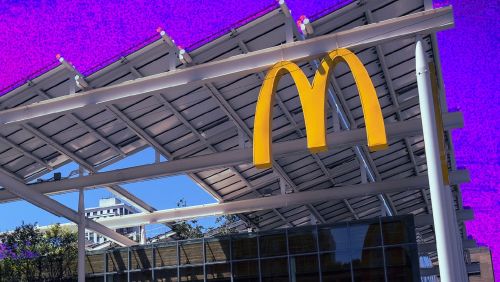
You’ll be greeted with smooth wood and glass surfaces, along with digital menu boards that run promotional footage to stimulate your appetite. You can order at one of the touchscreen kiosks that allow you to explore the menu at your leisure and customize your order without worrying about holding up the line and pissing off the cashier. You can pick up your food at the counter, request table service, or, if you’re rushed, skip the whole process: McDonald’s new mobile app allows you to order from your phone and have a store clerk run out food to your car in the parking lot. Actually, McDonald’s will bring you food anywhere. Through a partnership with Uber Eats, the order-however-the-hell-you-want-to company now offers home delivery from roughly 9,000 U.S. stores.
This is part of what the company calls its Experience of the Future overhaul, a massive rethink that’s already rolled out to 7,000 of its 14,000 U.S. units and will ultimately transform every McDonald’s in America. But the new look isn’t just physical. The iconic Quarter Pounder — formerly a frozen, puck-like patty that clanked when it landed on a hot metal grill — is now made from never-frozen meat. The chicken in its sandwiches is from birds raised without human-grade antibiotics. The frappés contain milk lacking bovine growth hormones.
Related: The Great Grandson of the Big Mac’s Creator Becomes McDonald’s First 4th-Generation Franchisee
The changes are having big results, leading to McDonald’s nabbing the top spot on the Entrepreneur Franchise 500® once again. The 64-year-old company has landed atop our list more than any other franchise except Subway — but today, that sandwich rival has slipped to #125. So what keeps McDonald’s ahead? The answer is clear: constant reinvention. It’s been the Golden Arches’ secret all along.
The latest round of re-creation began in 2015. That’s when Steve Easterbrook rose from chief brand officer to CEO and inherited a company that had declines in same-store sales for nearly two years. He wasted no time in shaking things up. Shortly after taking the helm, he said in a video that “the reality is our recent performance has been poor. We can no longer afford to support legacy structures, legacy commitments, or legacy attitudes.”
Easterbrook immediately began stripping away layers from the company’s international structure, and, at the same time, he launched menu initiatives that better align McDonald’s with modern food preferences. During his first week as CEO, he announced the company’s two-year plan to move away from chicken with antibiotics and milk with hormones, and also began testing all-day breakfast (which would roll out nationwide a few months later). “That was the number one request from customers for decades,” says Sara Senatore, a Bernstein senior restaurant market analyst. “The pushback all along has been due to operational challenges, but Easterbrook said, “If the customers want it, it’s going to happen.’ ”
Easterbrook also began strengthening the company’s franchise network, selling thousands of corporate-owned stores to independent owners. “You’ve seen chains like Burger King, Wendy’s, and Buffalo Wild Wings do this, too,” says Mark Siebert, franchise consultant and CEO of the iFranchise Group. “From a capital structure standpoint, franchisors can improve their sheet by taking money that’s tied up in illiquid assets and redeploying it more effectively.” At the start of 2015, McDonald’s was 81 percent franchised. Now franchisees make up 95 percent of U.S. locations and more than
90 percent worldwide.
The strategy is paying off: The company is riding on 13 consecutive quarters of positive growth. “This is helping us deepen our customer relationships and enhance our perception as a more modern, progressive McDonald’s,” says Lucy Brady, senior vice president of corporate strategy and business development. “We’re expanding choices, building awareness of the breadth of our menu and quality of our food, enhancing convenience, and elevating the overall experience.”
It’s easy to view this as a new era for the Golden Arches, and in some ways it is. But there’s another way of looking at it. This is just the latest phase of McDonald’s constant evolution, one that began not long after it was founded. McDonald’s owes its long-standing reign not just to being faster and cheaper than the competition, but to being more nimble. Even when the company stumbles over its own clown-size shoes — and it certainly has — it recovers before lasting damage is done.
Related: 22 McDonald’s Facts That May Surprise You
Of course, change is hard — and that’s especially true when your brand consists of thousands of locations that pull in annual revenues north of $8 billion in the U.S. alone. But by rerouting the ship, McDonald’s is doing more than avoiding a crash. It’s proving once again the incredible resiliency of the franchise model.

The story of the Golden Arches is one of postwar American capitalism. As it goes, a salesman named Ray Kroc was hawking five-spindle milkshake machines in 1954 when he heard that two brothers in San Bernardino, Calif. — Dick and Maurice McDonald — were using eight of his machines at one location. That meant they could produce 40 milkshakes at a time. Why did they need to make so many? Kroc visited the brothers to find out.
In his autobiography, Grinding It Out, Kroc recounts pulling up to McDonald’s and waiting in his car for the restaurant to open. Before customers arrived, men in white paper hats began hauling in boxes of hamburger and sacks of potatoes. “They were bustling around like ants at a picnic,” he wrote. And they appeared to be making too much food for such a small building.
But Dick and Maurice did a staggering business. Their restaurant had no waitstaff, so customers lined up at a window off the kitchen to order 15-cent burgers. They could add cheese for 4 cents, or tack on fries, a milkshake, or a soda, and the order would appear almost immediately.
“I don’t remember whether I ate a hamburger for lunch that day or not,” wrote Kroc, in what amounts to an odd confession for a man falling in love with a restaurant. But initially, it wasn’t the food that set Kroc’s heart aflutter. It was the efficiency — not to mention the potential to sell milkshake machines.
The next day, Kroc attempted to convince Dick and Maurice to open more restaurants. “It’ll be a lot of trouble,” said Dick. So Kroc suggested a solution: He’d handle the national franchising efforts, and they could call the shots. For each franchise sold, Kroc would take 1.4 percent of gross sales, and the McDonald brothers would receive .5 percent.
Related: How McDonald’s Turned Around Its Slumping Sales
The deal came together quickly, but the relationship that followed was famously combative. In 1961, after opening hundreds of stores that collectively brought in nearly $130 million in sales, Kroc bought the brothers out of the business. Four years later, the company went public at $22.50 per share, and by the end of the first month, it was trading at $50.
McDonald’s owes its growth in part to Kroc’s faith in franchising. He was a strong leader, yet he refused to let power calcify at the top of the organization. “It has always been my belief that authority should be placed at the lowest possible level,” he wrote in Grinding It Out. “I wanted the man closest to the stores to be able to make decisions without directives from headquarters.”
That allowed franchisees to respond to customer demands and test out new ideas, some of which turned into hits. The Filet-O-Fish was created by a franchisee in a Roman Catholic part of Cincinnati, where the local crowd didn’t eat meat on Fridays. The Big Mac came from a Pittsburgh franchisee who was losing sales to a chain with bigger cheeseburgers. And the Egg McMuffin was born in the kitchen of a California franchisee who just really, really liked breakfast. “Most of the things being sold in McDonald’s today were first trialed in local places,” says food historian Andrew Smith, author of Food in America. “If people bought them, McDonald’s put them on the national menu.” And if not? See the low-fat McLean Deluxe or the Hula Burger, a failed cheeseburger that replaced tomato with grilled pineapple.
Through a combination of new menu items and buzzy limited-time offerings — like the McRib, the St. Patrick’s Day Shamrock Shake, and the recently returned Szechuan Sauce — McDonald’s generally managed to keep its customers’ appetites satisfied. But decades later, Kroc’s vision of flexibility was tested when those very customers started associating fast with unhealthy. The restaurant that pioneered fast food was caught on its heels, and it would take years to fully recover.
At the start of 2000, McDonald’s looked like it might not fit into the 21st century. Dire statistics about obesity, diabetes, and heart disease were fueling national shifts in diet, and growth of fast food slowed while rival fast-casual joints — which sold the promise of a healthier meal — started gaining ground.
It’s not as if growth suddenly stopped. Between 1998 and 2006, McDonald’s added some 1,300 stores to expand its network by about 10 percent, and revenues grew by 53 percent. But during that same period, the much smaller Panera grew 500 percent, and Chipotle exploded nearly 40 times over — from 13 to more than 500 locations. (McDonald’s was actually Chipotle’s majority shareholder during this time.)
If McDonald’s customers didn’t notice, investors did. In November 1999, McDonald’s stock was above $48 a share. By January 2000, it had dropped below $40. The 2001 book Fast Food Nation blasted the industry, and McDonald’s in particular, for promoting obesity and widening the nation’s income disparity, and the next year, a survey published in the trade publication Restaurants & Institutions ranked McDonald’s a disappointing 15th in terms of food quality among burger chains.
For fourth quarter 2002, McDonald’s reported a loss for the first time in the company’s history, and in March 2003, the company’s stock hit a low of $12.12 — down 70 percent from where it ended in 1999. The next year, Morgan Spurlock’s documentary Supersize Me blamed the fast-food chain for making him depressed, lethargic, and 24.5 pounds heavier in one month.
McDonald’s has generally taken its critics seriously. After Supersize Me, the company removed the supersize option from its menu. A short time later, it began offering nutrition information for every item, and it removed trans fats from the frying oil. The changes helped shore up investor confidence — by 2007, McDonald’s stock was recovering — but years of playing the nutritional villain resulted in lagging sales. For first quarter 2015, just as Easterbrook was taking over as CEO, the company reported that same-store sales in the U.S. were down 2.3 percent. By the third quarter, after his changes started to reach stores, the company was growing revenues again, with comparable sales up .9 percent. And it has had steady quarterly growth since.
The campaign to improve the product is ongoing, and recently, McDonald’s announced that its seven classic burgers are now being made without artificial colors or flavors. The yogurt in its Happy Meals, just like the chicken in its McNuggets, is preservative-free, and to keep the Happy Meal calories below 600, the chain has downsized the fries and eliminated cheeseburgers as an option.
Related: 5 Things You Should Know Before You Buy a McDonald’s Franchise
McDonald’s hasn’t gone so far as to add steamed broccoli as a side dish. But the changes do reflect an effort to recalibrate speed in a slow-food era, where expediency is often conflated with obesity. Early last year, the company announced that Quarter Pounders and Smokehouse Burgers would be made with never-frozen, made-to-order beef, and it’s testing made-to-order chicken at 160 locations in Washington. It’s also ramped up the limited-time promotions, with offerings like a $6 Classic Meal Deal and — as part of a balancing act that signals open doors to even hedonistic diners — Triple Breakfast Stacks, sandwiches served with extra cheese and sausage. (All McDonald’s eggs will be cage-free by 2020, says the company.)
Taken together, the changes could make McDonald’s seem like a wholly different restaurant than the one that existed 20 years ago. That’s the point. “Change has been our history,” Kroc wrote in 1977, using language that’s still fresh today.

McDonald’s expects that every one of its restaurants will have undergone Experience of the Future renovations by 2020, at a total cost of $6 billion. It’s a huge bet on staying current while keeping what has made the company great.
“Experience of the Future is about creating that sort of digital relevance and convenience that people are beginning to expect,” says David Palmer, a food and restaurant analyst at RBC Capital. “It sends cues, from a brand perspective, that “we’re open for business in whatever way you want to do business with us.’ ”
On a recent earnings call, Easterbrook identified the initiative as “the largest construction project in our history,” one in which franchisees are fronting about 45 percent of the cost. The corporate entity is coming up with the rest.
Of course, the plan isn’t without friction. When an individual store undergoes construction, the kitchen shuts down, construction equipment clogs up the parking lot, and customer routines are disrupted. Stores are generally completely closed for five to 10 days, according to a company spokesperson. And they could be partially shut down for slightly longer — with, say, only a drive-through open.
“Restaurants have experienced a little longer downtime than we expected,” says the senior VP Brady. “When they do reopen, and it’s a full modernization here in the U.S., we’re getting mid-single-digit-sales uplifts and strong increases in customer satisfaction.”
Not everyone sees it that way. In October, some 400 franchisees gathered in Tampa, Fla., to air grievances and discuss the possibility of forming a franchisee association. But few analysts see the meeting as a serious threat, says Palmer. In all likelihood, he says, it’s just an effort to renegotiate power after the dustup caused by Easterbrook’s massive organizational changes: “It’s a shot across the bow, obviously. But management at McDonald’s is very smart. They heard.”
Related: Shamrock Shakes and Pumpkin Spice Lattes: the Best-Branded Food for Every Season
Meeting organizers didn’t reply to Entrepreneur inquiries, and McDonald’s declined to comment directly, pointing us to a statement issued at the time of the franchise meeting, which read, in part, “We always welcome and are committed to a constructive, collaborative dialogue with our franchisees.”
In the meantime, things are looking good for McDonald’s. Early last year, it relocated its headquarters from the suburbs of Illinois to Chicago’s West Loop district. And in the third quarter of 2018, it grew while its rivals slowed down: McDonald’s same-store-sales growth was 2.4 percent, while Wendy’s was 1.2 percent and Burger King’s was negative. With the aggressive rate at which the company is rolling out the modern new store format, analysts are optimistic that growth will continue.
“McDonald’s is becoming a stronger beast,” says Palmer. It’s outperforming the industry now, and he believes that the fast-food titan’s continued upgrades will put it even further ahead of competitors. How long will that last? McDonald’s knows one thing for sure: Change is inevitable, so it can’t stop now.
To see our complete Franchisee 500 rankings, please click here, or view more stories here.
Started franchising: 1955
Total units: 37,406
Cost to open: $1.06M–$2.23M
If you haven’t walked into a McDonald’s in the past year or two, prepare to be disoriented.
You’ll be greeted with smooth wood and glass surfaces, along with digital menu boards that run promotional footage to stimulate your appetite. You can order at one of the touchscreen kiosks that allow you to explore the menu at your leisure and customize your order without worrying about holding up the line and pissing off the cashier. You can pick up your food at the counter, request table service, or, if you’re rushed, skip the whole process: McDonald’s new mobile app allows you to order from your phone and have a store clerk run out food to your car in the parking lot. Actually, McDonald’s will bring you food anywhere. Through a partnership with Uber Eats, the order-however-the-hell-you-want-to company now offers home delivery from roughly 9,000 U.S. stores.