He Turned His Hobby Into a Business That Has Grown 6,124% in the Last Three Years: ‘Growth Almost Broke Us’
The Picklr CEO Jorge Barragan shares how he turned an annoying wait for a rec center court into a nationwide indoor pickleball franchise.
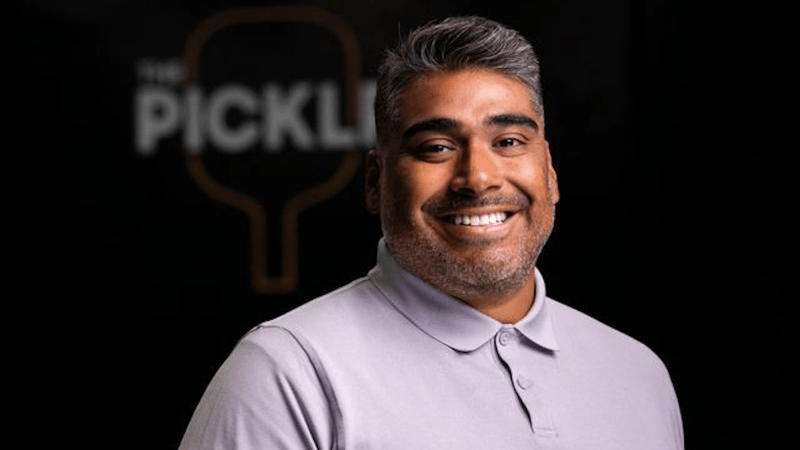
“Ten years ago, I was the guy people made fun of for playing pickleball,” says Jorge Barragan, CEO of The Picklr, a nationwide franchise of indoor courts. “My own coworkers thought it was a joke.”
No one is laughing now as pickleball has become the fastest-growing sport in the country. About 24.3 million Americans played last year. “In 2020, that number was around four million,” Barragan says. “You don’t see growth like that in sports.”
Barragan says he is a big proponent of chasing your dream business despite doubters. “I keep a picture of Steve Jobs on my office wall with the quote: ‘Don’t let the noise of others’ opinions drown out your own inner voice.’” Here, he breaks down how he aced his vision of a business that makes courts more accessible to players clamoring to dink their way to victory.
What was the moment that made you want to start this company?
Honestly, it started with me being annoyed. I found the game in 2015 and got hooked fast. One winter, I drove with a group to a rec center for a lunch game and about 50 people were waiting for a court. I stood there thinking: I wouldn’t wait in this line for anything else. Why am I doing it for this?
Subscribe to the “How Success Happens” podcast: Apple | Spotify | YouTube
That stuck with me. The demand was there, but the places to put it weren’t. By the end of 2020, the idea clicked: build a place that’s just pickleball. Make it indoor so the weather doesn’t matter. Reserve a court, no waiting. Leagues, clinics, tournaments. Create the place I couldn’t find. I called my best friend, Austin Wood, to pitch it, and he was in before I finished talking.
When did you know you were onto something?
We opened our first club in April 2021, which included seven courts in a small town in Northern Utah. The community showed up right away. That felt great, but that wasn’t the moment.
The moment was when we decided to franchise. Within a month, over 100 people were in my inbox asking how they could own one. Serious people who loved the game and wanted to bet their own money on it. That’s a different feeling than selling memberships. Those are people trusting you with their savings. That’s when I knew it wasn’t just my obsession. Other people saw it too, and they were willing to put everything behind it.
What is your company’s revenue?
The number that tells the real story isn’t revenue, it’s growth. Our three-year growth rate: 6,124%. We went from 27 clubs to 64 in a single year.
What has been your key to standing out in a crowded field?
A few things. We were early. If we weren’t the first dedicated indoor pickleball club in the country, we were close. And we only do pickleball, at a real standard: blacked-out walls, sound baffling, championship-style lighting. It feels like a real club, not a few courts taped onto a gym floor.
We also got smart about real estate. There are empty big-box stores in just about every town in America: old Bed Bath & Beyonds, Staples, Sears locations. They’re the right size and shape for courts, cheaper and faster than building from scratch, and cities want you to bring those dead buildings back to life. That helped us move fast.
Subscribe to the free How Success Happens Newsletter for weekly inspiration.
And here’s the honest one. I came out of software sales, not sports. So we run this like a software company. We track retention, we study why someone signs up, we obsess over the member. Most people in this space don’t think that way.
What is your advice to entrepreneurs about risk-taking?
When I started, I was unemployed and we’d just had our fifth kid. On paper, there couldn’t have been a worse time to start a company. But here’s how I think about risk. The one everyone warns you about – what if it fails – was never the one that scared me. The one that scared me was getting to the end and knowing I never tried. I always told myself: if The Picklr didn’t work, I’d go try something else. Not trying was the only real failure.
My dad came to this country from Mexico at 17, before he finished high school, with nothing but the belief he could build a better life. I watched that my whole life, so the leap felt normal. My advice: you don’t need every advantage to start. You need to be willing to do the work and stop letting the noise drown out your gut.
Tell us one “holy @#$!” moment.
The growth almost broke us. In 2022, we opened four clubs in four months and I was driving location to location, trying to hold it all together. Then franchising took off and we were opening approximately one new club a week. You can’t be everywhere when it’s moving that fast, and a brand falls apart the second the standards slip.
We had to stop being founders running around with our hair on fire and start building real systems. Playbooks, training — create the same experience in every market. A couple of our team themes those years were “change equals opportunity” and “pressure is a privilege.” We lived them.
Then you look up and you’re No. 43 on the list of fastest-growing companies in America. You’re in TIME magazine as one of the most influential wellness companies in the country. From a guy who got laughed at for playing pickleball 10 years ago, that’s the holy @#$! moment: realizing the thing people made fun of is now on those lists.
Tell us about a time you felt particularly proud or fulfilled.
Two things: one small, one big. The small one: I was so buried in the business last year that I barely got to play. One of the times I did, I lost to an 11-year-old. I wasn’t even a little mad. I drove home smiling, because that kid is exactly who we built this for. The big one: we have kids as young as eight on real development tracks now. When a parent tells me their child found their sport at one of our clubs, that’s the whole job for me. We’re not just opening clubs. We’re trying to build the place where future college players, pros, and maybe one day Olympians get their start.
What does the word “entrepreneur” mean to you?
To me, it just means you see a problem you can’t let go of, so you go build the fix, usually before anyone agrees with you. It’s in my blood. My dad bought a tortilla factory when I was a kid, and my brothers and sisters and I were up at 4 a.m., packaging tortillas before school. Summers, I did landscaping with him. He’s owned a tire shop for 15 years. I watched my whole life what it takes to build something from nothing. Being an entrepreneur was never a career choice. It’s just what we do.
“Ten years ago, I was the guy people made fun of for playing pickleball,” says Jorge Barragan, CEO of The Picklr, a nationwide franchise of indoor courts. “My own coworkers thought it was a joke.”
No one is laughing now as pickleball has become the fastest-growing sport in the country. About 24.3 million Americans played last year. “In 2020, that number was around four million,” Barragan says. “You don’t see growth like that in sports.”
Barragan says he is a big proponent of chasing your dream business despite doubters. “I keep a picture of Steve Jobs on my office wall with the quote: ‘Don’t let the noise of others’ opinions drown out your own inner voice.’” Here, he breaks down how he aced his vision of a business that makes courts more accessible to players clamoring to dink their way to victory.