He Got 77 ‘Nos’ Before a ‘Yes’. How This Founder Raised $85 Million to Transform Communication for the Deaf.
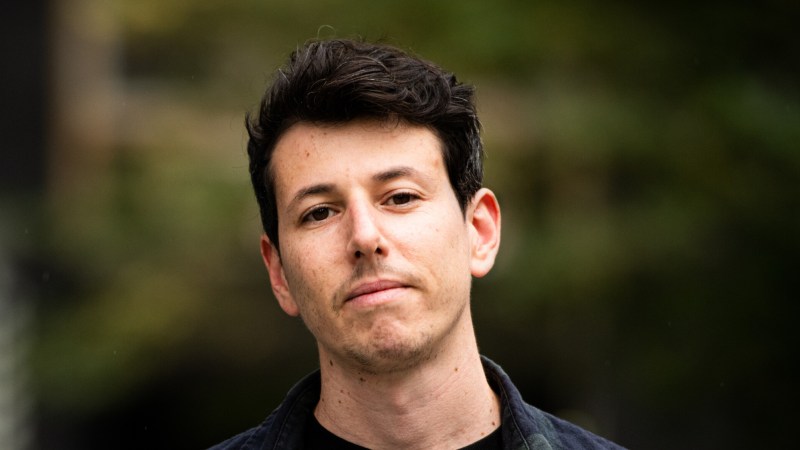
Tomer Aharoni, CEO of Rylo, believes Deaf and hard-of-hearing people deserve the same private communication as everyone else.
Key Takeaways
- Tomer Aharoni started Rylo after discovering that deaf and hard-of-hearing people had no private way to make a phone call without a third-party interpreter.
- He worked with the deaf community from day one to build tools that actually fit their needs.
- Rylo raised $85 million to bring AI-powered private communication to the 48 million Americans living with hearing loss.
In 2019, Tomer Aharoni was sitting in a computer science class at Columbia University when his phone rang. He couldn’t answer it. So he opened his laptop, hacked his audio device and watched the conversation caption itself in a Google Doc in real time. That small hack sparked a much bigger question: How can you have a phone call when you cannot hear or speak?
He mentioned the problem to classmate Alon Ezer who shrugged his shoulders and said: “How do deaf people communicate? Why would you have to invent anything?” The two did some research and discovered that deaf and hard-of-hearing people actually had no private way to make a phone call.
The end result was Rylo — an AI-powered, FCC-certified communication platform that gives deaf and hard-of-hearing people the ability to make private phone calls without an interpreter, a stenographer or anyone else on the line. The company just raised $85 million to bring that technology to everyone who needs it. But the journey to get there was far from smooth sailing.
Related: This Leader Is Making It Easier for Members of the Deaf Community to Start Their Own Businesses
A problem nobody was solving
Forty-eight million Americans live with hearing loss. By 2050, the World Health Organization estimates that number will reach 2.5 billion worldwide. Yet for decades, deaf people couldn’t make a private phone call. Every call required a third-party interpreter on the line, turning what should be a private conversation into a three-way exchange.
Tomer references a scene from CODA, the Academy Award-winning film, where a deaf mother needs her hearing daughter to call grandma. The daughter suggests an interpreter. The mother refuses. “It’s awkward,” she says.
Tomer isn’t deaf himself. He knows that to do this right, he needed to build with the Deaf community. So he and Ezer went on Facebook and searched for Deaf community groups. One of the people they connected with was Matt Sherman.
“I was born deaf, come from a hearing family,” says Sherman, who is now Rylo’s Head of Community. “I’ve seen different types of barriers that exist for Deaf people. All these ideas were really great, but the ideas don’t really fit what the Deaf community needs, and then it becomes too late.”
Related: A Disability Ended My Corporate Career, But It Pushed Me to Build the Life I Really Wanted
From side hustle to serious business
What impressed Sherman about Aharoni and Ezer was that they asked before they built. For two and a half years, the founders toiled away on their project during nights and weekends, adding features whenever someone from the Deaf community asked for them. They called the company Nagish, which means “accessible” in Hebrew.
A big break arrived when Google heard about the project. They wanted to showcase what students had built using Google Cloud and produced a YouTube ad featuring a 17-year-old deaf girl using Nagish to call her mom for the first time. It got tens of thousands of views.
“When we were on set filming this, it was so emotional,” Aharoni says. “We realized we have to make this bigger. We have to build something real. It can’t just be a side project.'”
Then COVID hit. Hundreds of deaf people started reaching out, particularly in Israel, where the community had been left completely isolated. Zoom had no captions. Aharoni and Ezer built a mobile app and put it in the App Store.
“We started asking ourselves: are we shutting this down, or are we making this a company?” Aharoni says. They chose a company.
Related: How to Turn Your Side Hustle Into a Full-Time Job
Getting the FCC on board
Making it a company meant getting FCC certification. The Federal Communications Commission ran a fund to make communication more accessible, and Aharoni wanted Rylo to be the first AI-powered service to tap into it. Everyone told him not to bother.
“They told us it will take a decade,” he says. “And even then we’ll probably never get certified.”
He and Ezer quit their jobs and went for it anyway. It took three and a half years. Only six companies in the United States hold an FCC license for this type of service. Rylo is the only one that is entirely AI-driven. The certification also unlocked the business model — the service is free to users, with the federal government paying Rylo between $1 and $8 per minute of conversation.
The certification also marked the moment they outgrew their original name Nagish. It was unpronounceable, and the company’s ambitions had grown far beyond phone calls. They rebranded to Rylo, a name that bridges “relay” and “rely on.”
77 no’s
For the first time, Aharoni had something concrete to take to investors. Getting them to listen was another battle entirely. For the seed round alone, Aharoni met with 99 investors and got 77 nos.
“We heard investors, founders and candidates say so many times, ‘Oh, it’s such a cute project,'” he says. “But I wanted people to understand there’s a real opportunity here.”
The problem was that VCs didn’t know many deaf people. They assumed hearing aids were enough. But some saw the light. The Series B brought in $85 million from General Catalyst, Canaan, Vertex Ventures and Contour. The money allows them to expand beyond phone calls into in-person communication, workplace accessibility tools and sign language translation.
Related: 3 Types of “No” Every Entrepreneur Should Learn (and How to Thrive From Rejection)
The bigger challenge
The funding battle may be won, but Aharoni says the hardest challenge remains solving communication for people with hearing loss. On average, people wait eight years before taking action on their hearing loss. Many never acknowledge it at all. Tomer’s own father is a perfect example. He’s 77 years old, wearing hearing aids and still insisting he doesn’t have a hearing problem.
“The vast majority of people with hearing loss don’t consider themselves people with hearing loss,” Aharoni says. “You need a lot of money to educate so many people and be known in every single household.”
For Sherman, the larger mission is more important than any business metric.
“I do see hope,” he says. “I see an equitable future for Deaf, hard of hearing people and people with speech disabilities. We want to be their lifeline.”
Key Takeaways
- Tomer Aharoni started Rylo after discovering that deaf and hard-of-hearing people had no private way to make a phone call without a third-party interpreter.
- He worked with the deaf community from day one to build tools that actually fit their needs.
- Rylo raised $85 million to bring AI-powered private communication to the 48 million Americans living with hearing loss.
In 2019, Tomer Aharoni was sitting in a computer science class at Columbia University when his phone rang. He couldn’t answer it. So he opened his laptop, hacked his audio device and watched the conversation caption itself in a Google Doc in real time. That small hack sparked a much bigger question: How can you have a phone call when you cannot hear or speak?
He mentioned the problem to classmate Alon Ezer who shrugged his shoulders and said: “How do deaf people communicate? Why would you have to invent anything?” The two did some research and discovered that deaf and hard-of-hearing people actually had no private way to make a phone call.
The end result was Rylo — an AI-powered, FCC-certified communication platform that gives deaf and hard-of-hearing people the ability to make private phone calls without an interpreter, a stenographer or anyone else on the line. The company just raised $85 million to bring that technology to everyone who needs it. But the journey to get there was far from smooth sailing.