Cultivating the Architecture of Responsibility: The Launch of the GRUNI SDGs Center and the Strategic Vision of Libra Alliance
Opinions expressed by Entrepreneur contributors are their own.
You're reading Entrepreneur Georgia, an international franchise of Entrepreneur Media.
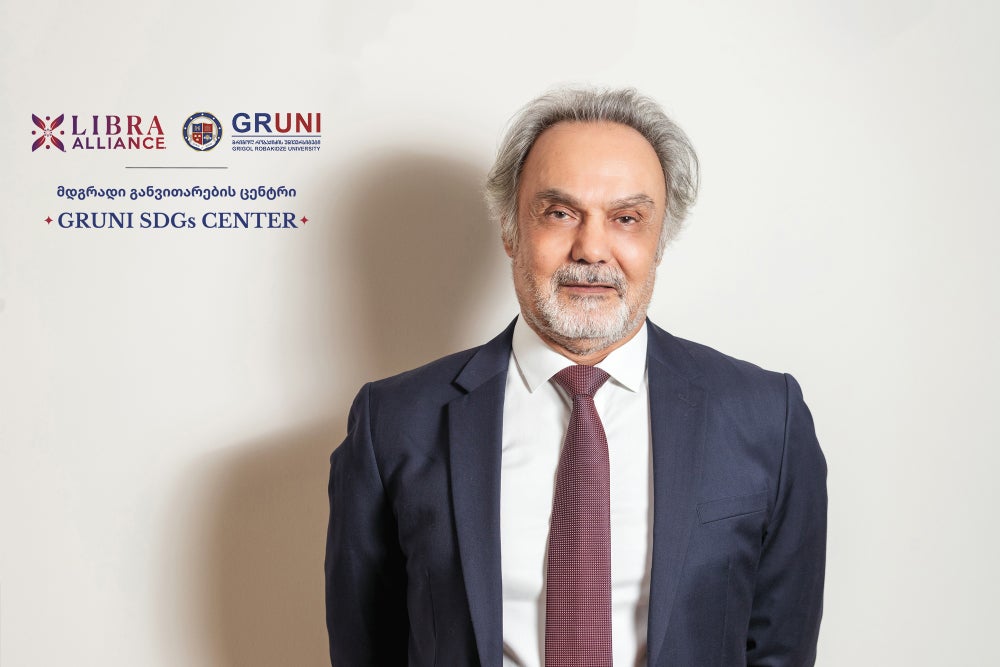 Mehdi Majidi – Founder of Libra Alliance & Co-Founder of the GRUNI SDGs Center
In the evolving landscape of global business, the very definition of corporate success is undergoing a profound transformation. The traditional emphasis on isolated financial efficiency is rapidly giving way to a more integrated model: one that prioritizes social well-being, ethical leadership, and long-term sustainability. In the Caucasus region, this shift has taken institutional form through a new strategic partnership between Grigol Robakidze University (GRUNI) and Libra Alliance, culminating in the establishment of the GRUNI SDGs Center.
The center represents more than an academic initiative; it is a joint platform designed to serve as a catalyst for sustainable socio-economic development. By aligning higher education with the United Nations' Principles for Responsible Management Education (PRME), the center aims to bridge the critical gap between global sustainability frameworks and the day-to-day strategic decisions of the private sector.
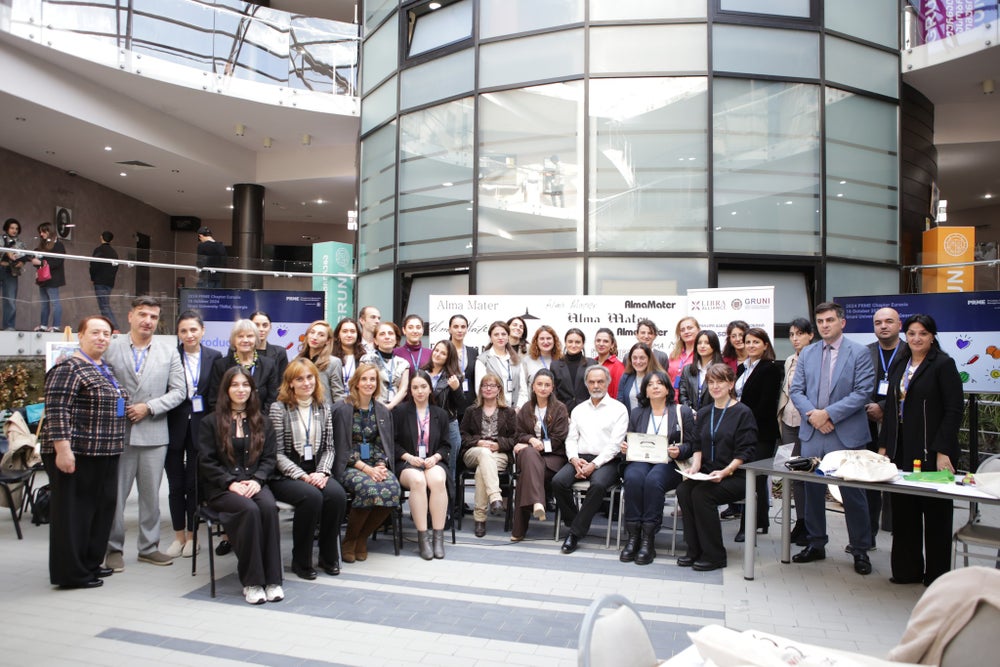 i5 PRME Workshop – UN PRME Representation at Grigol Robakidze University
The genesis of Libra Alliance, and subsequently the GRUNI SDGs Center, stems from Prof. Majidi's extensive career in global development, which includes roles within the UN working group on SDGs and consulting for the World Bank. For Majidi, the decision to establish an independent education and consultancy company was driven by the need for agility in a rapidly changing world.
"The main issue was a sense of accomplishment," Majidi explains. "In long-established institutions, rules and regulations are often set in stone, leaving little room to adapt to new trends. I chose to create a platform that could add value where it is needed most: using management education as the primary force for transforming society and implementing sustainable development."
Prof. Majidi identifies a fundamental cultural gap in how business problems are traditionally viewed. While the old method prioritizes growth at any cost, the new paradigm focuses on the well-being of society as a value-based starting point.
"It is no longer optional," Majidi notes. "If you are not on board, you will be left behind. This is a strategic necessity to avoid obsolescence in a world where information is free, but the ability to implement ethical, impactful solutions is the true differentiator."
Although Majidi initially considered launching the initiative across Central Asia, a deeper cultural analysis ultimately led him to Georgia. He observed that the country's historical emphasis on art, education, and modesty creates a value system naturally aligned with the principles of sustainability.
The choice of partner was equally deliberate. After evaluating various institutional leadership environments, GRUNI emerged as the ideal collaborator due to its innovative, student-centered approach.
"I was looking for a university that was future-oriented, and where the leadership understood the vision immediately," Majidi says. "At GRUNI, we found a 'captive launch.' The leadership didn't just approve the idea; they provided the space to push boundaries and implement things that have not been done before. Georgia has the potential to be the backbone of sustainability culture and education for the region, and this center is the first step in materializing that potential."
The GRUNI SDGs Center addresses the talent shortage in the sustainability sector through a rigorous suite of innovative graduate programs, aligned with the UN PRME. These tracks are designed to move beyond technical skills, fostering what Prof. Majidi calls a "vocation" - a purpose-driven approach to professional life.
Innovative Graduate Programs include:
- PhD in Sustainable Business Management: A 3-year, 60-credit research-focused track for future experts and policymakers.
- MBA in Sustainable Business Management: A 2-year, 120-credit program focusing on the practical application of leadership.
- MA in Sustainable Business Transformation: A 1-year, 60-credit intensive program designed for mid-career professionals leading organizational shifts.
Complementing these degree tracks, the center is also launching a series of Certificate Programs targeting specific industry needs, including Social Impact Assessment, Sustainable Industry Transformation, and High-Performing Organizations.
These programs emphasize that sustainability is, in financial terms, a method of risk mitigation. By securing social reputation and acceptance, companies effectively lower their operational risk, while increasing their long-term returns.
One of the center's most distinctive features is its commitment to public awareness through creative and cultural initiatives. From the SDG Olympiad 2025 and the Social Entrepreneurship Lab to the Big Wall Painting and the SDGs Awareness project, the center is actively deconstructing the "ivory tower" of academia.
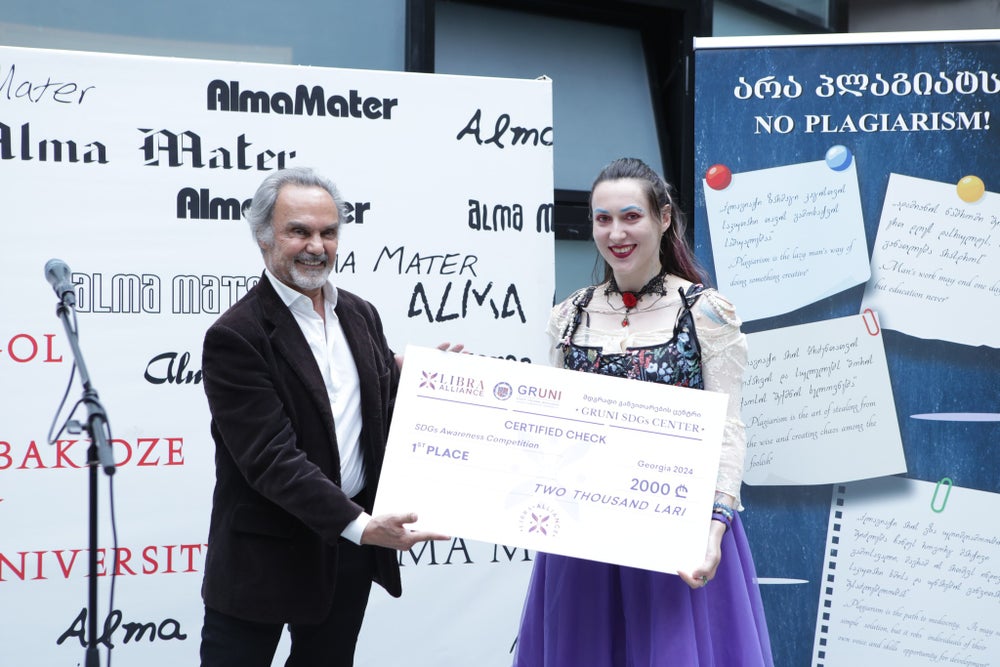 Final Awards Ceremony of the SDGs Awareness Photo, Video, and Art Competition
Prof. Majidi advocates for "Public-Private-Social Partnership" (PPSP). He argues that the traditional public-private partnership (PPP) model is insufficient for sustainability; society must be involved at the design stage of solutions.
"Art opens the mind; it makes you creative," Majidi explains. "Artists imagine a new world and then illustrate it. That is exactly what we want business managers to do: imagine a sustainable world and then materialize it. This is why we are even reaching out to children through the SDGs Storytelling Book. We are not just offering a service to society; we are integrating ourselves within it."
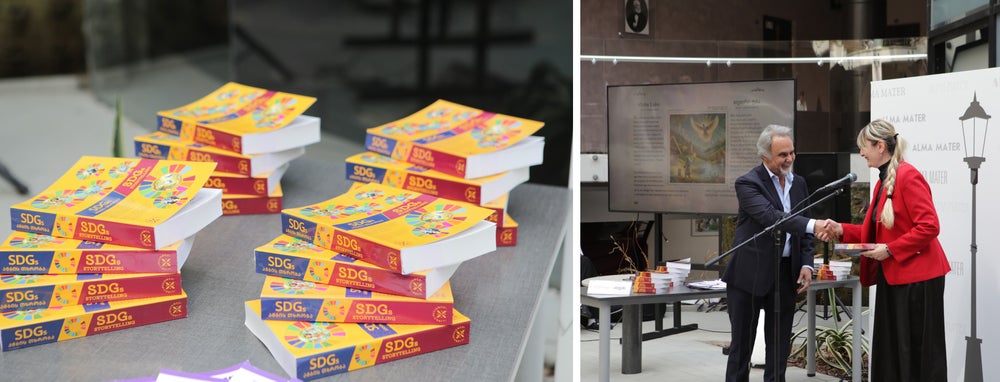 Presentation of the SDGs Storytelling Children's Book on Sustainability
The long-term vision for the GRUNI SDGs Center and Libra Alliance is one of expansion. With plans to open the PhD program immediately and the Master's programs by September, the team is already looking to replicate this model in Central Asia and Eastern Europe.
The message to the Georgian business community and aspiring leaders is clear: resources follow vision.
"We often stop because we think we don't have the money," Majidi concludes. "But in the new world, finance is merely a facilitator. Active collaboration and a belief in the vocation of social well-being are what truly make things happen."
As the GRUNI SDGs Center begins its journey, it stands as a testament to the power of a "vocation-first" education, and as a blueprint for how Georgia can lead the region into a more responsible, innovative, and sustainable future.