A Former Apple Engineer Behind Face ID Is Now Building an 8-Figure AI Startup: ‘We’re the Guardians of AI’
Vince Gaydarzhiev’s startup, Alcatraz, ensures that top companies remain secure with face security scans.
Key Takeaways
- Vince Gaydarzhiev, a Bulgarian‑born engineer who worked on Face ID at Apple, founded Alcatraz in 2014 to bring Face ID‑style authentication into the physical world.
- Alcatraz builds biometric access‑control hardware and software that links a momentary facial scan to a badge number.
- The startup’s technology is now used by most Fortune 100 companies and seven of the top ten AI companies, according to Gaydarzhiev.
If AI is worth billions, then surely the companies that make AI will spend millions to protect it, right? That’s what Vince Gaydarzhiev, the president and founder of Alcatraz figured, when he started his technology security company back in 2014.
Today, Alcatraz’s technology is used at most of the big AI players’ data centers — providing single, dual, or even triple-factor authentication at doors where higher security is required.
Alcatraz makes “biometric access control” technology: Essentially, the system takes a live snapshot of a face, instantly binds it to a badge credential, allows or denies access, deletes the image within milliseconds and sends only badge numbers to the building’s access control system — it doesn’t store photos, names or videos.
“We’re the guardians of AI,” Gaydarzhiev tells Entrepreneur in a new interview. “AI is built and stored in data centers and is deployed in other large organizations. We are the ones making sure from a physical security standpoint that everything connected to the data centers is protected with the best technology possible.”
His beginnings and early work at Nvidia and Apple
Gaydarzhiev was born and raised in Bulgaria and moved to the United States at age 15, entering the U.S. educational system in high school. He went on to pursue what he calls “heavy engineering,” studying microelectronics at the University of Southern California and later at Stanford, grounding himself in deep technical disciplines.
That technical foundation shaped his career choices, pushing him toward companies operating at the cutting edge of chips, sensors, and large‑scale computing rather than consumer apps. It also prepared him to eventually build a complex hardware‑plus‑software startup.
Before launching Alcatraz, Gaydarzhiev worked at Nvidia on graphics processing units designed for automotive applications, including systems used in Tesla vehicles just before the Model S and Model X shipped.
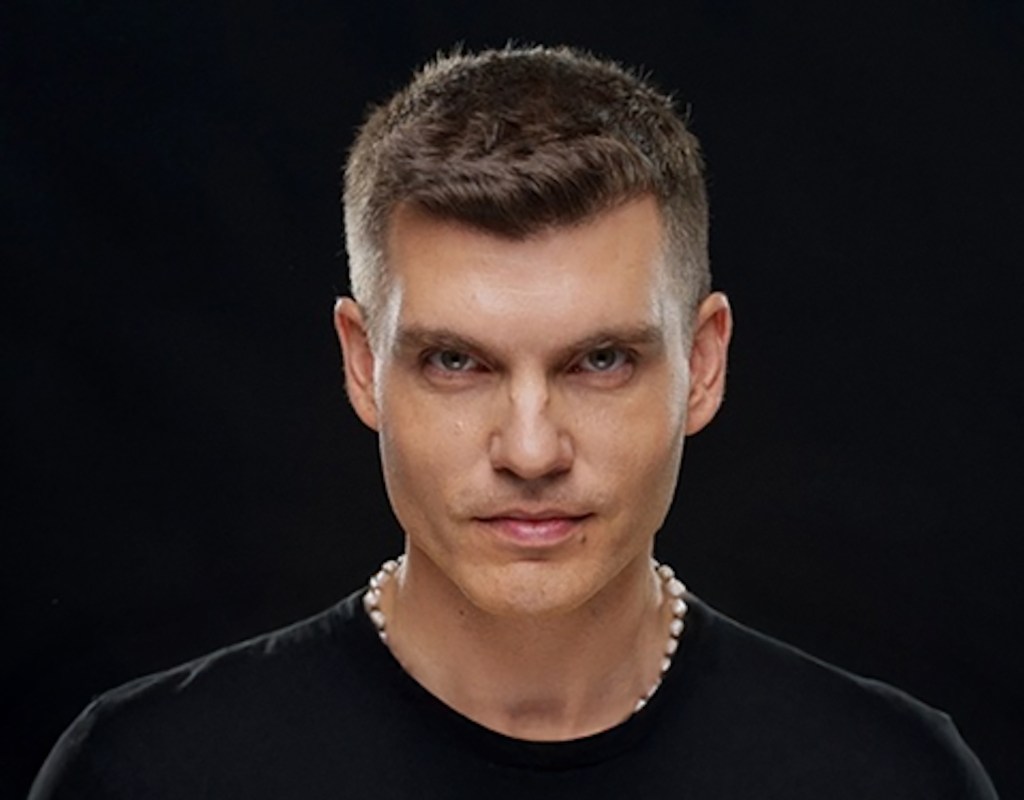
He then joined Apple, where he worked on iPhones and was part of the team that eventually created Face ID, Apple’s facial authentication technology, which the company first introduced in November 2017 with the launch of the iPhone X.
While at Apple and Nvidia, Gaydarzhiev frequently visited secure environments like factories and data centers, where he noticed that physical security often lagged far behind the sophistication of the products these companies built. Many large companies had either disabled older biometrics like fingerprint readers due to reliability problems, or they relied on armies of guards manually checking photo badges and trying to prevent tailgating at doors. “Security was not efficient,” he says.
Founding Alcatraz
The precise spark for Alcatraz came around mid‑2014 while Gaydarzhiev was at Apple, watching how Face ID‑style technology was about to become invisible and ubiquitous for hundreds of millions of users. He believed the best technology feels “magical” and transparent — something you enroll in once on your iPhone and then forget about as it unlocks your device every time you swipe up.
He realized that while phones could be unlocked with a face, the building ecosystem needed its own deeply integrated, privacy‑preserving biometric layer that could plug into existing access control and video systems without carrying personally identifiable information.
“I got inspired to basically create a Face ID for the physical world,” he says. “So to create an end-to-end product with AI for those kinds of companies and use cases.”
That insight led him to leave Apple, fund the early work with his own savings and leftover stock, and start Alcatraz around a decade ago.
Creating a product wasn’t fast or cheap. Gaydarzhiev estimates that it took at least $20 million from external funding and around five years before the product truly worked across key use cases. The product required hardware, embedded systems, AI, computer vision, factories, and rigorous compliance, meaning the minimum viable product had to be a full, end‑to‑end, certified system.
Fundraising came in stages: a small seed round of a few million dollars, followed by a Series A in the $25 million to $30 million range in 2022.
Growth strategy
Gaydarzhiev says Alcatraz now works with most of the Fortune 100. Seven of the top ten “hyperscaler” AI companies, or organizations building and operating massive data centers and cutting‑edge AI systems, use Alcatraz’s technology.
It was tough to get customers at first. One of his earliest customers, a global leader in data centers and AI chatbots, took roughly four years to go from first meeting to a contract to roll out across its infrastructure.
Gaydarzhiev’s growth strategy has been to start small in each target vertical, prove the product in a handful of deployments, then “copy-paste” the winning playbook to similar customers. Today, Alcatraz sells into multiple verticals, including hyperscale data centers, banks, airports, stadiums, and utilities. The startup’s sales leaders specialize deeply in their sector rather than trying to sell into all markets at once. “We’re going after the sectors that need our technology the most,” he says.
Alcatraz now has roughly 110 employees split between a main office in Cupertino near Apple, and an office in Sofia, Bulgaria. The company also operates a factory that some team members visit regularly for prototyping and hardware work. While the company won’t reveal its exact numbers, Gaydarzhiev tells Entrepreneur they bring in “eight-figure” revenue.
Advice for founders
From Nvidia and Apple, Gaydarzhiev says he learned to move fast, never compromise on quality and obsess over the end user. “Your customer should be number one, always,” he says. “We are in daily communication with many of our customers, getting feedback from them, talking to them about what dreams they have outside what we already deployed to them, so we can actually do it for them. That’s very important.”
He advises founders to “never give up” and “involve very smart people” in the process of building their companies. According to him, creating a company is like having a baby. “You don’t give up on your baby,” he says. “It’s part of your family now.”
Looking ahead, Gaydarzhiev wants Alcatraz to protect every major AI-driven organization worldwide. His vision is to “keep creating magic” and to keep deploying in large organizations.
“We have been an AI-first company since the beginning, before AI was a household name,” he says. “Now it’s about how to give more value to our customers.”
Key Takeaways
- Vince Gaydarzhiev, a Bulgarian‑born engineer who worked on Face ID at Apple, founded Alcatraz in 2014 to bring Face ID‑style authentication into the physical world.
- Alcatraz builds biometric access‑control hardware and software that links a momentary facial scan to a badge number.
- The startup’s technology is now used by most Fortune 100 companies and seven of the top ten AI companies, according to Gaydarzhiev.
If AI is worth billions, then surely the companies that make AI will spend millions to protect it, right? That’s what Vince Gaydarzhiev, the president and founder of Alcatraz figured, when he started his technology security company back in 2014.
Today, Alcatraz’s technology is used at most of the big AI players’ data centers — providing single, dual, or even triple-factor authentication at doors where higher security is required.
Alcatraz makes “biometric access control” technology: Essentially, the system takes a live snapshot of a face, instantly binds it to a badge credential, allows or denies access, deletes the image within milliseconds and sends only badge numbers to the building’s access control system — it doesn’t store photos, names or videos.