This Workout Was Created for Male Prisoners During World War I. Now It’s Everywhere — and Worth $120 Billion.
Joseph Pilates developed his namesake exercise regimen during World War I.
Key Takeaways
- Joseph Pilates developed the low-impact workout to rehabilitate prisoners.
- The exercise entered the mainstream in the U.S. in the 1990s.
- Here’s how the practice evolved over the years, and what’s driving its latest spike.
Whether you’ve taken a Pilates class or not, you’ve no doubt heard of the exercise, which has enjoyed several spikes in popularity over the last century — including one that’s endured in recent years.
Pilates and yoga studios make up an estimated $120 billion market as of 2025.
Joseph Pilates, who was born in Germany in 1883 and trained as an acrobat and gymnast, developed the low-impact workout, which can improve muscle tone, flexibility and strength, and rehabilitate injuries.
In the early 1910s, Pilates and his performance troupe worked in England, where he still lived when World War I began. Pilates was imprisoned by the British as a German national classified as an “enemy alien.”
During his time in an internment camp, Pilates led injured inmates in rehabilitative exercises which could be done from a hospital bed, and led to the now-widespread practice.

How Pilates became mainstream — and a business — in the U.S.
Pilates’ journey in the U.S. kicked off when its founder brought the practice to Manhattan in 1926. The technique gained ground among professional dancers, then went mainstream in the late 1990s, per Vogue.
Additionally, although the exercise’s popularity has ebbed and flowed in the decades since, it hasn’t lost its grip on devotees who gravitate toward its low-impact approach and health benefits.
In fact, the exercise is perhaps more ubiquitous than ever before, inspiring not only classical and contemporary studios, but also a host of Pilates-adjacent spinoffs.
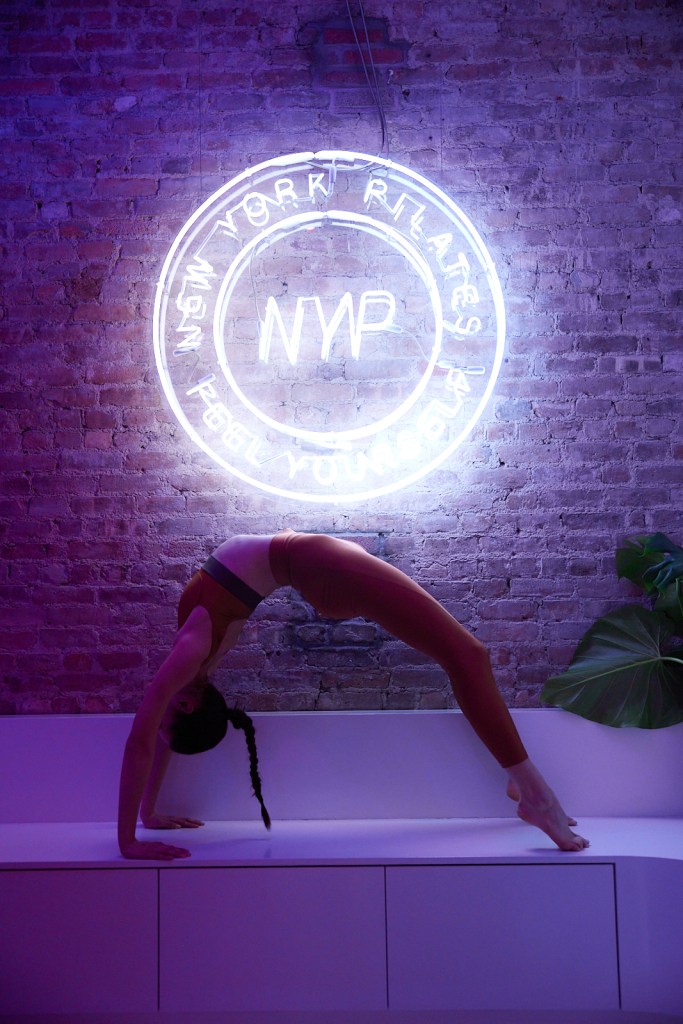
Heather Andersen, a former ballerina who co-founded the contemporary pilates studio brand New York Pilates with her husband Brion Isaacs, got her start in the industry as an instructor around 2008, primarily teaching private classes.

Andersen and Isaacs opened their first New York Pilates studio in 2013.
“At the time, if you were wanting to participate in Pilates, you had to go and book a private session, which has all sorts of hurdles — finding an instructor, scheduling, it’s expensive,” Andersen tells Entrepreneur. “I thought that you should be able to go take a reformer class in the way that you could go take a yoga class in New York City at any time of day or night.”
The reformer apparatus, a bed-like frame with a sliding carriage, was also created by Pilates, and features springs and ropes for resistance to aid in the signature full-body, low-impact workout.
The business of pilates and its spinoffs — and what keeps people coming back
New York Pilates is a contemporary studio focused on proper technique, form and functional alignment, Andersen says. When Andersen opened the first studio, she still considered reformer Pilates a somewhat niche activity, and says it was a “really wild experience” to see it rise in popularity as quickly as it did.
New York Pilates currently has eight studios across New York City and the Hamptons, with plans for two more locations underway.
Kat Anta, who started taking Pilates when she was 15 years old as a dancer with lower back pain, then fell in love with the practice and followed it into a career, has taught at New York Pilates for several years, and is also the education manager.
“ It’s a very broad [client] demographic, especially here at the Flatiron location, and I really enjoy that,” Anta says. “I get a chance to work with lots of different people with different bodies, whether they’re super athletic or maybe dealing with an injury. It’s a little bit of everything, which makes teaching fun.”
Anta notes that she teaches an open-level class, which offers modifications and advancements to suit different fitness abilities and goals. “Pilates is adaptable to your needs and your body,” Anta explains, “and I think that’s what keeps people coming back.”
Building a business that centers on progress, growth and community
Additionally, Anta says that working with her students and seeing their growth day after day, week after week, is her favorite part of the job.
Andersen emphasizes a simple but critical fact: Effective Pilates instructors have a passion for interacting with people — and a studio is only as good as its instructors, and the community that results.
Some of the fastest-growing studios and brands that fall under the “Pilates-inspired” umbrella are able to raise money and expand rapidly because their instructors don’t necessarily require the same rigorous training and certification, Andersen notes.
New York Pilates has yet to take any outside investment, predominantly using debt financing and cash flow to grow.
“The product is real people showing up with real skills”
New York Pilates’ team consists of about 120 staff members, 55 of whom are instructors.
“It takes time to develop a successful, well-informed, well-trained instructor,” Andersen says. “It doesn’t happen overnight. People have to process and learn information. In this kind of business, the product is real people showing up with real skills. You can’t fake it.”
Andersen also echoes Anta’s sentiment — that the people are the best part of her work.
“This community is absolutely what makes it worth it,” Andersen says. “Running a business is hard work, and there are a lot of challenges. But it’s about that personal connection with people, and the personal transformations.”
As Andersen looks to the future of New York Pilates, she’s excited to scale strategically and intentionally, prioritizing effective instructors who can maintain the brand’s quality and integrity across its community.

In-person and online communities fuel Pilates’ growth — and business opportunity
It’s safe to say that over the course of its journey from rehabilitative practice to wellness staple, Pilates has developed strong roots in community, both in-person and online, as the prevalence of Pilates-focused social media content and trends — from viral workout videos to “Pink Pilates Princess” aesthetics — can’t be ignored.
In addition to its robust in-person community, New York Pilates boasts a strong online presence, with about 160,000 followers on Instagram and more than 20,000 on TikTok. The brand’s bio on both platforms reads, in part, “The Internet’s favorite pilates studio,” a nod to the savvy overlap between physical and virtual communities.
Pilates’ most recent resurgence in the wake of the pandemic, with people seeking community and connection in an era where few “third places” remain, just might power its biggest growth wave yet.
Key Takeaways
- Joseph Pilates developed the low-impact workout to rehabilitate prisoners.
- The exercise entered the mainstream in the U.S. in the 1990s.
- Here’s how the practice evolved over the years, and what’s driving its latest spike.
Whether you’ve taken a Pilates class or not, you’ve no doubt heard of the exercise, which has enjoyed several spikes in popularity over the last century — including one that’s endured in recent years.
Pilates and yoga studios make up an estimated $120 billion market as of 2025.
Joseph Pilates, who was born in Germany in 1883 and trained as an acrobat and gymnast, developed the low-impact workout, which can improve muscle tone, flexibility and strength, and rehabilitate injuries.